
Two more Ontario educators’ unions vote to strike as contract talks loom - Toronto Star
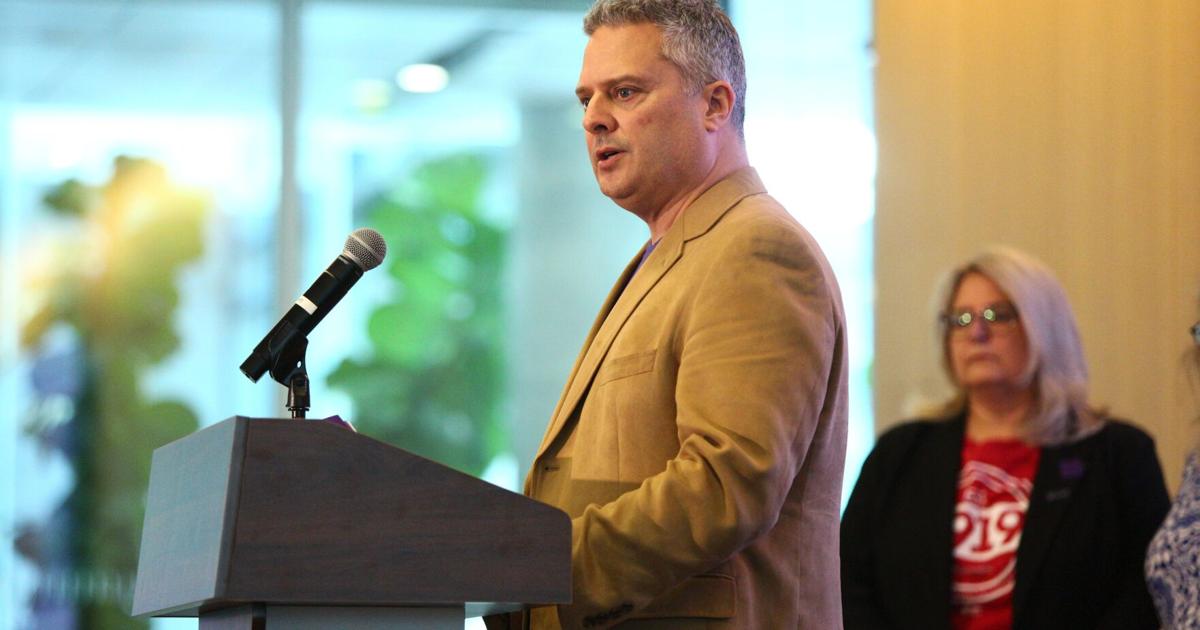
French board teachers and the Ontario School Board Council of Unions have voted overwhelmingly for job action.
OSBCU president Joe Tigani said members, who have voted 94 per cent in favour of strike action, want improved school funding and staffing. “We need to see real investment, and we need it now.”
Two more education unions have joined the growing ranks of school workers in Ontario voting overwhelmingly for job action ahead of contract talks resuming.
French board teachers with L’Association des enseignantes et des enseignants franco-ontariens cast their ballots earlier this week and voted 96 per cent in support of a strike, union president Gabrielle Lemieux said in a statement in French.
Members of the Ontario School Board Council of Unions, representing CUPE education workers in public, Catholic, English and French school systems, voted 94 per cent in favour of a strike in results announced Thursday night.
Three other education unions in Ontario also voted this past week overwhelmingly in favour of job action if a deal can’t be reached with the province: elementary school teachers, public high school teachers and English Catholic teachers. Education contracts expired at the end of August and the unions’ grievances have included class sizes, stronger health and safety protections, better compensation and job security.
Lemieux said working conditions in schools require an urgent fix: teachers have dwindling resources to manage intense workloads, high-needs classrooms, and violence and security threats. If members’ working conditions improve, so too will students’ educations, Lemieux said.
The government should take the strike mandate seriously and understand the difficult reality of work in French-language schools when they arrive at the bargaining table, Lemieux added.
OSBCU president Joe Tigani said members want improved funding and staffing as educators often face violence in classrooms and workers must deal with precarious, casual work arrangements.
“Our members decided to say enough is enough,” Tigani said in an interview. “We need to see real investment, and we need it now.”
Several more steps, including bargaining, must come before any work stoppage, and the public high school teachers and English Catholic teachers unions emphasized that their votes don’t necessarily mean teachers and school staff will strike.
“What comes next will depend on whether the government comes prepared to actually negotiate at the bargaining table” on Nov. 30, Tigani said, charging that Education Minister Paul Calandra has been reluctant to negotiate while teachers were prepared months ago.
Tigani added that a new ruling from the Ontario labour board about which education bargaining items will be negotiated at the provincial level, and which will be handled at individual boards, is proof that “local voices matter.”
Calandra told reporters earlier this week that the strong strike vote results don’t alarm him because they are in line with past votes, saying their underlying message is “get to the table, negotiate a deal.”
David Mastin, president of the Elementary Teachers’ Federation of Ontario, has said Calandra “misses the point entirely” on the frustration that drove the union’s 97 per cent strike vote.
The provincial government spent $42.7-billion on education in 2025-26 and, although it’s a historical high, the province’s financial watchdog reported that with inflation, funding is actually decreasing on a per-student basis.
Error! Sorry, there was an error processing your request.
There was a problem with the recaptcha. Please try again.
You may unsubscribe at any time. By signing up, you agree to our terms of use and privacy policy. This site is protected by reCAPTCHA and the Google privacy policy and terms of service apply.
Elissa Mendes is a staff reporter with the Toronto Star. Reach her via email: emendes@thestar.ca


