U.K. leader says Iran believed to have "played a part" in air base incident
London — The British government believes Iran "played a part" in the incident over the weekend at the RAF Fairford air base in England, which has been used by U.S. warplanes carrying out strikes on Iran, U.K. Prime Minister Andy Burnham said Wednesday.
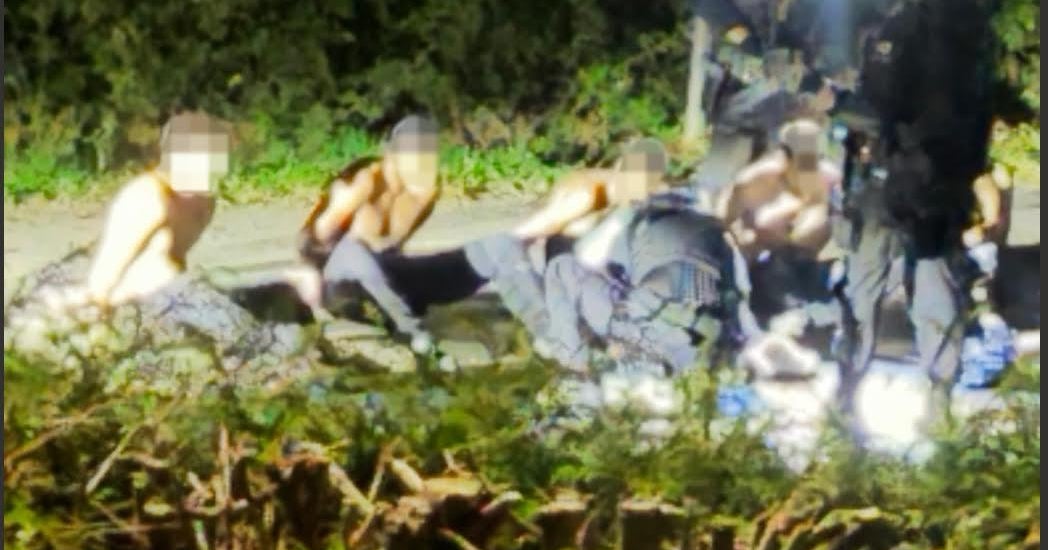
Burnham's remarks to the BBC were the first confirmation by the British government of its assessment of the incident, which saw five men — all British nationals in their mid-20s — arrested near RAF Fairford early Sunday morning on suspicion of preparing a terrorist act. They were all released on bail the following day, however, even though the police had the right to hold them for up to 14 days under U.K. counterterrorism laws.
Their quick release drew criticism from President Trump and U.S. Secretary of State Marco Rubio. But it also prompted questions in the U.K. as to whether the authorities had overreacted.
U.K. counterterrorism police said no explosives were found in extensive searches of the three vehicles operated by the men, only some fuel and a number of large, mostly empty plastic drums.
There were reports by local media, unconfirmed by authorities, that the men could have been fuel thieves trying to steal diesel from farms in the rural area or possibly even from the air base itself. But Burnham indicated Wednesday that a more serious plot could have been in play.
"There are strong indications that Iran played a part in what happened over the weekend at RAF Fairford, but of course it remains an ongoing, complex and serious police investigation, and of course we are working closely with our colleagues in the United States of America," the prime minister told the BBC.
"We will say more in due course, but we can confirm our belief that we believe Iran to have played a part," he said.
Asked why the suspects were released so quickly on bail, he said, "people need to understand that when it says released — that isn't as people might think. It's obviously with the strictest possible bail conditions."
Assistant Commissioner Laurence Taylor, who heads the London Metropolitan Police force's Counter Terror Policing unit, said Monday that the men remained under investigation and would be monitored closely.
"The authorities have this under the strongest grip and closest control, and I can assure you of that," Burnham told the BBC, stressing that U.K. authorities had been "talking to our counterparts in the United States all week to explain what is happening here, how things are being done."
He said he had "complete confidence in the way British security services are handling this."
Iranian authorities have warned that any bases used to attack the country would be considered legitimate targets, but the Iranian Embassy in London said in a statement shared Monday on social media that the regime "categorically rejects and strongly condemns the recent unfounded and malicious speculations published by some British individuals and media outlets attempting to link Iran" to the incident.
Taylor, the head of the London police's counterterror unit, told reporters Monday the incident "may be activity committed by proxies, or individuals either knowingly or unknowingly, working on behalf of a foreign state."
Iran has, like Russia, been accused of using individuals who may be unaware they are even working for a foreign state to conduct sabotage attacks across Western Europe.
The Iran-aligned group Harakat Ashab al-Yamin al-Islamia — or The Islamic Movement of the Companions of the Righteous (IMCR) — has claimed responsibility for several incidents over the past few months, including attacks on synagogues in the Netherlands and Belgium, and multiple attacks on north London's Jewish community.
A representative of the group told CBS News in March that it would "keep threatening U.S. and Israeli interests worldwide until we've avenged every child in Gaza, Iran, Lebanon, and the resistance nations," and it urged people "to stay away from Zionist and American interests."
In July, the U.K. government said the elite Quds Force of Iran's Islamic Revolutionary Guard Corps "almost certainly directed IMCR attacks across Europe."
Experts have characterized those incidents as part of a growing pattern of Iran and Russia outsourcing sabotage by recruiting sometimes unsuspecting people, often young men, to carry out low-level attacks for financial compensation.
On Tuesday, law enforcement authorities in NATO member Estonia said they had determined an arson attack against a defense industry company in mid-August was a "deliberate and pre-planned act commissioned by Russian security services."