U.S. academic retraces Long March - Time Magazine
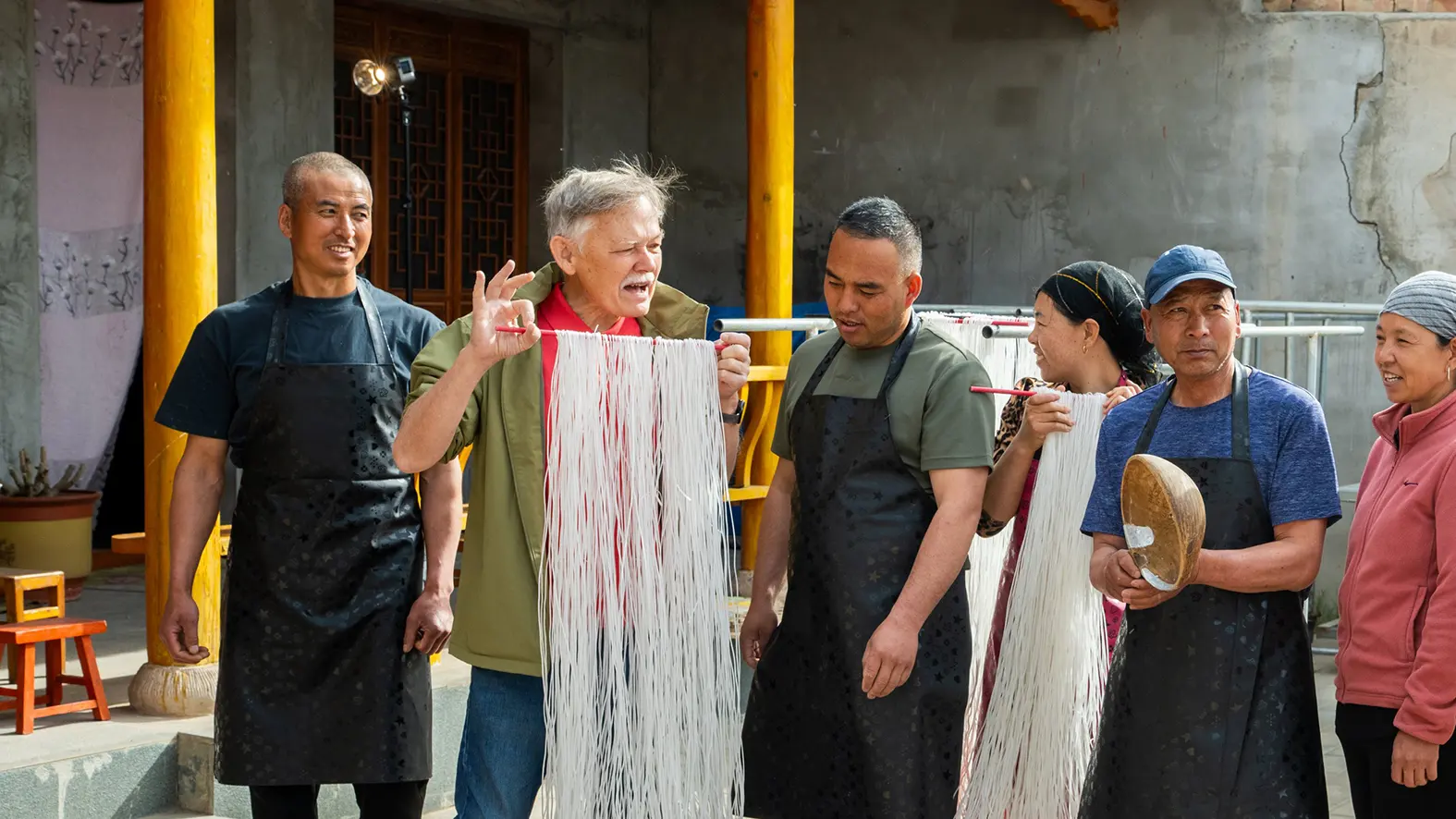
William N. Brown learns about potato noodle-making techniques that were taught to the locals by Red Army soldiers during the Long March in Xiji, Ningxia Hui autonomous region. PROVIDED TO CHINA DAILY
William N. Brown, an American business studies professor at Xiamen University, is celebrating his bond with China that began half a century ago when he served on a United States Air Force base on Taiwan Island in 1976.
After leaving the military in 1981, completing his education and selling his business, Brown moved with his family in 1988 to the coastal city of Xiamen in Fujian province. Known for his academic work in business management and promotion of local culture, he in 1992 became the first foreign national in Fujian province to obtain Chinese permanent residency.
Marking his 50-year bond with the country, the 70-year-old recently embarked on a multimedia project retracing the historic Long March.
From October 1934 to October 1936, the Red Army, the precursor to the Chinese People’s Liberation Army, marched through more than 10 provinces. With some marching as far as 7,800 miles while enduring hunger, thirst and cold, the Red Army carried out a daring military maneuver that changed the trajectory of the Communist Party of China and the history of the whole nation.
For Brown, however, the journey was deeply visceral. Having previously driven over 120,000 miles across every Chinese province — including a grueling 25,000-mile road trip in 1994 when he noted road infrastructure was primitive — he still found the physical realities of the Long March staggering.
“I could not imagine walking through such terrain, in sweltering heat or freezing winters,” Brown said. “Just reading about the Long March is interesting, but it’s no more real than watching a historic movie. Even if the facts are correct, you still can’t grasp the essence of the joys and sufferings.”
While retracing the footsteps of the Long March this year, Brown was moved meeting the descendants of those who lost their sons and weren’t able to find out where they had died until decades later.
“What most impressed me was that even though the Red Army troops, who averaged only 19, I hear, were starving and freezing, and lacked weapons, they never took advantage of the common people,” Brown said.
Brown found that if the Red Army soldiers received food or clothing, they always found a way to pay for it.
“In all of history, I think there was no other ‘march’ as grueling as this, and yet the soldiers showed their love for China by their love for the people they met. It was not a slogan, ‘Love China’, but the reality of their love for the people,” he said.
Later this year, Brown’s latest book will be published, entitled Many People, One Dream: Bill Brown’s Record of China’s Shared Prosperity For All Ethnicities.
Brown has collected countless books recounting the historical experiences of foreigners in China over the years, and stories of Chinese people traveling overseas.
Among the books that have most influenced Brown is Red Star Over China by Edgar Snow — the classic account “that opened the eyes of the world to what was really happening in China.”
“It opened my eyes as well,” he said, citing Snow in chapter one of the book saying that the Red Army “had for nine years been isolated by a news blockade as effective as a stone fortress ... Some people denied that there was such a thing as a Red Army.”
“Had I not read this, I would not have been so keen on exploring China myself, driving a total of over 120,000 miles these decades, visiting every province, to see the fruits of the Long March’s many sacrifices,” Brown said.
Prior to revisiting the Long March route this year, Brown had been to all of these places, and read about most of them.
“But it was much different when I spent almost 50 days with a team whose sole purpose was to experience and explore both the first Long March and the Long March that China faces today,” he said.
It gave him “a much more visceral appreciation of the sacrifices and tragedies” during the Long March, and it also helped him “better feel the spirit of the Chinese, and perhaps most of all, their love for their country.”
Brown appreciates the stories of how Chinese people today show the Long March spirit in their lives in overcoming difficulties or serving others.
One of his favorite stories is about China Post mailman Lhalung Dorje, who works on the snowy western plateau of Sichuan province where temperatures can plunge below — 10 C.
“A mailman for 18 years, a 134 mile mail route, traveling a total of 310,000 miles, delivering 5 million pieces of mail, no piece ever lost,” Brown said.
“He helped children get college acceptance letters, and drove over 60 miles after work to deliver medicines for an elderly Tibetan lady. His e-commerce studio helps Tibetans sell local products,” he added.