
UK Chancellor Healey says benefits Bill will fall, doesn’t give timeline - The Business Times
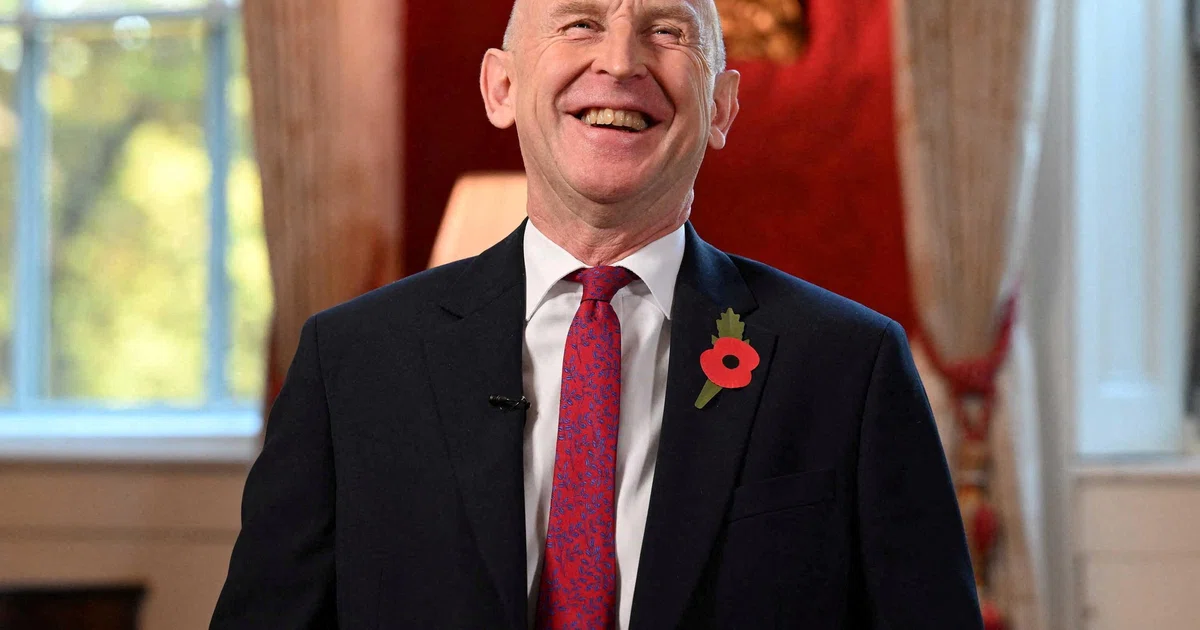
Britain’s fiscal watchdog projects welfare spending to rise to £431 billion or 11.3% of GDP in 2031 to 2032
CHANCELLOR John Healey said that the UK government would bring down welfare spending but declined to commit to a timetable for it, highlighting the difficulty the Labour Party faces in curbing a major pressure on public finances.
“One hundred per cent we will bring the benefits Bill down,” Healey said in a BBC interview broadcast on Sunday (Nov 1), when asked if welfare spending would be cut by the time of the next election.
“We’ve never set out the timetable for savings.”
The absence of a plan to tackle welfare spending was one of the issues seized on by Labour’s political opponents after Healey delivered his Budget on Wednesday.
It also raised questions about how Britain’s chancellor will fund commitments, such as its goal to spend 3 per cent of gross domestic product on defence by 2030.
The Office for Budget Responsibility, Britain’s fiscal watchdog, projected that welfare spending – including state pensions – will rise to £431 billion (US$577 billion) or 11.3 per cent of GDP in 2031 to 2032, compared with £334 billion in 2025 to 2026.
Five decades of milestones and moments that shaped Singapore’s success story - told through our headlines.
Healey said that the government is waiting to assess the recommendations of two separate reviews by Alan Milburn and Stephen Timms, who are due to propose potential changes to Britain’s benefits system.
He added that the government would legislate its reforms next year.
“We will do this in a way which reflects our values,” the chancellor said. “We’ll start the changes next year, and we’ll bring that bill down.”
Healey and new prime minister Andy Burnham’s caution around welfare changes comes after the botched handling of reforms last year badly damaged the authority of ex-premier Keir Starmer within his own party.
Burnham said in the House of Commons in September that national security “cannot come at the expense of social security”.
Public polling showed Healey’s Budget to have been one of the better-received fiscal events of recent years, even while it has been criticised by economists and think tanks.
The chancellor’s defence of his plans was described as “weirdly hesitant” and “low energy” by former Scottish first minister Nicola Sturgeon, who contrasted it with Burnham’s plain-speaking approach that has helped Labour register a bump in the polls since he took office a little more than three months ago.
Of the peril that lies ahead for the new prime minister, Sturgeon told the BBC: “The danger for him is if they slip back to what I think we just heard from John Healey – very conventional politician interviews trying to speak without saying anything – then that political capital will start to dissipate.”
Healey’s key Budget measures included a £100 payment to 20 million households to help with cost-of-living pressures, alongside revenue-raising moves such as an increase in the taxes banks pay, a reduction in the generosity of a corporate capital allowance and improved tax collection.
One of the main criticisms the chancellor has faced is the lack of a credible and detailed plan for spending 3 per cent of GDP on defence by 2030, while also planning for real-terms cuts to departmental budgets and having little to say about how he would boost economic growth.
Healey said he will address Britain’s longer-term funding pressures at a spending review next year.
“National security will not await a spending review,” said Andy Haldane, president of the British Chambers of Commerce who acted as an informal economic adviser to Burnham while he prepared to take power.
He told the BBC: “Financial markets will not await a spending review. Growth will not await a spending review.”
Healey’s steady-as-she-goes Budget was deliberately small in scope on account of the harsh economic backdrop driven by the fallout of the US-Iran war, Bloomberg previously reported.
His primary aim was to ensure a muted reaction on financial markets, which he achieved by retaining £15 billion of fiscal headroom – in line with expectations – and not unleashing a significant new package of borrowing or unfunded spending.
Healey also declined to reiterate a government commitment to bring minimum wages for young people in line with the national standard during this parliament, amid a crisis of youth unemployment.
“There’s no question about whether or if, it’s a question of when,” Healey said, adding that it’s also a question of “how fast”. Businesses have blamed the plan for their reluctance to hire young people.
Healey raised the UK’s national living wage at the Budget but did not close the pay gap for younger workers.
In its 2024 election manifesto, Labour had vowed to end what it termed “discriminatory age bands”.
Bloomberg first reported that the government was considering scaling back the wage rise for 18-to-20-year-olds over concerns that the higher cost to employers is driving up youth unemployment. BLOOMBERG
Decoding Asia newsletter: your guide to navigating Asia in a new global order. Sign up here to get Decoding Asia newsletter. Delivered to your inbox. Free.
Is Manila Asia’s new dining hot spot?

