Ukraine has a French election problem

France’s presidential election is shaping up to be a battle of populists who would pare back the country’s staunch support for Ukraine.
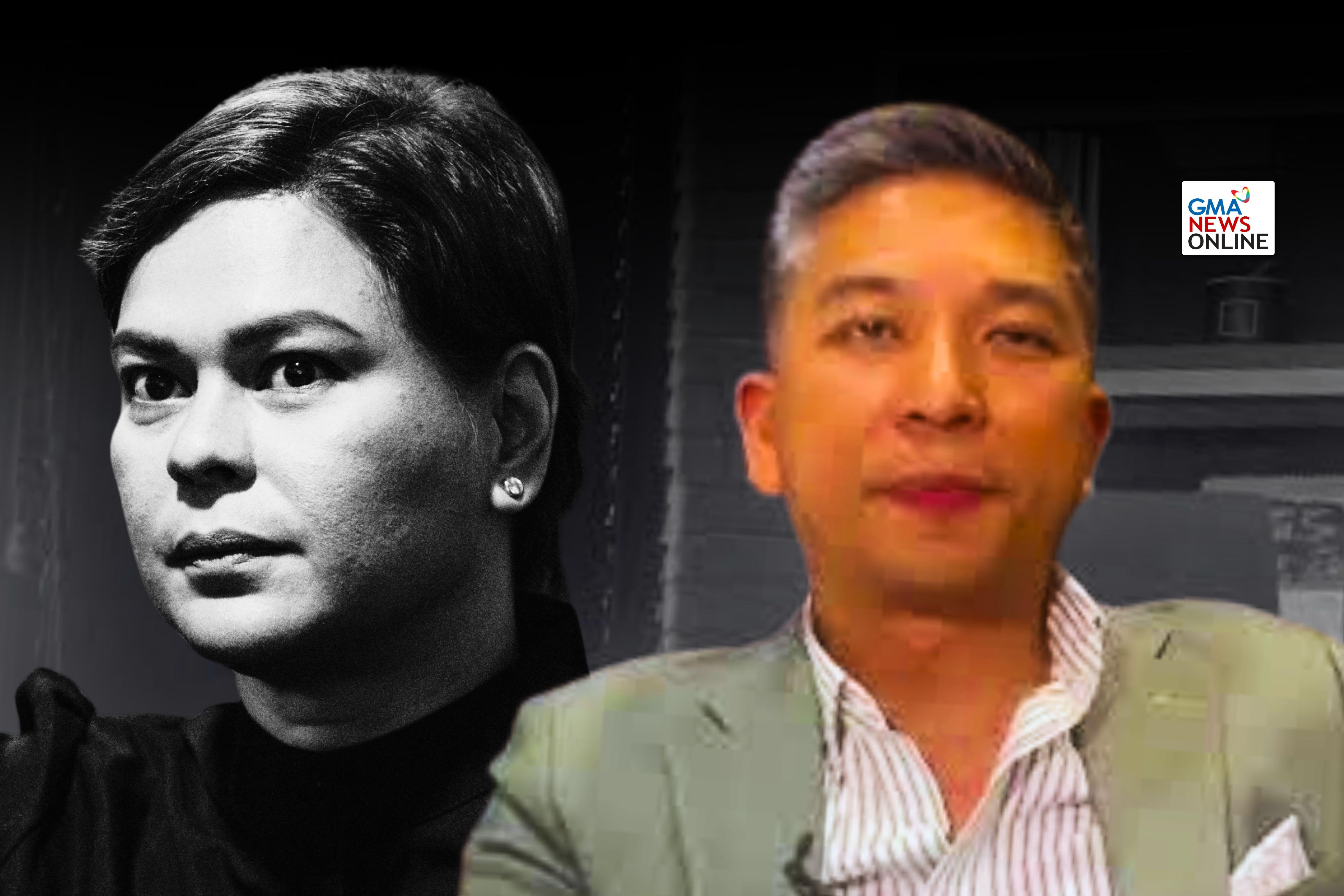
Surveys increasingly show that far-right front-runner Marine Le Pen and far-left candidate Jean-Luc Mélenchon are on track to make the runoff to succeed President Emmanuel Macron next spring. Both are NATO critics and have been accused by their rivals of parroting Kremlin talking points on the war in Ukraine.
Le Pen, who is sparring with Ukraine President Volodymyr Zelenskyy over where a possible meeting could take place, has repeatedly said France’s dire fiscal outlook means it can no longer afford to send financial aid to Kyiv. Mélenchon is opposed to Ukrainian strikes deep into Russian territory. He was also heavily criticized for supporting a referendum in Donbas to allow its people to decide whether they want to be a part of Russia or Ukraine, given that such a vote could not be held freely or fairly in a territory largely under Russian occupation.
“Many are watching the [French] campaign and the candidates’ positions very closely, because the outcome could have a profound impact on the future of our entire alliance and European security,” said Marko Mihkelson, the chairman of the Estonian parliament’s foreign affairs committee, voicing a concern shared across the Baltic and Nordic capitals.
More muted support for Ukraine from Paris would be a significant shift. France — the EU’s only nuclear-armed nation — co-leads the coalition of the willing, which gathered in Berlin on Thursday to discuss European support for Kyiv. U.S. President Donald Trump called into that meeting and sharply questioned their continued spending on military support for Kyiv.
Paris is also a key player in efforts to crack down on Russia’s shadow fleet, which transports oil for sale in contravention of EU sanctions.
In what looks like a move to Le Pen-proof future financial aid to Ukraine, German Chancellor Friedrich Merz is forging ahead with an effort to lock in a durable funding scheme for Ukraine in the EU’s next long-term budget. His proposal would require a qualified majority — rather than unanimity — for such future decisions.
Of the eight lawmakers and diplomats in Europe and Ukraine who spoke to POLITICO for this story — many of them granted anonymity to talk freely about another country’s election campaign — about half shared Mihkelson’s concern that a President Le Pen or President Mélenchon would weaken European resolve to stand up to Russia.
The others believe the two candidates would fall in line with the European consensus toward Kyiv if elected.
Le Pen has sought to reassure Ukraine on the campaign trail, meeting the country’s ambassador to France behind closed doors earlier this week. And Mélenchon says he has the Ukrainian people’s interests at heart.
Zelenskyy is downplaying the risks, too.
“We will work with whoever the French people elect. After all, the European Union is 27 countries, not just one,” he told POLITICO during a meeting with a small group of reporters last week. “We have already seen what election campaigns are like and what happens afterward,” he said.
On military aid to Ukraine, France lags behind countries such as Sweden or Germany. But what Macron brings to the table, three European diplomats said, is strong political leadership. That risks ending under a Le Pen or Mélenchon presidency.
One Ukrainian official said the biggest risks are to French commitments on the coalition of the willing, security guarantees and future EU funding.
“In terms of financial support, [France is] never in the top 10,” the official said. “But in terms of destroying consensus in Europe, that would be a real challenge.”
One NATO diplomat pointed out that another risk would be to European unity on peace negotiations, in which the French play a big role.
“When you talk about European security at the table, France is important — it will be difficult to find a common position,” they said.
Paris has been instrumental in supporting Ukrainian soldiers and planning post-war military deployments as well. The coalition of the willing headquarters has been in France since it was founded last year, though it’s expected to move to the U.K. in the coming months.
“The coalition of the willing, that’s not our thing,” said an official from Le Pen’s National Rally party, who explained that the party’s focus would instead be on France recovering its own individual voice on the global stage.
Macron, sitting between German Chancellor Friedrich Merz and Italian Prime Minister Giorgia Meloni, with world leaders, including Zelenskyy, during a Coalition of the Willing summit n Berlin on Nov. 19, 2026. | Pool photo by Kay Nietfeld via Getty Images After a report by Radio France Internationale this week confirmed that French military personnel were present on Ukrainian soil for training missions, Russian Foreign Minister Sergey Lavrov said that amounted to “direct participation” in the conflict.
French Deputy Defense Minister Alice Rufo pushed back against the accusation. Yet both Mélenchon and National Rally spokesperson Laurent Jacobelli echoed Lavrov’s language, warning against the risks of France becoming a “co-belligerent” in the war.
That split leaves Kyiv with a dilemma: how to engage candidates who may soon be in power, but who openly break with the current government’s line on Ukraine.
Heorhii Tykhyi, a spokesperson for Ukraine’s foreign ministry, said ambassadors are engaging with politicians locally and that all French presidential candidates are welcome to visit the war-torn country and see for themselves.
Oleksandr Merezhko, the head of the Ukrainian parliament’s foreign relations committee and a member of Zelenskyy’s party, said the outreach strategy could also include “informal meetings to test the waters.”
In recent years, Le Pen has tried to shed her party’s pro-Russia image, partly rooted in a 2014 loan from a Russia-linked bank and a 2017 meeting between Le Pen and Russian President Vladimir Putin.
Mélenchon’s past comments on Russia, including partly blaming Russia’s annexation of Crimea in 2014 on NATO’s eastward expansion, have raised questions about his commitment to Kyiv.
Both the National Rally’s and France Unbowed party’s votes in the European Parliament point to a more limited level of support for Ukraine than many of their adversaries.
Le Pen and Mélenchon’s opponents have sharpened their critiques of the pair’s respective Ukraine policies this week. French center-right presidential hopeful Edouard Philippe, who is slipping behind Mélenchon in the polls, accused his opponents of harboring an “unhealthy fascination” with Putin. France’s foreign affairs minister, Jean-Noël Barrot, said the duo was relaying “Russian propaganda.”
But the two candidates are pushing back against allegations that they are mirroring Kremlin talking points and trying to smooth over divisions with Kyiv.
Le Pen and Zelenskyy have traded invitations to meet, and while Kyiv initially slammed Mélenchon’s comments on a Donbas referendum, Ukrainian officials reacted positively to his bid to clarify his statements.
“We also saw a very balanced and calibrated reaction … on the side of Mr. Mélenchon and his team,” said Tykhyi, the Ukrainian foreign ministry spokesperson. He also appeared to endorse Mélenchon’s argument that French media had misrepresented his remarks.
“Our only request is not to politicize the issue of supporting Ukraine,” Tykhyi said.
Not everyone is that optimistic, however. A former French official who now works for the EU said that the Ukrainians were using a “wishful thinking” approach, as they did before U.S. President Donald Trump took office for his second term.
“There’s a segment of the diplomatic community that still believes it won’t be all that drastic” because Le Pen would soften her stance on Ukraine once in power, as Italian Prime Minister Giorgia Meloni did, said a Western European diplomat.
The diplomat hinted the National Rally could push to ease sanctions on Moscow, which EU countries must regularly renew unanimously, meaning a single French veto could unravel them. With energy prices skyrocketing due to the U.S.-Israeli war against Iran, bringing back Russian oil and gas may start to look attractive.
“It’s not hard to see where you’ll go for cheap gas,” the diplomat said.
Veronika Melkozerova reported from Kyiv. Victor Jack reported from Brussels.