Ukraine: Russian attacks leave tens of thousands without power
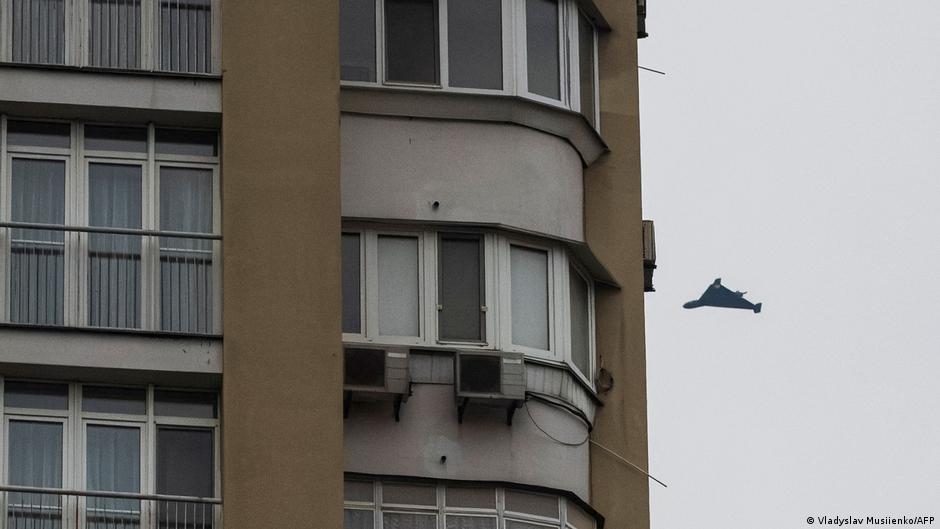
Hundreds of thousands of households lost electricity after overnight Russian strikes hit energy infrastructure in four Ukrainian regions, President Volodymyr Zelenskyy has said.
In a post on X, the Ukrainian president said energy infrastructure in four regions — Dnipro, Vinnytsia, Zhytomyr, and Khmelnytskyi — had been struck.
"Substations, transformers, and power lines that supply electricity to our people's homes were targeted. Repair crews are working everywhere. As of now, hundreds of thousands of families remain without power," Zelenskyy said Sunday.
He added that "massive Russian attacks on Ukraine's other critical infrastructure are also continuing unabated."
"The intensity of the strikes is very high," he said, accusing Russia of seeking to exploit Ukraine's shortage of interceptors used to shoot down ballistic missiles.
Zelenskyy repeated his call to the US, Europe and Ukraine's other partners to do more to deliver missiles and other weaponry to better defend against the Russian attacks.
"These deliveries cannot take years. Russia is destroying infrastructure and killing our people right now, and it is betting on ballistic missiles this winter. Accordingly, decisions on air defense must also be implemented now," the Ukrainian president said.
Russia wants the opening rounds of renewed peace negotiations to involve only Moscow, Kyiv and Washington, Kremlin aide Yuri Ushakov said.
Asked whether European countries should participate, Ushakov pointed to Russia's existing contacts with the United States.
"We have working contacts with the Americans," Interfax quoted him as saying. It was therefore "logical" for at least the first rounds to take place in a trilateral format, he added.
A drone attack caused "significant damage" to an industrial facility east of Moscow, a Russian governor said, following Ukrainian reports of a strike on a major oil refinery.
Nizhny Novgorod Governor Gleb Nikitin reported a "massive drone attack" overnight, saying more than 100 drones were destroyed. Preliminary information indicated no casualties, he added.
Nikitin did not identify the damaged facility. Ukrainian media reported that the target was the Kstovo oil refinery, describing it as one of Russia's largest.
The reports could not be independently verified.
Authorities said they were taking steps to keep fuel available at gas stations.
Russia said Ukraine had resumed attacks on its refineries after a pause. US President Donald Trump had pressured Kyiv to stop such strikes, blaming them for rising diesel prices.
Ukraine has repeatedly targeted Russian oil and gas facilities in response to Russian attacks on its energy infrastructure.
Welcome back to our coverage. Follow the latest developments throughout the day.
Thank you for joining today. We'll be back with the latest developments on Sunday.
Ukraine spent months demanding that Russia allow people to evacuate out of Oleshky in southern Ukraine, after food delivery supplies stopped earlier this year.
Hundreds of people made their way out on Saturday.
At a news conference after the G20 foreign ministers' meeting in Atlanta, DW correspondent Benjamin Alvarez Gruber asked German Foreign Minister Johann Wadephul whether Sergey Lavrov's presence and the possibility of Russian President Vladimir Putin attending the G20 summit in Doral, Florida, in December signaled a normalization of relations with Russia.
Wadephul said the US and European countries were "on the same side."
"Speaking to the Russian Foreign Minister is not a concession we're making to Russia, but it is normal to speak," he said, adding that foreign ministers must be prepared to engage even with adversaries.
"You don't have to negotiate with partners, but you have to negotiate with somebody who has a different position and who's somehow also an adversary to freedom and to security in Europe. So it is necessary that we speak, and for that reason I think it was useful," Wadephul added.
The G20 foreign ministers skipped their traditional family photo at a meeting in Atlanta on Friday, amid objections from several European countries, Australia and Canada to appearing alongside Russian Foreign Minister Sergey Lavrov.
Wadephul said: "We are not in a position that it was necessary or useful or a good idea to have a family photo because in the very situation we are in, Russia does not really show an interest to share our values and to share our interests."
The US State Department removed the photo from the agenda to prevent it from becoming a distraction or a spectacle.
Ukrainian President Volodymyr Zelenskyy has arrived in Istanbul for talks with Turkish President Recep Tayyip Erdogan, with Black Sea shipping among the issues on the agenda.
"We're working to strengthen the protection of our people, our bilateral partnership with Türkiye, and real diplomatic prospects," Zelenskyy wrote on X, using the alternative spelling for Turkey.
The Ukrainian president also plans to meet Ecumenical Patriarch Bartholomew, the Istanbul-based Orthodox Christian leader.
The US embassy in Russia warned there was "a credible threat of a mass casualty event" at a historical site in southern Moscow.
"The US government is coordinating with appropriate Russian authorities on a response," the US embassy in Moscow said in a post on X.
The alleged plot would target the Tsaritsyno Museum Reserve, a sprawling complex of palaces and gardens built under the orders of Empress Catherine the Great in the late 18th century.
Russia's federal law enforcement agency, the FSB, said it received the warning and was doing "appropriate work" in response to it, according to Russian news agencies.
Ukraine's military said it struck a factory producing solid rocket fuel in Russia's Rostov region, setting a warehouse ablaze and damaging four production workshops.
The attack on the Kamensky plant in Kamensk-Shakhtinsky involved drones and Neptune missiles, according to the Ukrainian account.
The military said the plant supplies fuel for ammunition used by Russia's Uragan, Smerch and Tornado-S multiple-launch rocket systems, as well as other missiles and air-launched weapons.
Ukraine also reported strikes on four Russian military supply depots in occupied parts of the Donetsk, Zaporizhzhia and Luhansk regions.
The claims have not been independently verified.
The first evacuees from Russian-occupied Oleshky have reached Ukrainian-controlled territory amid a localized ceasefire.
Oleshky, near the front line in the southern Kherson region, has been occupied by Russia since 2022. In recent weeks, the town has faced a severe humanitarian crisis.
Both sides have recently agreed to a localized ceasefire to extract the estimated 2,000 civilians still in Oleshky, down from its pre-invasion population of 24,000.
Moscow and Kyiv credited the US first lady, Melania Trump, with brokering the truce.
Residents were given a choice to go to Russia or travel via Belarus to the part of Ukraine controlled by Kyiv.
Ukraine's human rights ombudsman Dmytro Lubinets said the initiative required "an enormous amount of work."
He said evacuees included a 1-year-old baby and a 94-year-old resident of Oleshky. The evacuees brought pets, including dogs, cats, a parrot and a raccoon, according to Lubinets.
He expressed hope that the Oleshky arrangement can be replicated elsewhere.
The truce started on Tuesday and is due to end on Sunday night.
Welcome to DW's coverage of the latest developments in the Russian war on Ukraine.
You join us as Ukraine welcomes evacuees from Oleshky, a town in the Kherson region that has been occupied by Russia since 2022.
Meanwhile, Kyiv claimed it hit the Kamensky plant in the Rostov region deep inside Russia. The factory produces solid fuel for rockets and missiles.
Stay tuned for the latest news and analysis from the ongoing war.