
UNDAS 2026: When no one bids the dead goodbye - GMA Network
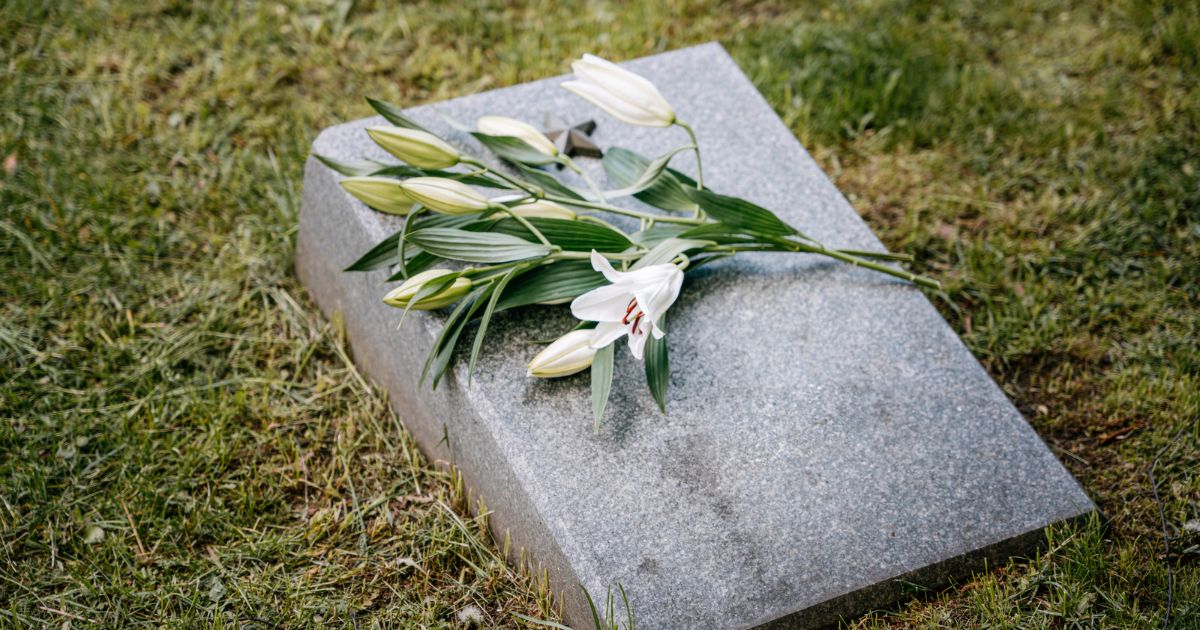
The smell hit Rhiannah Sta. Ana before she ever laid eyes on the cadavers.
A first year physical therapy student at a Metro Manila university, Sta. Ana likened the pungent odor to the strong smell of hair dye at a salon.
These bodies have been preserved with a chemical called formalin, Sta. Ana explained. While their facilitators told them what to expect, nothing could quite prepare the students once the covers were removed and the cadavers were revealed for the first time.
Many were taken aback. After all, the bodies before them used to be living people, Sta. Ana said. Yet to the students, they were strangers, their identities lost to time. She found herself wondering: Who were they when they were alive? Where did they live? What were their names?
Historically, cultures all around the world have different ceremonies to commemorate their dead. These days, people typically bury their loved ones or cremate them, giving them the final respects.
But what happens when someone dies, and there is no one left to claim their body, let alone bid them goodbye?
Presidential Decree No. 856, or the Code of Sanitation of the Philippines, outlines several rules on the proper handling of human remains, including the provision allowing the use of unclaimed bodies for research.
“Unclaimed remains may be used by medical schools and scientific institutions for studies and research subject to the rules and regulations prescribed by the Department,” the decree read.
The Department of Health would later update and elaborate the presidential decree through Administrative Order 2010 - 0033, or the “Revised Implementing Rules and Regulations of the Code on Sanitation of the Philippines Chapter XXI Disposal of Dead Persons."
Under the rules, funeral parlors or embalming establishments are not allowed to hold unclaimed bodies for more than 60 days.
While some might find the thought unpleasant, there have been many instances of bodies seemingly being abandoned by their relatives and friends. In 2022, the bodies of 176 of Bilibid inmates were unclaimed at the Eastern Funeral Homes — many of them had to be buried because they were already rotting.
Based on the data provided by the Bureau of Corrections (BuCor), there are 1,144 unclaimed bodies from 2020-2025 in the New Bilibid Prison.
Correctional Technical / Corrections Chief Superintendent (CT/CSUPT) Ma. Cecilia Villanueva, BuCor Deputy Director General for Reformation, explained that families are unable to claim the deceased persons deprived of liberty (PDL) because their homes are far.
"Usually yung mga tawid-dagat, yung malalayo, Visayas, Mindanao, but we send letters," Villanueva told GMA News Online.
(Those people cross the seas; they are from Visayas and Mindanao, but we send letters.)
Once a PDL is declared dead, the body is brought to Eastern Funeral Home in Muntinlupa City for documentation, while the Bureau of Corrections contacts the deceased’s family.
However, in some cases, family members cannot be contacted, or no one claims the bodies due to financial constraints, while others just retrieve the death certificates.
Unclaimed bodies are then buried in the New Bilibid Prison Cemetery, also in Muntinlupa City.
“Kasi kahit sabihin naman natin na mga PDL, they have the same rights as any public person,” Villanueva said.
“Meron din silang dignidad kahit pa naman sabihin natin na mga PDL ’yan. May dignity pa rin in their death," she added.
(Even though they are PDLs, they have the same rights as any public person. They still have dignity, even in death.)
BuCor data showed the highest number of unclaimed bodies in 2021 (285 cadavers) and 2020 (258 cadavers), the years when the COVID-19 pandemic disrupted operations worldwide.
“Yung period namin for [claiming the deceased persons] lumampas nga sa 60 days. Kasi nga, may mga limitations sa movement,” Villanueva said.
(Our period for claiming the deceased exceeded 60 days due to restrictions on movement.)
“Kahit nga yung cremated, yung iba hindi na nila claim yung remains ng relatives nila,” Villanueva said, adding that PDLs who died from the coronavirus were immediately cremated.
(Even those that were cremated, some relatives were unable to claim them.)
According to the BuCor data, 89 cremated bodies were claimed while 23 were unclaimed.
Quezon City’s Burial Assistance Program serves indigent residents by providing free burial services. Vivs Funeral Homes is one of the funeral parlors accredited by the local government in the project.
Vivs Funeral Homes Operations Manager Larry Leccio said that although rare, there have been instances when they had to bury an unclaimed body.
There are various reasons why bodies go unclaimed, Leccio explained. In some cases, they belong to impoverished people who die on the streets and are brought to hospitals.
“Itong isang patay ay dinala ng pamilya niya sa ospital doon sa East Avenue. Tapos, hindi na binalikan. Tapos hindi na mahanap yung pamilya,” Leccio said.
(One of the dead was brought by the family to the hospital there in East Avenue. After that, they did not come back. And the family could no longer be found.)
The process typically began at the hospital, according to Leccio. The hospital then alerts the barangay, which makes a report. Details about the found body are then circulated in newspapers for 30 days in hopes of finding a claimant. During those 30 days, the body remains at the morgue of the funeral home.
However, once the body hits the 60-day mark, the local government needs to act on the matter.
Since the Quezon City local government has a free funeral service program, a barangay representative will be interviewed by the city’s Social Services Development Department on behalf of the unclaimed body.
Once local government officials handle all the necessary documentation, the funeral parlor can process the death certificate.
In case that no one knows the body’s name, the cadavers are simply issued a case number and labeled as “unknown” before being buried in a public cemetery. Their tombstones would also be labeled as such, Leccio said.
There would be no ceremonies for the body.
“Direct na libing na po siya. Wala na po siyang pamisa,” Leccio said. (It is a direct burial. There will be no masses.)
Despite the initial shock of seeing the cadavers before them, Sta. Ana said that the students would eventually get used to them because of how invaluable they were as learning instruments — they could even freely go in and out of the laboratory where the cadavers were just to study them.
As the semester went on, the students got used to dealing with the cadavers. So much so that they almost forget that bodies used to be people.
“We still have to remember to be respectful to it, kasi nga, habang na nasasanay ka sa nakikita mo sa harapan mo, nakakalimutan mo na this was a person, this is a person we're dealing with, kahit hindi na siya nagsasalita,” Sta. Ana said.
(We still have to remember to be respectful to it, because while you get used to seeing it in front of you, you forget that this was a person, this is a person we’re dealing with, even if they no longer speak.)
As a result, the students would always begin their sessions with the bodies with a prayer, offering them gratitude.
They had also given the anonymous bodies names, and spoke to them as if they were still alive.
“Mami” was the name of the cadaver assigned to Sta. Ana and her group. She still has a personal bracelet on her wrist, which the students kept on.
Whenever an incision needed to be made, or if skin needed to be pulled back, the students would inform the cadaver that it could hurt and apologize to them.
“We talk to them as if they are still alive, so even if we know that they are physically not with us, we still find a way to talk to them and say ‘thank you’, and say ‘sorry’... it helps us humanize the experience,” Sta. Ana said.
While they knew nothing of the stories of the bodies before them, sometimes, the bodies themselves offered signs of how they died. Both the teachers and students could make their own inferences on how the cadavers wound up dead. Sta. Anna recounted that one of the first bodies she saw had red marks around the neck.
Regardless of how the bodies ended up before the students, one thing was certain: they were invaluable teachers. As physical therapy students, they had to become familiar with human anatomy. And these bodies could teach them things that no book ever could, Sta. Ana said.
They would often go around looking at different types of bodies just to learn more, she added.
Sta. Ana hopes of becoming a doctor one day, a path that would likely introduce her to even more cadavers.
“We recognize that we’re learning so much through their bodies and we understand that they make significant contributions to our education as physical therapists,” Sta. Ana said.
While the bodies that reached Sta. Ana and her classmates were anonymous, it was unlikely that they were prisoners.
Villanueva said the agency has not been providing cadavers to be dissected in medical schools after they were flagged by human rights groups.
“I started in 1998. Parang around that time na pinagbawal ng human rights yung paggamit ng body para sa mga medical schools,” Villanueva shared.
(I started in 1998. Around that time, it was around that time, I think, that the use of bodies for medical school purposes was prohibited after being flagged by human rights groups.)
“Marami naman kaming letter requests from medical schools na hindi namin na-approve,” she added.
Currently, BuCor is looking into building more buildings across the country to decongest existing detention facilities and bring PDLs closer to their families.
“More regional prison facilities [kasi] dapat yung nandito, yung taga-NCR, yung malapit. Eh hindi eh. Marami dito na taga-tawid-dagat pa rin,” Villanueva said.
(BuCor is working on regional prison facilities because PDLs from NCR should be detained here, but that’s not the case. Many PDLs here are from far away areas.)
We are all made according to God’s likeness, according to Father John Paulo Bautista of the Mary Immaculate Parish in Dasmariñas City.
“The Church teaches very clearly that everybody, every Christian, Catholics or not, every human person, whether it is unclaimed or claimed bodies, we bear the image of God,” Bautista said in an interview.
However, this does not mean that priests could simply bless abandoned bodies, as they may not be certain if the corpses were Catholic when they were still alive, Bautista explained. Priests would need the permission of the deceased’s kin to bless the body.
Bautista recounted a time when he saw a motorcycle rider who died in a road crash incident. While he was initially inclined to give the body blessing, he had to stop and think. Would it have been an act of charity? Would he have to wait for the family?
Priests were not strictly prohibited from blessing a body that they were unsure of being Catholic however, Bautista explained. But it was still discouraged.
In cases where the body is used as a learning instrument — as was the case with the physical therapy students — Bautista maintained that it should be done morally.
“It should be done in a right way, legal way, in a moral way, at the same time, with a reverence to the body,” Bautista said.
“The human body is sacred,” he added.
There are a few ways to honor the unclaimed dead, according to Bautista. For Catholics, they could offer a Mass, prayer, or even the act of remembrance.
But what if there was no one left to remember the dead? Bautista said that Catholics could offer a prayer for a soul in purgatory.
“The Church is praying for them, in Masses, they are remembered… If you will pray for them, generally, we could say prayers for the souls in purgatory, and for those who have not attained a peaceful, holy, or blessed death,” Bautista said. —With GMA News Research/Joviland Rita/ LDF, GMA News
