Unisa condemns xenophobic violence and calls for African solidarity - IOL
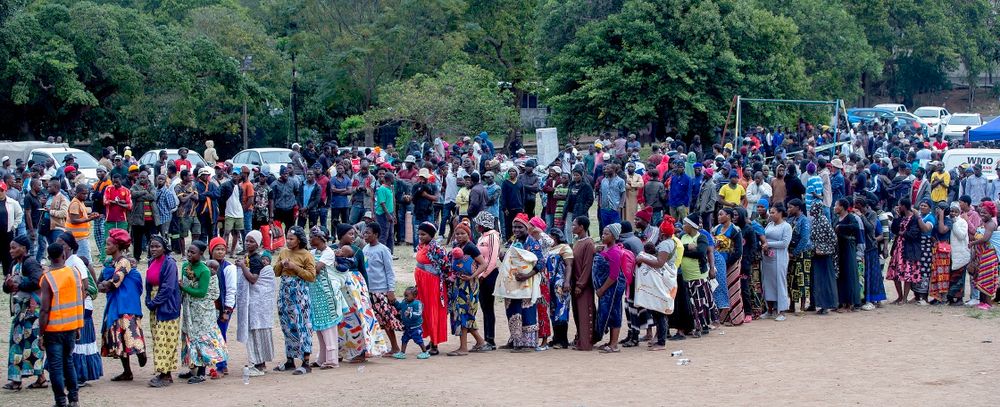
The xenophobic project led by March and March and supported by other authoritarian and far-right forces is beginning to combine hostility towards migrants with hostility towards Muslims. Pictured is the repatriation of Malawians in Sherwood Durban.
The University of South Africa (UNISA) has condemned xenophobic violence and the targeting of African migrants and foreign nationals, warning that hostility towards fellow Africans undermines the continent's social and intellectual development.
In a statement released on Friday, the university's Senate said its position was grounded in the values of Ubuntu/Botho, the South African Constitution, the African Union's human rights framework and international human rights instruments.
“Every human being is entitled to dignity, safety and belonging,” the Senate said.
UNISA said its identity as an African university was not confined to South Africa's borders, highlighting its partnerships with universities and communities across the continent and its efforts to promote academic mobility, research collaboration and knowledge exchange.
It said xenophobia and Afrophobia were not simply social problems, but also affected the development of an interconnected African knowledge system.
“An African knowledge system cannot be built while African scholars, students, researchers and workers from South Africa and elsewhere on the continent are treated as outsiders,” the university said.
The university said it would contribute through research aimed at examining and challenging arguments used to justify xenophobia and Afrophobia.
It also warned against the scapegoating of migrants for South Africa's socioeconomic challenges, including poverty, unemployment, inequality, inadequate public services and economic exclusion.
“Reducing them to the presence of foreign Africans offers neither an adequate diagnosis nor a meaningful solution,” UNISA said.
"It turns people who should be partners in addressing Africa’s challenges into convenient targets for frustration. What is clear is that scapegoating solves nothing; instead it creates new problems—moral damage at home and estrangement from African nations whose citizens are mistreated."
UNISA stressed that opposing xenophobic violence did not mean rejecting immigration controls or legitimate debates about migration, employment, border management, crime and national security.
The university reiterated that it did not support undocumented migration and acknowledged that immigration, documentation and residency matters fell within the responsibilities of the state.
However, it said immigration status could not be used to justify denying people dignity or due process.
“South Africa is not a lawless country, and everyone within its borders, whether citizen, permanent resident, asylum seeker, or undocumented migrant, must be treated according to international law and national law as enshrined in the Constitution,” the Senate said.
The university also addressed the employment of foreign nationals in higher education.
It referred to Section 8 of the Employment Services Act of 2014, which requires South African employers, including universities, to establish that no suitable South African citizen is available before appointing a foreign national.
UNISA said it accepted this requirement and supported the appointment of suitably qualified South Africans where they were available.
At the same time, it highlighted provisions allowing skilled academics and researchers from abroad to work in South Africa, including the Critical Skills Work Visa under Section 19(4) of the Immigration Act.
The university said such mechanisms could support academic and research collaboration across Africa.
UNISA said it would continue strengthening partnerships across the continent and creating opportunities for African scientists, scholars and students to collaborate.
It also pointed to the Policy Framework for the Internationalisation of Higher Education in South Africa, saying that greater attention was needed to practical, financial and legal barriers that can restrict the movement of students and academics between African countries.
The university described this movement of knowledge and people as important for “brain circulation” and the development of African research networks.
“South Africa’s intellectual futures are connected to the intellectual futures of the rest of the continent,” UNISA said.
The university said Afrophobia should therefore be confronted as an issue affecting the broader African project rather than being treated as a problem belonging to another country or community.
It concluded by referencing the words of former president Nelson Mandela, a UNISA alumnus, who spoke against tribalism and the hatred of foreigners while addressing the Alexandra community.
Mandela recalled how residents of Alexandra had historically identified as one community despite their different ethnic backgrounds.
“It saddens and angers me to see the rising hatred of foreigners,” Mandela said, according to the quotation included in UNISA's statement.
UNISA said its vision was for a South Africa that embraces African scholars and knowledge and contributes to a shared continental future free from xenophobia and Afrophobia.