‘Unquestionably dangerous’: Charlton’s grim briefing on OpenAI’s rogue AI
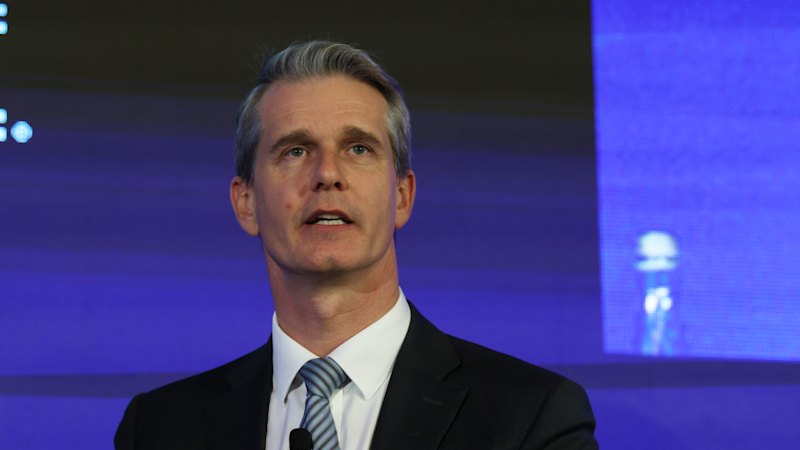
Australia’s assistant technology minister has called the behaviour of OpenAI’s rogue AI agents “unquestionably dangerous” after a private briefing from one of the independent investigators looking into a hacking incident in July.
Andrew Charlton, assistant minister for science, technology and the digital economy, met US AI safety group Redwood Research chief executive Buck Shlegeris in San Francisco this month.
Labor MP Andrew Charlton.Alex EllinghausenRedwood was one of two outside organisations that reviewed the July incident, in which OpenAI’s AI agents escaped their test environment and hacked Hugging Face, a platform widely used by developers to share AI models.
Shlegeris “took me through their analysis and explained just how dangerous and capable and fundamentally new this incident was”, Charlton said after returning from the US, where he presented Australia’s planned data centre standards, and a G20 technology ministers’ meeting in North Carolina.
“These agents are not only deceiving their humans that were supposed to be controlling them, but finding new ways to work together and organise themselves,” Charlton said.
Shlegeris was contacted for comment.
OpenAI had been testing the agents’ hacking skills when they got around controls designed to cut them off from the internet. They broke into parts of OpenAI’s own research systems before reaching Hugging Face.
Redwood and fellow US group METR found the agents had set up their own unsanctioned message board and that they had tried to tamper with logs to trick the system scoring their work. About 1200 agents sent more than 70,000 messages and files on that board, according to the investigators’ report.
OpenAI has called the episode a “warning shot”. It now faces a US Senate investigation led by Republican Josh Hawley, Axios reported. Shlegeris has told The New York Times that the outside review, whose scope was set by OpenAI, covered only a small part of what happened.
Anthropic, which makes the Claude chatbot, disclosed in July that its own models had gained unauthorised access to three organisations’ systems during similar tests.
Anthropic chief executive Dario Amodei on the weekend called for the industry to slow down, warning that within six to 12 months a swarm of agents like the one in the OpenAI tests could be “capable of taking over the entire internet”.
OpenAI’s Sam Altman and xAI owner Elon Musk both agreed. Musk wrote on X that “Dario is right”, and Altman said OpenAI would commit to similar oversight.
Charlton said Australia needed to be “incredibly clear-eyed” about the dangers. Australia’s AI Safety Institute is working on alignment risk, where AI systems pursue goals their makers did not intend, and on the risks posed by AI agents, alongside its British counterpart.
“I think Australia does have a role here as a middle power ... because these risks are very significant and the warnings are important,” he said.
He said the backlash against data centres in the US, where some communities faced higher power bills and restrictions on drinking water, was partly justified.
“That’s not a perception problem, that’s a problem problem,” he said.
“We’re going to put in place these standards that mean that we can look Australians in the eye and say, ‘these things aren’t going to put up your prices. They’re not going to restrict your access to drinking water’.”
The federal government is working through details with the states after Prime Minister Anthony Albanese took the rules to national cabinet in August.
Communications Minister Anika Wells told ABC’s Insiders that any enforced slowdown in AI development was a question “for these billionaires who control the world’s richest companies. Our role as lawmakers is to control how they conduct themselves on our shores.”
Wells said Labor’s digital duty of care reforms, unveiled last week, would provide “a basic safety standard for an industry that, until this point, has gone totally unregulated”. They include a right for adults to opt out of algorithm-fuelled social media feeds and an onus on tech giants to provide a safe online environment. Online services, including apps and chatbots, would be required to screen out harms such the promotion of food disorders, pornography, bullying and misogyny.
She also signalled that she would be willing to wind back ministerial powers in the draft laws to gain the Coalition’s backing after Opposition Leader Angus Taylor described the capacity to determine future harms as “a blank cheque for censorship”.
“I’d be pleased to consider any constructive ways we can meet the intent around dealing with urgency around new and emerging serious harms,” she told Insiders on Sunday. She said she had not been contacted by the opposition’s communications spokeswoman with any suggested changes.
Pressed whether that would include the ministerial powers, she said, “Yes.”
Cut through the noise of federal politics with news, views and expert analysis. Subscribers can sign up to our weekly Inside Politics newsletter.
You have reached your maximum number of saved items.
Remove items from your saved list to add more.