UPI above Rs 2,000: Who will bear the cost?
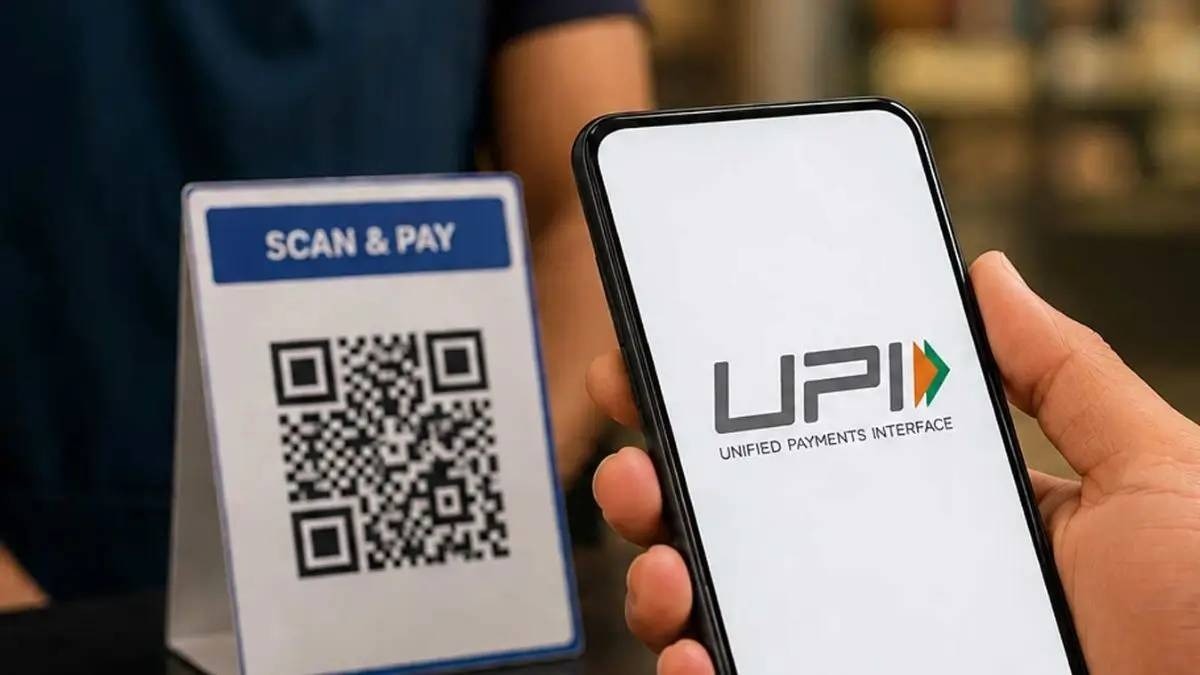
A Rs 2,000 UPI payment is now at the centre of a larger debate over who should pay for India's fast-growing digital payments ecosystem. The government has protected UPI transactions up to that amount from direct and indirect charges, but has left the door open for a different treatment of higher-value payments.
The notification issued on September 14 says banks and system providers cannot impose any direct or indirect charge on payments made or received through UPI transactions up to Rs 2,000. The provision also covers transactions made through RuPay-powered debit cards.
There is, however, no new charge on UPI payments above Rs 2,000.
That distinction matters. The notification does not prescribe a merchant discount rate, or MDR, for higher-value UPI transactions. Instead, it comes at a time when the government and the payments industry are looking at ways to make the UPI ecosystem financially sustainable as transaction volumes and values continue to rise.
The immediate takeaway for consumers is simple: nothing changes when they scan a QR code and make a UPI payment today.
The bigger question is whether they could eventually end up paying indirectly.
The government has maintained that consumers should not be charged for using UPI. Its August clarification said person-to-person transactions would remain free and indicated that any future MDR would be limited to certain merchant transactions above a threshold, while the vast majority of transactions would continue to remain free.
MDR, if introduced, would initially be a cost on merchants accepting payments. A customer making a UPI payment would not automatically see that fee deducted from their bank account.
A merchant could absorb the additional expense, negotiate it with its payment service provider or factor it into the price of goods and services. A separate surcharge specifically for paying through UPI would be a different matter and has not been introduced by the latest notification.
That makes the debate less about whether consumers will suddenly see a “UPI fee” on their screens and more about whether the cost of accepting digital payments eventually gets reflected in what they buy.
The issue has become more pressing as UPI has grown into India's dominant digital payment system. What began largely as a convenient way to make small payments now handles everything from a cup of tea to high-value purchases and business transactions.
That growth has created an interesting divide. Small-value payments account for a large part of UPI's transaction volume, while higher-value transactions represent a much larger proportion of the total value moving through the system.
That is one reason transactions above Rs 2,000 have emerged as a potential area for a future revenue model.
The thinking under discussion has not been to make UPI a paid service for everyone. Instead, a nominal MDR could potentially be applied to a limited category of high-value merchant transactions, allowing the ecosystem to generate revenue while keeping everyday payments free.
Several possible rates and thresholds have been discussed in recent months, but none of those proposals should be mistaken for a final framework.
The question of who pays for UPI has been building alongside the system's spectacular growth.
Banks, payment companies and other participants bear the cost of processing and settling transactions. The government has also supported the ecosystem through incentives aimed at encouraging banks and payment providers to expand digital payments.
That model becomes more difficult to sustain as transaction volumes grow into billions every month.
The RBI has also acknowledged the underlying problem: digital payments infrastructure is not costless, and somebody ultimately has to bear that cost.
The policy challenge is to find that “somebody” without weakening one of UPI's biggest advantages: its simplicity and low cost for consumers.
A merchant-based charge would keep the payment experience largely unchanged for users. But its effect could vary across businesses.
A large retailer may be able to absorb a small processing cost across its operations. A smaller merchant operating on thin margins may have less room to do so. The final impact would depend on the rate, the transactions covered and how businesses respond.
There is also the question of pricing.
If merchants choose to pass on the cost, consumers may not necessarily see it as a payment charge. It could simply become part of the price of a product or service. That would make the impact much harder to identify.
A customer paying Rs 3,000 through UPI, for instance, could still complete the transaction without a separate fee appearing on the payment screen. But if the merchant has adjusted prices to account for payment costs, the consumer could eventually bear part of that expense.
That possibility is not the same as the government imposing a UPI charge on consumers. It would be an indirect consequence of how merchants respond to a new cost.
The Rs 2,000 threshold therefore marks an important policy boundary.
Below it, the government has explicitly barred banks and system providers from imposing charges. Above it, the notification does not impose a fee but does leave higher-value transactions outside that particular statutory protection.
That gives policymakers room to consider a different model for high-value merchant payments without immediately affecting the small transactions that have driven UPI's mass adoption.
The distinction will matter particularly at a time when UPI is being used for increasingly expensive purchases. A system built around free transactions has to find a way to pay for its own infrastructure as it scales, but any attempt to introduce charges also risks changing user and merchant behaviour.
The government is therefore walking a narrow line: preserve the perception of UPI as a free public digital utility while finding a sustainable way to fund the ecosystem behind it.
Nothing in the latest notification changes the experience of a consumer making a routine UPI payment. There is no new fee for paying Rs 500, Rs 1,000 or Rs 2,000.
The uncertainty begins beyond that point, particularly for merchant transactions.
If an MDR framework eventually arrives, the first impact is likely to be on businesses accepting payments. Whether consumers feel it later will depend on what those businesses do with the additional cost.
That is where the Rs 2,000 line could become more significant than it appears today. The issue is no longer simply whether UPI itself will remain free. It is whether keeping the payment free at the point of transaction could eventually carry a cost somewhere else in the chain.- EndsPublished By: Sonu VivekPublished On: Sep 15, 2026 13:09 IST