UPI industry bleeding money, cannot depend on govt subsidies: PhonePe CEO
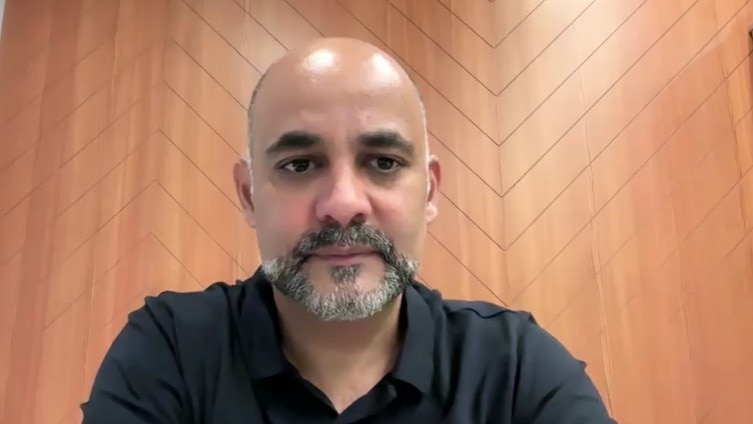
The UPI payments industry is “bleeding money” and cannot continue to depend on government subsidies, PhonePe CEO Sameer Nigam said, defending the government’s decision to introduce a Merchant Discount Rate (MDR) on select UPI transactions.
Speaking to India Today, Nigam said the industry, comprising banks and fintech companies, spends around Rs 10,000-12,000 crore a year at current UPI volumes, while the government’s subsidy payments have not been sufficient to cover its costs.
“We don't want subsidies from the government,” Nigam said, arguing that payment companies are for-profit businesses that raise equity and debt and should be able to sustain themselves through their operations.‘WE ARE ALL BLEEDING MONEY’
Nigam said the introduction of MDR marks a shift towards a revenue model for UPI, which has remained free for merchants for several years. He recalled that UPI initially had an MDR of 0.65% before the government made it free during the Covid period in 2020. According to Nigam, UPI was growing rapidly even when MDR was applicable, challenging the assumption that zero MDR was necessary for digital payments to expand.
He said the industry now needs a sustainable model as the cost of operating the UPI ecosystem has grown substantially.
“At today's volumes, paying Rs 2,000 crore in subsidy doesn't cut it. We are all bleeding money,” Nigam said.
Under the new framework, a 0.4% MDR will apply to specified person-to-merchant UPI transactions above Rs 2,000. Nigam said around 95-96% of P2M transactions are below Rs 2,000, meaning most everyday UPI payments will not be affected.
He cited daily expenses such as groceries, autorickshaw fares and public transport as examples of transactions that generally fall below the threshold.
However, Nigam acknowledged that transactions above Rs 2,000 account for a much larger share of the total value of UPI payments. He said these transactions constitute around 4% by volume but about 66% of the total UPI value.‘MERCHANTS CANNOT PASS MDR TO CUSTOMERS’
Responding to concerns that merchants could eventually pass the MDR burden on to consumers, Nigam said charging customers a surcharge specifically for UPI payments is illegal under the relevant notification and NPCI circular.
He said the responsibility of ensuring that merchants do not transfer the cost to customers rests with acquiring banks and payment aggregators.
Nigam also argued that the possibility of indirect cost transfer is limited because several categories with thin margins have been given specific caps.
Bill payments, insurance and petrol payments, for instance, have a Rs 5 cap, while stockbroking has an MDR of 0.02%, according to Nigam. He said categories such as retail, clothing, dining, travel and entertainment have comparatively higher margins and already compete with card and wallet payments where MDRs are higher.PHONEPE CEO REJECTS SUBSIDY-DEPENDENT MODEL
Nigam also pushed back against the argument that MDR effectively amounts to another form of government revenue collection.
He said the government has effectively been subsidising the payments industry for the last five years because merchants were not bearing MDR.
“We don't want to be beholden to government subsidies,” Nigam said, adding that the industry would rather operate as a commercial business and earn revenue through its payment operations. He said that with UPI volumes at their current levels, the gap between the industry's costs and government incentives has become difficult to sustain.
Nigam also compared the new UPI MDR with charges on other payment networks. He said merchants accepting credit cards, RuPay cards and wallets already pay interchange rates that can be significantly higher, while debit cards have an interchange rate of around 0.65%.
At 0.4%, he described UPI's proposed MDR as the lowest among payment networks globally.NIGAM RESPONDS TO TAX COLLECTION CRITICISM
Nigam was also asked about criticism from former BharatPe co-founder Ashneer Grover and others who have argued that imposing charges on UPI transactions effectively amounts to tax collection and questioned the Rs 2,000 threshold.
Responding to the criticism, Nigam said the argument overlooks the fact that the government has been paying subsidies to the payments industry since MDR was made zero. He said the industry does not want to remain dependent on taxpayer-funded subsidies and would rather have a revenue model that allows payment companies to sustain their businesses independently.HOW WILL MDR REVENUE BE DISTRIBUTED?
Nigam said MDR revenue will be distributed among several participants in the UPI ecosystem, including the issuing bank, PSP bank, third-party application providers, acquiring banks and payment aggregators.
He said the customer's issuing bank would receive 40% of the MDR, while the PSP bank would receive 10% and the TPAP, which includes apps such as PhonePe and Google Pay, would receive 20%.
He said PhonePe's share is a portion of that TPAP and broader payment ecosystem pool rather than a direct share equivalent to its overall UPI transaction market share.
Nigam also pointed to an NPCI provision under which 5% of the relevant revenue will be withheld to support the growth of small merchants.- EndsPublished By: Sayan GangulyPublished On: Sep 16, 2026 23:53 IST