
UPI payments over Rs 2,000 to merchants will attract 0.4% fee - The Indian Express
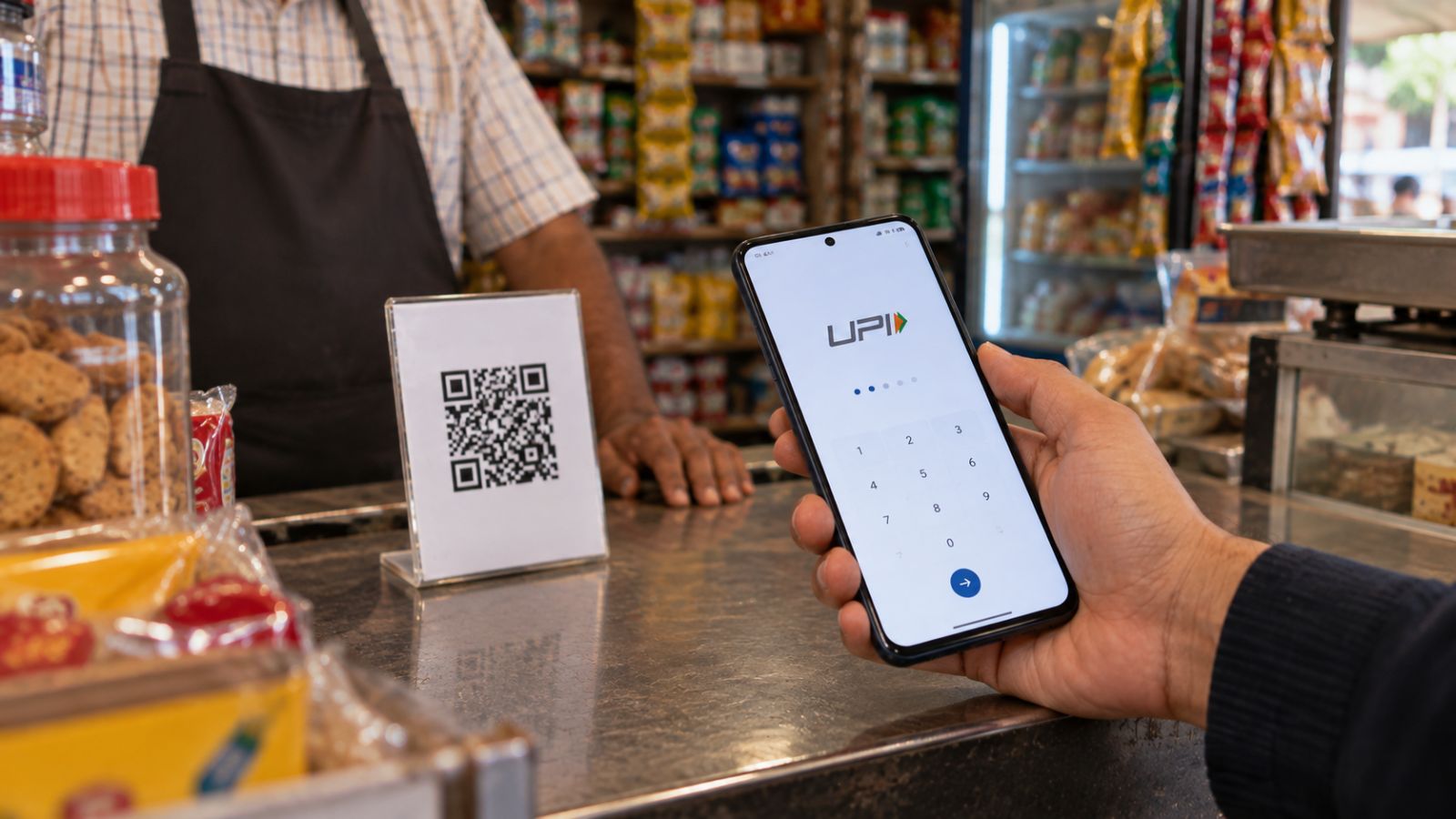
Merchants will have to pay a fee of 0.4% on receiving payments of more than Rs 2,000 via UPI starting from October 15, the National Payments Corporation of India (NPCI) said on Tuesday, with the government saying that banks have been “advised” to ensure that merchants don’t pass this on to customers.
This fee, called Merchant Discount Rate (MDR), will be capped at Rs 300 per transaction. This essentially means that the MDR fee will not exceed Rs 300 if a UPI payment of Rs 75,000 or more is made to a merchant.
According to an official, the charges announced on Tuesday will be reviewed every 6 months to 1 year.
“Market dynamics and historical payment trends show that merchants absorb nominal digital processing costs to drive higher business volume. Payment acceptance costs are considered standard operational overheads that are offset by increased footfall, higher average ticket values, and reduced cash-handling risks,” the NPCI said. As a result, “shopkeepers have no economic incentive to inflate retail shelf prices” and consumers will continue paying the exact listed price for goods and services.
The revised MDR framework announced on Tuesday comes a day after the government notified that smaller-value payments and those made by RuPay debit cards cannot be charged by banks or service providers. The fees come after years of payments industry players calling for the return of the MDR to help them meet their infrastructure and transaction settlement costs of around Rs 20,000 crore per year.
“Transitioning to a commercial, threshold-based model provides reliable capital for continuous technological innovation,’ the NPCI said, adding that this will also allow new fintech startups and technology companies to enter the digital payments space and compete with “well-capitalised tech conglomerates”. The MDR revenue will also fund investments in cyber security infrastructure, AI-driven fraud detection, and encryption upgrades.
Please refer to the FAQs here: https://t.co/DTOZFVHAVB pic.twitter.com/4HMU0YZ2AC
Payment via debit and credit card attract an MDR of around 1-3%.
Since January 2020, there has been no MDR on RuPay debit cards and UPI transactions. This was to promote the adoption of digital payments across the country. To help meet some of the costs, the government has been subsidising payments of up to Rs 2,000 made to small merchants through its ‘Incentive scheme for promotion of RuPay Debit Cards and low-value BHIM-UPI transactions (P2M)’.
The incentive offered is capped at 0.15% of the transaction value. Large merchants are not covered under this scheme.
The new fees apply only to person-to-merchant (P2M) transactions. Person-to-person (P2P) transactions will continue to be free, irrespective of the size of the transaction. There are no monthly quotas, volume limits, or tiered caps on free UPI transactions for individuals, the Ministry of Finance said in a statement, adding that daily transaction limits of Rs 1 lakh-Rs 5 lakh enforced by banks and NPCI are “purely risk-management measures, not commercial charge tiers”.
“The new MDR framework will make UPI self-sustainable, give incentives for further expansion in rural and semi urban areas and maintain competitiveness, while ensuring that large majority of payments remain free of charge,” the finance ministry said, adding that UPI app providers cannot levy platform fees or hidden charges.
A lower fee of 0.02% – also capped at Rs 300 – will apply for UPI payments towards mutual funds, securities, stock brokers, and dealers. This rate has been pegged at less than standard commercial transaction rates “to encourage retail participation in formal financial markets”, the NPCI said.
SIP payments made via UPI will not face this 0.02% MDR. Similarly, automated recurring standing instructions that make payments automatically will not face this charge. These ‘autopay’ categories include monthly utility bills, OTT streaming subscriptions, and recurring investments, among others.
Meanwhile, UPI payments of more than Rs 2,000 to certain merchant categories such as railways, telecom, insurance, fuel sectors, and agriculture inputs, among others, will attract a flat MDR fee of Rs 5 per transaction, the Ministry of Finance said in a statement.
These payments account for 17% of UPI P2M transactions in volume terms and 46% of in value terms.
“This flat-rate model prevents cost escalations in critical public services, utility bill collection, and thin-margin sectors like fuel retail. It ensures that essential consumer services remain low-cost and digitally efficient,” the NPCI said.
For small merchants, who receive up to Rs 1 lakh per month into their bank accounts via UPI QR codes, will continue to face zero MDR, the NPCI said. These small merchants will operate under the Person-to-Person-Merchant (P2PM) framework of the NPCI.
“This classification bridges informal street vendor setups and formal commercial merchant acquiring accounts, ensuring zero cost for micro-businesses. It promotes digital payment adoption across unorganised sector,” the NPCI said.
Merchants who receive more than Rs 1 lakh in their bank account via UPI for three months in a row will be moved to P2M category.
Siddharth Upasani is a Deputy Associate Editor with The Indian Express. He reports primarily on data and the economy, looking for trends and changes in the former which paint a picture of the latter. Before The Indian Express, he worked at Moneycontrol and financial newswire Informist (previously called Cogencis). Outside of work, sports, fantasy football, and graphic novels keep him busy. ... Read More
