UPSC began 100 years ago with a British chairman: Meet Sir Ross Barker
Today, the UPSC is almost synonymous with one of India's toughest examinations and the civil servants who emerge from it. But go back 100 years and the picture looks very different.
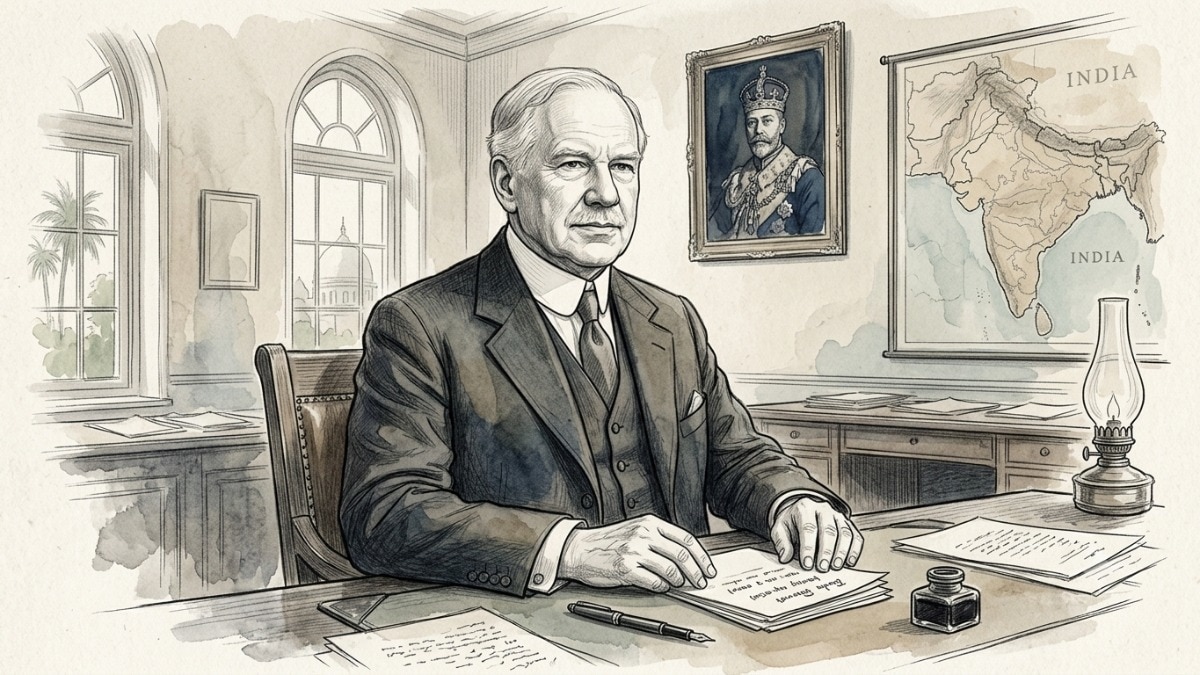
The man sitting in the first chairman's chair was Sir Ross Barker, a British Home Civil Service officer.
On October 1, 1926, Barker took charge of India's newly established Public Service Commission. It was not yet the UPSC we know today, but it was the institution from which the present commission would eventually emerge.
The demand for a body to oversee recruitment to government services had been building for years.
The Government of India Act, 1919 had provided for a Public Service Commission, but it took several more years for the institution to actually come into existence.
The civil service itself was much older than the commission Barker came to head. Under British rule, recruitment had initially followed a system of nomination, but that changed in the mid-19th century.
From 1855, the competitive examination for the Indian Civil Service, or ICS, was held in London. Indians could compete, but that meant getting to Britain first.
In 1863, Satyendranath Tagore, elder brother of Rabindranath Tagore, became the first Indian to qualify for the ICS. He joined the service in 1864. A meeting in a British colonial government office (AI-generated image) For decades, London remained the examination centre. It was only in 1922 that the ICS examination was held in India for the first time, at Allahabad, alongside the London examination.
The Lee Commission, formally the Royal Commission on the Superior Civil Services in India, examined the issue. Its 1924 report recommended that a statutory Public Service Commission be established without further delay.Two years later, on October 1, 1926, the Public Service Commission came into existence, with Sir Ross Barker as its chairman. The commission began with a chairman and four members, and its working was broadly modelled on the traditions of the British Civil Service Commission, according to UPSC's historical records.The Indian ICS examination centre was later shifted from Allahabad to Delhi in 1928. (AI-generated image) There is, however, an important technical distinction: Barker was not the first chairman of the UPSC, because the UPSC did not yet exist. He was the first chairman of the Public Service Commission, the direct institutional predecessor in the chain that led to today's UPSC.The next major change came under the Government of India Act, 1935. From April 1, 1937, the body became the Federal Public Service Commission.After Independence, when the Constitution came into force on January 26, 1950, the Federal Public Service Commission became the Union Public Service Commission (UPSC), receiving constitutional status. Â Young Indian candidates preparing for competitive government examinations in British India in the early 1900s (AI-generated image) THE FIRST CHAIRMAN HAD HIS OWN CRITICISMS
Barker's story gets more interesting here.
He was not simply the British officer who happened to occupy the new chairman's post.
In 1928, he submitted a memorandum to the Indian Statutory Commission criticising the limitations placed on the Public Service Commission. A later Parliamentary document records that Barker considered its powers defective and argued that the original idea behind such a commission had been weakened.
That matters because the early commission did not have the sweeping constitutional position the UPSC enjoys today.
Its functions were largely advisory, with its powers governed through rules framed for the purpose.
Barker left the chair in 1932. Sir David Petrie succeeded him, and the institution continued to evolve through the final decades of British rule. The face of the Public Service Commission has transformed a lot over 100 years (AI-generated image) FROM A COLONIAL PSC TO THE UPSCThe journey from Barker's commission to today's UPSC took nearly a quarter of a century.There was the Public Service Commission of 1926, followed by the Federal Public Service Commission in 1937. Then came Independence and the Constitution.On January 26, 1950, the Federal Public Service Commission became the Union Public Service Commission, giving the institution its present constitutional identity.Today, the commission conducts the Civil Services Examination and recruits for some of the country's most sought-after government services.Barker's place in that history is therefore unusual. The institution that now recruits civil servants for an independent India began in colonial India with a British civil servant at its helm.Sir Ross Barker did not head the UPSC in its constitutional form. But he occupied the first chairman's chair in the institutional journey that eventually became the UPSC India knows today.- EndsRead | Did you know that ICSE exam papers were checked in England until 1970s?Read | UPSC turns 100: PM Modi to release commemorative coin, stamp on October 1
Roshni has been working in the journalism industry for over a decade, telling stories that matter. She loves writing about student innovations, latest research, and people striving to make the world better for children -- through education, social change, or environmental efforts.
With a special focus on education, the job industry, and mental health, she also enjoys uncovering lesser-known scientists and changemakers from history whose work continues to shape our lives today. Away from work, Roshni finds joy in reading, painting, photography, and exploring the spiritual and the occult.