UPSC turns 100: How Indians took on Britain for exam even before Congress was born
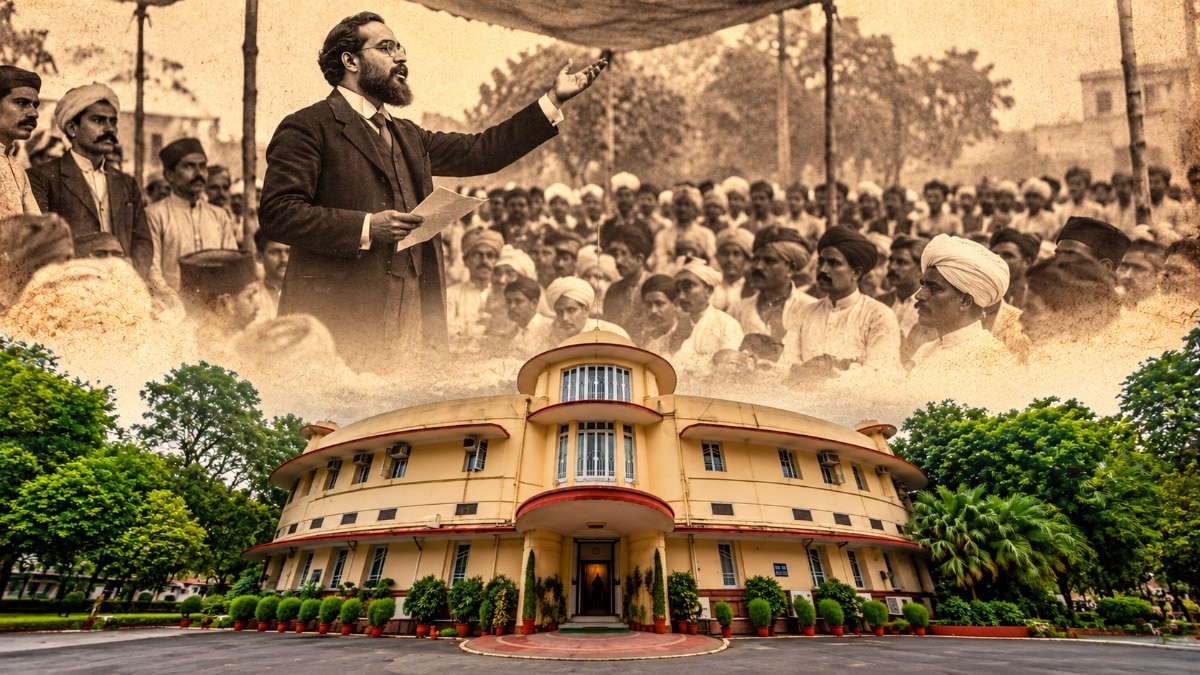
"Risk or no risk, I had made up my mind," said Surendranath Banerjea, a former Indian Civil Service (ICS) officer, in the summer of 1877. Banerjea, then a professor in Calcutta (now Kolkata), had been warned that travelling through northern India in the punishing heat posed a "grave risk". But the 28-year-old professor was determined. On May 26, accompanied by his colleague Nagendra Nath Chatterjee, Banerjea set out by train carrying a petition demanding a higher age limit for the ICS and that it be held in India, and not just in England.
Banerjea's tour across northern India was one of the earliest attempts to reform the elite colonial service and make it more accessible to Indians, who were themselves governed by the officers it produced. Banerjea travelled through Agra, Lahore, Amritsar, Meerut, Allahabad (now Prayagraj), Delhi, Kanpur, Lucknow, Aligarh and Varanasi, and addressed meetings and sought support for changes to the civil service examination.
That was eight years before the Indian National Congress was founded in December 1885, and historians like Bipan Chandra, have viewed the civil service agitation of Banerjea's Indian Association as one of the movements that helped prepare the ground for political organisation among Indians.
It would take decades for the ICS examination to come to India, and longer still for India to get its own recruitment body.
The institution, established as the Federal Public Service Commission on October 1, 1926, completes 100 years today (on October 1, 2026). The Federal Public Service Commission would eventually become the Union Public Service Commission (UPSC), the constitutional body that today is a gateway to India's higher civil services, described as its "steel frame".
As the UPSC marks 100 years, we are looking back at the long struggle to make the colonial civil services more accessible to Indians. Here's how the battle against the British Raj began before the Congress was born. But, let's start from the beginning of the story of civil service in India.BEFORE UPSC, THERE WAS THE ICS IN INDIA
Modern bureaucracy in India started taking shape under Governor-General Lord Cornwallis (1786 to 1793), as the East India Company needed an organised administrative machinery to govern the territories it was capturing. The Company needed officials to collect land revenue, administer justice, maintain order and exercise authority over millions of subjects across India under the Company rule.
For the initial decades, entry into the Company's civil administration depended on nomination and patronage. There was no open competition. Things began to change in 1855, when competitive examinations for what was then the Indian Covenanted Civil Service were introduced, though the test to select officers who would govern India was held in London.
Initially, any British subject aged over 18 and under 23 could compete, which technically included Indians. But the examination was held in London. The system forced Indian aspirants to travel to Britain at a young age and compete in an environment (educational and otherwise) designed around British learning.
Indians began demanding as early as 1856 that the examination also be held in India. But, for more than six decades, London remained the examination centre.
The barriers kept many Indians out, but also produced extraordinary stories of those who crossed the seas to compete.HOW THE ICS AGE LIMIT BECAME A POLITICAL ISSUE
By the 1870s, the age at which ICS candidates could compete had become contentious. The maximum age was reduced to 19. The change was said to be adverse in its impact on Indian aspirants, who had to complete their education sufficiently early and then travel to England to compete.
The decision was controversial even within the British colonial establishment. In a House of Commons debate in 1877, MP Lyon Playfair said 110 Indian officials and authorities had been consulted. At least 41 wanted the existing age retained, 41 wanted it increased to 22, 13 preferred 20, and just 15 favoured 19, reveals the House of Commons archive.
The colonial Government of India also acknowledged in 1878 that the reduction would make competition for Indians educated in India a matter of "exceptional difficulty". British parliamentary archives revealed that 11 of the first 12 Indian entrants had been selected when the maximum age was 21 or higher. Only one was selected between 1878 and 1883 under the lower ceiling.
For Banerjea, the issue was an opportunity to build political momentum. He saw that the anger over the civil service exam wasn't confined to Bengal, and decided to take the campaign to other parts of India.BANERJEA TAKES THE EXAM FIGHT BY TRAIN
Banerjea and Ananda Mohan Bose established the Indian Association in Calcutta in July 1876. After a major Town Hall meeting on March 1877, Banerjea was appointed a special delegate to take the civil service campaign to other provinces, according to Banerjea's autobiography, A Nation in Making. He chose the summer vacation from his teaching job for the journey.
Banerjea recalled that Nilcomol Mitter of Allahabad warned him that travelling at the hottest time of the year meant he was "incurring a grave risk".
"Risk or no risk, I had made up my mind and there was no going back," Banerjea later wrote in A Nation in Making.
His first stop was Agra. There, the Civil Service Memorial he had brought from Calcutta was translated into Urdu and lithographed before he proceeded to Lahore. The choice of Lahore was deliberate as Banerjea believed that beginning with a major meeting in the Punjab capital would have greater impact.
In Lahore, he recalled being welcomed by Hindus, Muslims and Sikhs. A crowded meeting adopted the Calcutta resolutions and the civil service memorial, while another meeting led to the creation of the Lahore Indian Association. The reception, Banerjea said, was "a revelation to me."
The campaign subsequently reached Amritsar, Delhi, Meerut, Aligarh, Kanpur, Lucknow, Allahabad and Varanasi. Public meetings adopted the civil service memorandum and, where possible, organisations affiliated with the Indian Association were established.
The significance of these meetings was beyond the ICS exam. The Indian Association's idea was to bring different provinces onto a common platform around a shared grievance. Banerjea's book describes it as an attempt to unite provinces through a "common grievance" and a "common resolve".
While it would be an overstatement to describe the Indian Association as a fully developed pan-Indian nationalist movement, the civil service campaign was an important attempt to coordinate political action around a specific political demand.
A 2016 feature published by the Press Information Bureau (PIB) described Banerjea's railway tours as an attempt to unite India's scattered political aspirations. The PIB release said that "in the process, he laid the groundwork for the Indian National Congress."advertisementCONGRESS ALSO INHERITED AND RAISED THE CIVIL SERVICE QUESTIONWhen the Indian National Congress was founded in Bombay in 1885, the civil service issue did not disappear. Some of the Indians who had entered the ICS later became prominent Congress leaders. Banerjea went on to preside over Congress sessions twice. His fellow ICS officer Romesh Chunder Dutt was Congress president in 1899.
The demand that ICS examinations be held simultaneously in India and England became a recurring cause for the Congress. The campaign would continue for decades to come. In 1893, the House of Commons even resolved that open competitive examinations for India's civil services should be held simultaneously in India and England.
But the ICS examination was not actually conducted in India until 1922, when a Civil Service Commissioner came from Britain specifically to supervise the arrangements, according to the UPSC website. It took 67 years from the first open competitive examination in London for the exam to finally reach India. The first ICS examination in India was held at Allahabad in 1922, alongside London.FROM FEDERAL PUBLIC SERVICE COMMISSION TO THE UNION PUBLIC SERVICE COMMISSION
Four years after the ICS examination was first held in India, another long-standing demand was met with the establishment of India's first Public Service Commission in 1926.
Following the recommendations of the Lee Commission, India's first Public Service Commission was established on October 1, 1926, under chairman Sir Ross Barker, an officer of Britain's Home Civil Service. The body was not the UPSC we know today. Its functions were limited too. It conducted the ICS examination in India on behalf of Britain's Civil Service Commission.
Under the Government of India Act, 1935 (which forms the partial basis of the Indian Constitution), it was succeeded by the Federal Public Service Commission, which conducted the Indian civil services examination (1937 onwards) independently of the British Civil Service Commission.
Then came Independence in 1947 and the Constitution in January 1950. On January 26, 1950, the Federal Public Service Commission became the Union Public Service Commission, with constitutional status. For the newly independent and republic nation, recruiting capable civil servants through a fair examination was crucial. The first Indian home minister, Sardar Vallabhbhai Patel, who defended the All India Services, told the Constituent Assembly in 1949 that "you will not have a united India, if you don't have a good All-India Service."
And, that's what the UPSC has been doing for all these years.
The independent constitutional body conducts India's most competitive examinations, including the Civil Services Examination for recruitment to the IAS, IPS, Indian Foreign Service and other services, the Indian Forest Service Examination, the National Defence Academy (NDA) and Naval Academy Examination, the Combined Defence Services (CDS) Examination, the Engineering Services Examination and the Combined Medical Services Examination.
The UPSC marked its 99th Foundation Day on October 1, 2025. A century after the first Public Service Commission was established, the UPSC's history, therefore, starts decades before 1926. It goes back to men like Surendranath Banerjea.- Ends
Sushim Mukul is a keen observer, with interest in polity, geopolitics, culture and heritage.
![[Rear View] DDS senators have the numbers to acquit. Why aren’t they cheering? - Rappler](https://www.rappler.com/tachyon/2026/09/TL-DDS-SENATORS-SEP-30-2026.jpg)