US Announces Mass Denaturalization Action - Newsweek
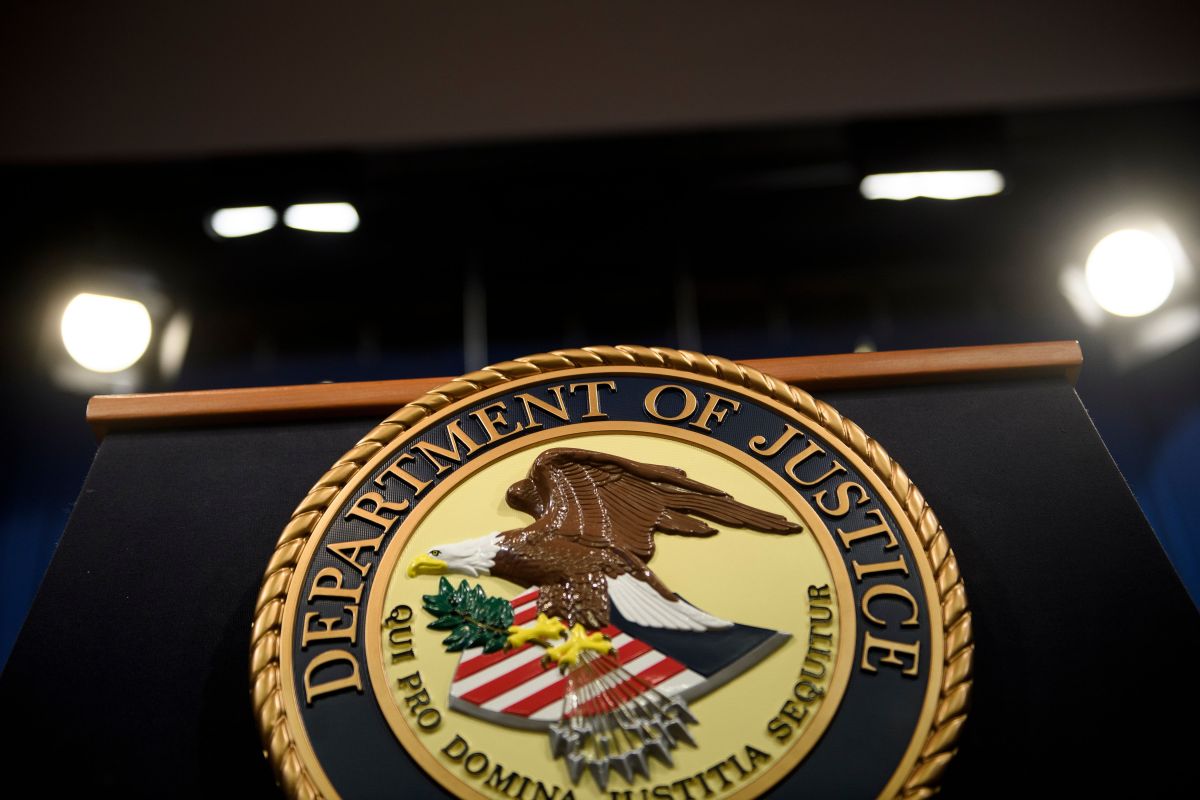
The Trump administration has launched a sweeping effort to strip 40 naturalized Americans of their U.S. citizenship as part of what U.S. Attorney General Todd Blanche called the "largest denaturalization effort in modern history."
The Justice Department alleges that they obtained citizenship illegally or through fraud.
Under the Immigration and Nationality Act, naturalized U.S. citizenship can be revoked by a federal court if the government establishes that it was illegally obtained or procured through concealment of a material fact or willful misrepresentation.
The Justice Department has made denaturalization a priority under the Trump administration’s hard-line immigration crackdown. Although USCIS can investigate suspected naturalization fraud, the government generally must bring a civil case in federal court to revoke citizenship, where it can argue that citizenship was illegally obtained or secured through concealment or willful misrepresentation of material facts. A federal judge ultimately determines whether the government has met the legal standard for denaturalization.
The Supreme Court has imposed limits on the government's power to revoke citizenship. In the 2017 case Maslenjak v. United States, the court held that an illegal act during the naturalization process must have played a role in obtaining citizenship, rejecting the government's argument that any false statement made during the process could be enough to support denaturalization.
Defendants vary in age from 26 to 76 and came to the U.S. from 20 different countries, including eight from Mexico and four from Pakistan, according to a Justice Department press release.
The cases span a wide range of alleged misconduct, including immigration and identity fraud, fraudulent marriages, concealed deportation orders and criminal histories, as well as cases involving people convicted of espionage, financial crimes, voluntary manslaughter, and offenses involving minors. In many of the complaints, the Justice Department alleges the individuals concealed conduct or made false statements before or during the naturalization process, making them ineligible for citizenship.
Among those targeted is Jinchao Wei, a Chinese-born former U.S. Navy sailor convicted in 2025 of conspiracy to commit espionage, espionage and unlawfully exporting technical data related to defense articles. The government alleges Wei began conspiring to sell military secrets to China before becoming a U.S. citizen in May 2022 and concealed that conduct during the naturalization process. He was sentenced to 200 months in prison.
The Justice Department is also seeking to revoke the citizenship of Nadia Hassan Mohamed Ali, 58, an Egyptian native accused of using fraudulent H-1B petitions to allow a family member to remain in the United States. Prosecutors allege Ali misrepresented her work history and the sponsorship during her own naturalization process.
The administration is also seeking to revoke the citizenship of Ping Li, who pleaded guilty in 2024 to acting as an agent of the Chinese government without notifying the attorney general. According to the department, Li worked at the direction of officers of China's Ministry of State Security to obtain information about Chinese dissidents, pro-democracy advocates, members of the Falun Gong movement, and U.S.-based organizations.
Prosecutors accused Ahmad Bahar Khattak, a Pakistani native, of using multiple identities to evade deportation and later obtain immigration benefits and citizenship. Assad Jhon Ramim, an Afghan national, is accused of using another person's identity during a decades-long effort to obtain immigration benefits that culminated in U.S. citizenship.
Iain Lumsden, a 50-year-old British native, pleaded guilty in 2021 to a federal child pornography offense and was sentenced to nine years in prison. The government says he concealed conduct that began before he became a U.S. citizen and made false statements during the naturalization process.
"Today’s announcement marks the largest denaturalization effort in modern history," Attorney General Todd Blanche said in a press release.
"Every single one of these individuals lied their way into U.S. citizenship," Assistant Attorney General Brett A. Shumate of the Justice Department’s Civil Division said in a news release.
In June 2025, the Justice Department’s Civil Division directed attorneys to "prioritize and maximally pursue denaturalization proceedings in all cases permitted by law and supported by the evidence." The guidance cited fraud or willful misrepresentation in obtaining citizenship, certain criminal conduct and national security concerns among the grounds for pursuing cases.
According to the Brennan Center for Justice, the federal government initiated an average of about 11 denaturalization cases annually between 1990 and 2017. During Trump's first term, that figure rose to roughly 25 cases per year.
The data shows a historic rise in denaturalization cases under the Trump administration. At least 105 lawsuits were filed in the first seven months of 2026; this nearly matches the roughly 125 cases TRAC, a nonpartisan, nonprofit data research project, recorded over the entire period from 2008 through 2025. This is even before the 40 additional cases announced by the Justice Department between August 21 and October 2.
Newsweek contacted TRAC, ACLU and the American Immigration Lawyers Association by email for further information on Tuesday morning and is awaiting responses.