US, Iran hold 3-hour meeting at UN; Tehran submits conditions to reopen Hormuz
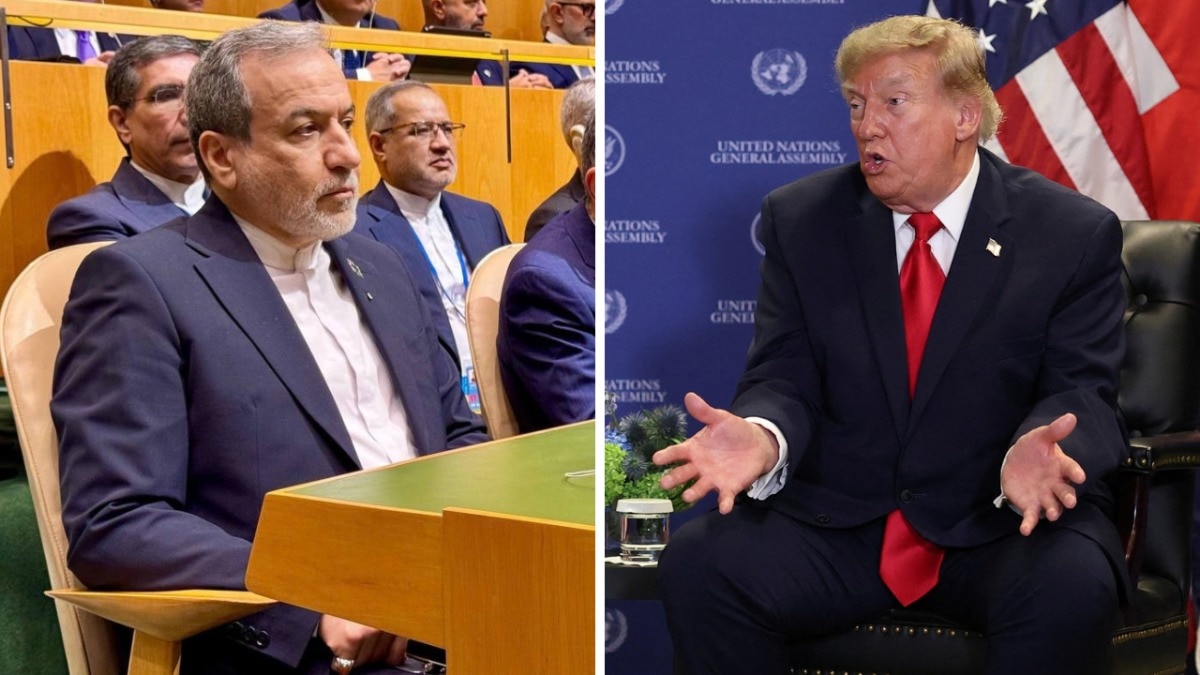
US President Donald Trump said on Tuesday that American officials held a three-hour meeting with members of Iran's delegation to the United Nations General Assembly in New York, offering a possible opening in the stalled efforts to end the nearly seven-month-old war.
With Ukrainian President Vlodymyr Zelenskyy seated beside him, Trump said US officials had held a three-hour meeting with Iran's delegation on the sidelines of the UN General Assembly. "It was a good meeting ... It's to their advantage to make a deal," Trump said.
"I can't imagine why they wouldn't want to do it," he said of a potential deal between the US and Iran that would the the fighting, which began at the end of February. "In one case, it's obliteration. And the other alternative is potential greatness. It could be a great country."IRAN SETS CONDITIONS FOR REOPENING HORMUZ
Iran has conveyed its conditions for reopening the strategic Strait of Hormuz to the US during a meeting between Foreign Minister Abbas Araghchi and US Special Envoy Steve Witkoff on the sidelines of the UN General Assembly in New York, Iranian state media reported.
Tehran is demanding the immediate lifting of the naval blockade, the release of frozen Iranian assets and an end to the war across all "resistance" fronts, the report said.
However, the US President asked Jared Kushner and Steve Witkoff to comment on the meeting but did not confirm who exactly attended the discussions. Iranian President Masoud Pezeshkian and Araghchi are in New York as part of Iran's core delegation for the 81st session of the United Nations General Assembly.
Witkoff, speaking to reporters after the reported meeting, said: "I feel very good right now."
Trump later added: "They had a very good meeting, and we'll see how it turns out. But certainly, it's to their advantage to make a deal."TRUMP'S RED LINE FOR IRAN DEAL
The comments came shortly after Trump met British Prime Minister Andy Burnham at the United Nations in New York. Speaking after that meeting, Trump said Iran had continued communicating with the US.
"They want to talk to us. They have been talking to us, even today they've been talking to us, and the relationship is developing."
"But we can't let them -- and they understand that -- we can't let them have a nuclear weapon," he added.
The issue of Iran's nuclear capability remains at the centre of Trump's position. Throughout his comments, the US President made clear that any potential agreement would have to prevent Iran from obtaining a nuclear weapon. The meeting therefore comes at a critical moment. The UN General Assembly has brought the leaders of the two countries into the same city, creating a rare opportunity for direct or indirect diplomacy despite the absence of a formal breakthrough.RARE OPENING IN DIPLOMACY
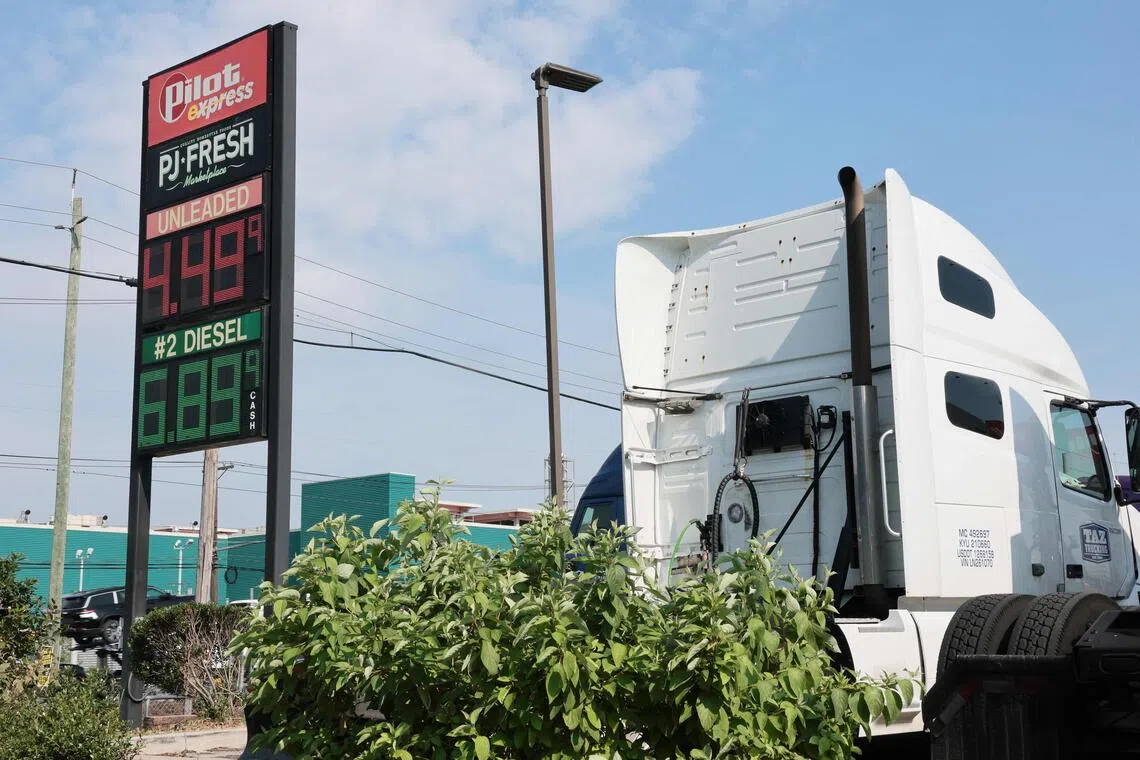
The General Assembly has provided a potential diplomatic opening at a time when the conflict is approaching its seven-month mark. For months, negotiations between Washington and Tehran have remained stalled, while the war has disrupted energy markets and choked the shipping through the Strait of Hormuz.
US Secretary of State Marco Rubio had said earlier on Tuesday that Trump was open to meeting Iranian representatives in New York because he believes direct engagement can help resolve difficult disputes. Rubio told NBC that Trump was open to such a meeting "because he believes that engaging with people is important if you're going to solve problems."
At that stage, however, Rubio said no meeting had been scheduled.
Trump will also meet representatives of nine Arab countries on Tuesday to discuss the war. Reuters reported that several of those countries were expected to press the US President to reduce tensions with Iran and pursue a diplomatic agreement. The Gulf states have a direct interest in ending the disruption because the conflict has affected shipping and energy supplies across the region.TRUMP'S BIG DECISION: DEAL OR ANNIHILATE IRAN
Trump's comments followed a combative speech at the UN General Assembly in which he presented the Iran issue as a stark choice. Earlier in his speech, the US President said he had a "big decision to make."
"Will a deal be made with Iran that lets them rebuild and create a far greater country than it ever was before, maybe one of the greatest in the Middle East or even the world," he said. "Or do I annihilate the Islamic Republic and do it quickly, never giving them a chance to kill and destroy people and countries again."
Trump said he believed a deal could eventually be reached with Tehran. He also suggested that Iran may be watching the outcome of the US midterm elections before deciding how to proceed.
"They're waiting to see how I do in the midterm election. What they don't realize is that I'm not running. I did that already, and won in a landslide," he said, noting that he still has two and half years more in his term.
He said the midterm elections do not "even enter my mind."
"The only thing that does is that Iran will never have a nuclear weapon," the President said. Speaking about the prospects of a deal with Iran, Trump said the United States would ultimately reach an agreement with Tehran.
"We will get it done one way or another. We will get it done and get it done fast," Trump said.
"It doesn't make sense for Iran not to (make a deal)," he added.IRAN SIGNALS IT IS READY TO RETURN TO DIPLOMACY
Iran has also indicated that it remains open to reviving negotiations, although Tehran's demands differ sharply from Washington's position. A senior Iranian official told Reuters that Tehran had conveyed its latest proposal to Washington through mediators the previous week.
According to the official, Iran could reopen the Strait of Hormuz to Gulf shipping within seven days if its demands were met. The Iranian official also said Washington needed to make its diplomatic intentions clear before negotiations could resume.
The official had earlier told Reuters that the US should "announce that it wants to resolve the issue diplomatically, make that official, and then agree on a timeline".
"The UN General Assembly is a golden opportunity for the US to return to diplomacy," the official said.
That position suggests that Tehran sees the UN gathering as a chance to restart diplomacy rather than simply another venue for public confrontation between the two countries. But Iran's leadership has also maintained that it will not accept what it sees as pressure or coercion from Washington.
Despite Trump's latest comments about the reported meeting, there was no immediate indication that Washington and Tehran had reached an agreement. The US President has continued to use strong language against Iran while simultaneously leaving the door open to negotiations.
His administration has demanded that Iran abandon any path towards acquiring a nuclear weapon, while Tehran has sought assurances that Washington genuinely wants a diplomatic settlement.
The reported three-hour meeting in New York could therefore represent an attempt to narrow that gap.- EndsWith inputs from agenciesPublished By: Satyam SinghPublished On: Sep 23, 2026 01:11 IST