US midterms: The final two years of Trump could be a rocky ride. Here’s how Australia will handle it
You have reached your maximum number of saved items.
Remove items from your saved list to add more.
You've used all of your gift articles. 3 more will become available on the 1st of every month.
The extraordinary repudiation of Donald Trump and the Republican Party by American voters is just starting to sink in. It is far too soon to predict with any certainty what it will mean for the United States let alone for allies such as Australia, Japan and the EU, or for strategic competitors such as China and Russia, to whom Trump has been cuddling up through most, if not all, of his two terms in office.
The only thing that can be said for sure is that the global political environment is now even more uncertain, with a divided US government and a president who could just as easily lash out at an enemy such as Iran as he could entirely desert a notional ally such as Ukraine.
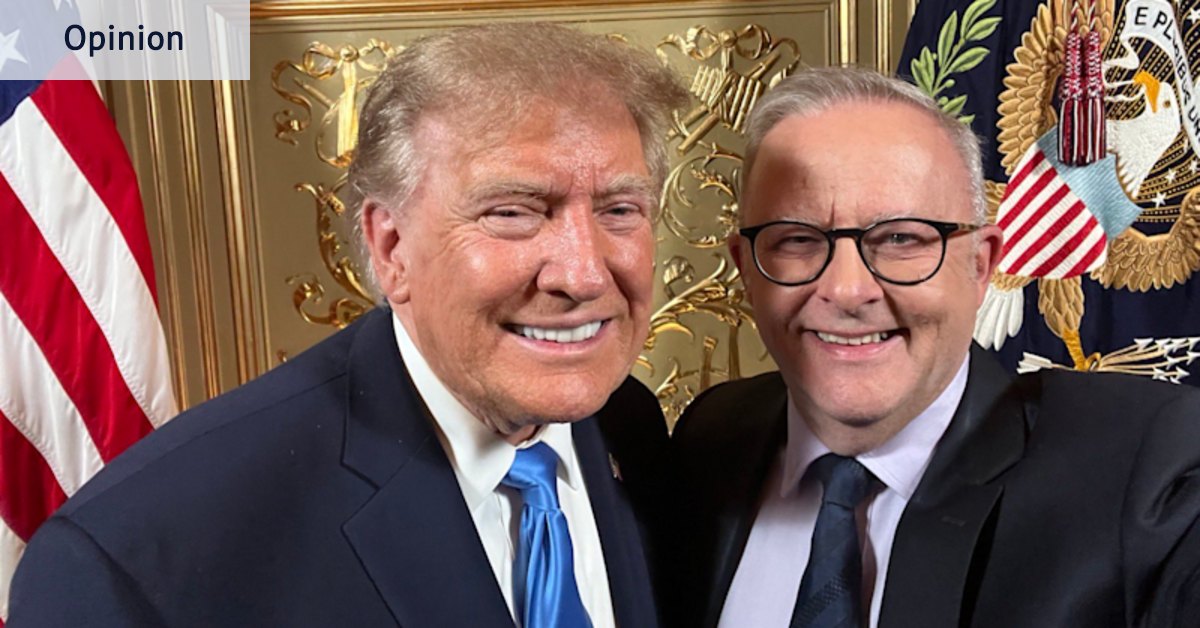
Donald Trump and Anthony Albanese meet at a leaders’ reception in New York.InstagramTrump will doubtless face a Democratic Congress determined to stymie him at every turn. But the Congress has little ability to block the president when it comes to the conduct of foreign affairs (and specifically, the ability to wage war). He will also be able to fall back on executive orders to implement at least some policy in his final two years.
The president has initially signalled a willingness to work with the Democrats, rather than simply vetoing every law they send his way to sign, but it’s impossible to say if this will remain his disposition; there is a high probability he could lash out, block legislation and take unilateral action targeting allies or enemies (or both) in the final two years of his term.
As the extent of the wipeout became clear on Wednesday, I spoke to senior figures in the Albanese government about how Prime Minister Anthony Albanese and his ministers might have to change their approach to Trump and his administration.
A senior figure in Albanese’s orbit said there would be no change to the prime minister’s approach to handling Trump. With three opportunities to meet the president over the next month during summit season, “we will continue with our calm and steady approach”.
“After he [Trump] was elected, we didn’t rush over there like other leaders such as Keir Starmer, who did and then got burned. He [Albanese] was under huge pressure to comment on Trump all the time, and then to go and meet him, and then he couldn’t get a meeting with him, and then it was all Kevin Rudd’s fault,” the source said, adding that all of that commentary from the opposition and much of the media had been wrong.
“We have just been consistent – we don’t provide a running commentary on the latest thing Trump has said and they get along well. We don’t expect that to change.
“We will continue to be concerned about the Middle East. We want that [the war on Iran] to end. It has created the greatest single shock to global oil supply and a huge inflation challenge.”
The effects of that inflation challenge were felt once again this week when the Reserve Bank of Australia raised interest rates for the fifth time this year, delivering another hammer blow to households – and the government’s standing with voters.
Trade Minister Don Farrell went further in an interview, telling me he hoped that following the extraordinary result, the Trump administration would heed two clear messages following the electoral rout: Americans don’t like tariffs, and they are furious about the rising cost of living (like voters just about everywhere).
Farrell, a wily political veteran and Right faction powerbroker in Labor, highlighted the current stoush over imports of Australian lamb to the US as just one example of how much raising tariffs hurt American consumers and contrasted it with the EU free trade deal, which will cut the price of close to 98 per cent of imports from the Eurozone – if the Liberal Party breaks with its Nationals coalition partner and backs the deal.
The trade minister said these midterm elections were the first time Americans had a chance to vote on Trump’s punishing regime of tariffs and “when the public had a chance to vote on tariffs, they comprehensively rejected them”.
“They were also voting on higher petrol prices, for example. I was in Milwaukee recently and the only topic of conversation was the cost of living. People were telling me that pre-war, diesel cost $US2.50 [per gallon] and now it costs $US7 ($10), and that the cost of everything was going up because of a combination of tariffs and fuel prices,” he said, adding, “I don’t think it’s a surprise that Americans voted this way.”
Farrell cited the current dispute over the prospect of raised tariffs on Australian lamb as just one example of the hugely damaging impact of Trump’s policies on ordinary Americans. At present, Australia accounts for about 60 per cent of all lamb imported to the US and, according to the Department of Foreign Affairs and Trade, all non-beef exports to the US are worth about $2 billion per year (the figure also includes goat meat) and are subject to Trump’s baseline 12.5 per cent tariffs.
Non-beef exports are dwarfed by the amount of beef Australia sells to the US, which is worth just under $5.9 billion per year according to DFAT, and beef is not subject to that 12.5 per cent baseline tariff.
Farrell is trying to convince his American counterparts not to put an additional 50 per cent tariff on Australia’s lamb exports. Think about that for a moment. US consumers, like consumers around the world, are struggling with a cost of living crisis. A potential 62.5 per cent tariff on 60 per cent of all lamb that US consumers eat would smash household budgets and the trade in lamb.
As Farrell explains, “I’ve said to the Americans we want to increase lamb sales, not destroy them, which will happen if they impose those additional tariffs. One hopes they have got the message about what their public think about tariffs.”
Optimists are hoping that Americans’ rejection of Trumpism could signal the return of the United States as a reliable trading partner and ally. But if six years of Trump in office has taught us anything, it is that the only reliable thing about this mercurial president is that he is unreliable and prone to change his mind at a moment’s notice.
As any hard-headed observer will tell you, with Trump it always pays to prepare for the worst and hope for the best. The next two years could be even rougher than the past two, and that could mean more bad news for the global economy.
You have reached your maximum number of saved items.
Remove items from your saved list to add more.
You've used all of your gift articles. 3 more will become available on the 1st of every month.