US military build-up in Palau stirs war fears
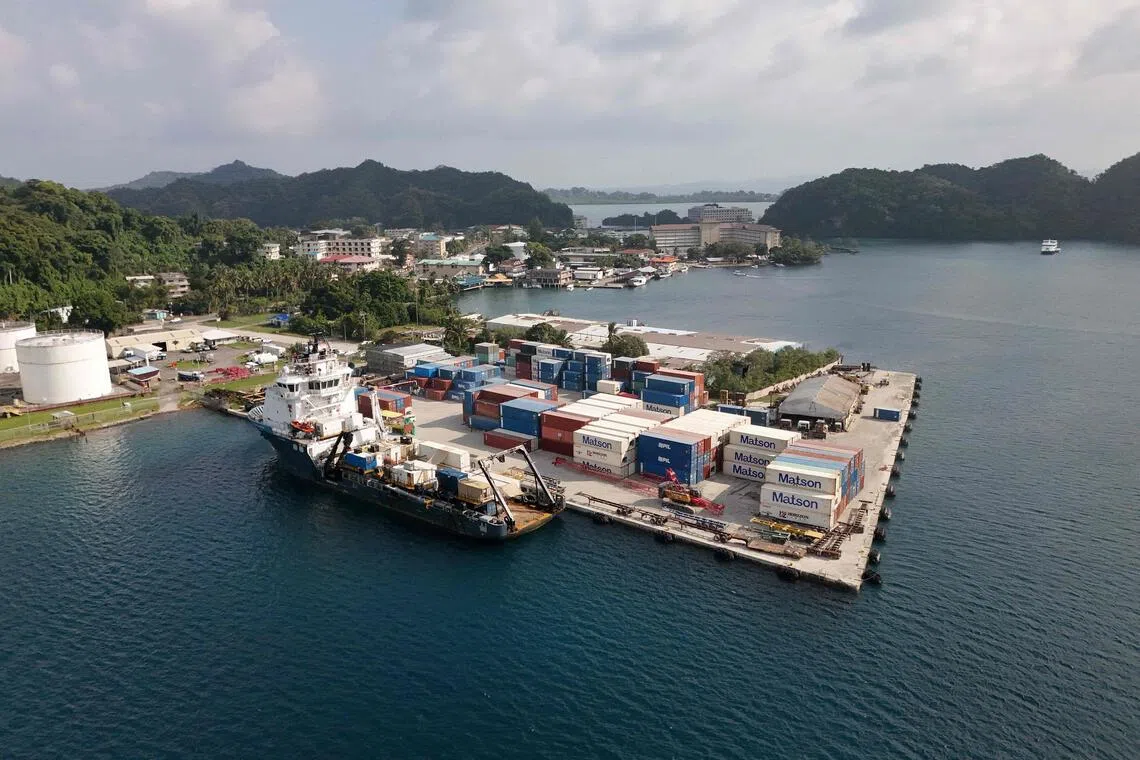
Palau will become the US military’s top overseas location for construction in 2027.
Koror, Palau – US military plans to rebuild the main port in a pristine Pacific archipelago have stirred painful memories of World War II and have locals concerned about being caught in a potential superpower conflict.
Palau will become the US military’s top overseas location for construction in 2027 as a crumbling wharf built by Japan in World War II is expanded to berth US Navy ships and the harbour is dredged deeper in a US$500 million (S$637 million) project.
Haunted by their past, Palauans have asked Washington how they will be protected if war breaks out again in a country with less than 458 sq km of habitable land.
“Where would they go? The concern is very real,” said Madelsar Ngiraingas, who grew up with stories told by her grandmothers of how they escaped during a bloody WWII clash between American and Japanese troops.
Located some 800 km west of the South China Sea and home to just 17,000 people, Palau is also earmarked to house a crisis-ready stockpile for US Marines, tender documents show.
Land is being cleared for a military radar and a remote airfield widened for heavy aircraft.
A petition signed by two thousand people sent in August to Palau’s congress sought assurances from Washington that the population would be safe should war reach their shores.
Palau receives significant US funding under a compact of free association and its citizens have the right to work and study there visa-free.
In return, they cede territorial access to the US military.
The construction boom is the first significant US military activity under that compact, explained Ongerung Kambes Kesolei, founder of local think-tank the Congress Point Institute.
“With the US military coming in, we are now a target. The role of Palau in the second island chain has become more prominent,” he said, referencing a dividing line in the Pacific viewed by both Chinese and US strategists as crucial in a potential future conflict.
At a community meeting in August, US officials explained the port’s benefits by showing images of cruise ships, not warships.
But when a resident asked where the passenger terminal would be, the reply was the US Navy did not require one.
“Many Palauans are not against the US military, nor the projects, there just needs to be better communication and discussion around the potential impacts,” said Ngiraingas, who organised the meeting.
The plans to rebuild the main port in the tourism hub of Koror have also sparked anxiety among traditional chiefs, scientists and tour operators.
Locals fear it will drive away vulnerable dugongs and put at risk World Heritage turquoise lagoons 2km from the construction.
UNESCO describes Koror’s marine lakes as “natural laboratories” for science, yielding new species in a zone abundant with large coral.
An environmental impact assessment found that the dredging in nearby Malakal Harbour – expected to start in 2026 – will cause the loss of 4.26ha of coral, impacting endangered turtles, fish and dugong.
“If we are pounding pilings and dredging coral, I have to imagine they are simply going to leave the neighbourhood,” said Ron Leidich, a biolo for weeks at a time. I don’t think that is realistic.”
Public submissions lodged with the environment watchdog in August demanded greater protection for the pristine waters.
Koror’s state government has asked for a bigger fund to rectify any potential damage and independent environmental monitoring, according to filings seen by AFP.
Palau’s President Surangel Whipps said in an interview the old port was “about to collapse” and he was grateful for the necessary upgrade.
“We can jointly use it for the benefit of the people, but at the same time ensure defence and security,” he said.
The US military’s Joint Taskforce-Micronesia told AFP the port will “expand Palau’s capacity for commercial shipping and larger vessels while simultaneously enhancing the US military’s logistical options for regional defence”.
A 929 sq m restricted access warehouse to be built at the port will house mooring lines, pedestrian barriers, gangways and repair gear for the US Navy, said a spokeswoman.
On his boat, Leidich hopes for peace.
“The thought that all of these beautiful creatures and habitats could be compromised as superpowers slug it out for supremacy is sobering.” AFP