
US planning to pull 40,000 troops from Europe as Trump-Nato rift widens
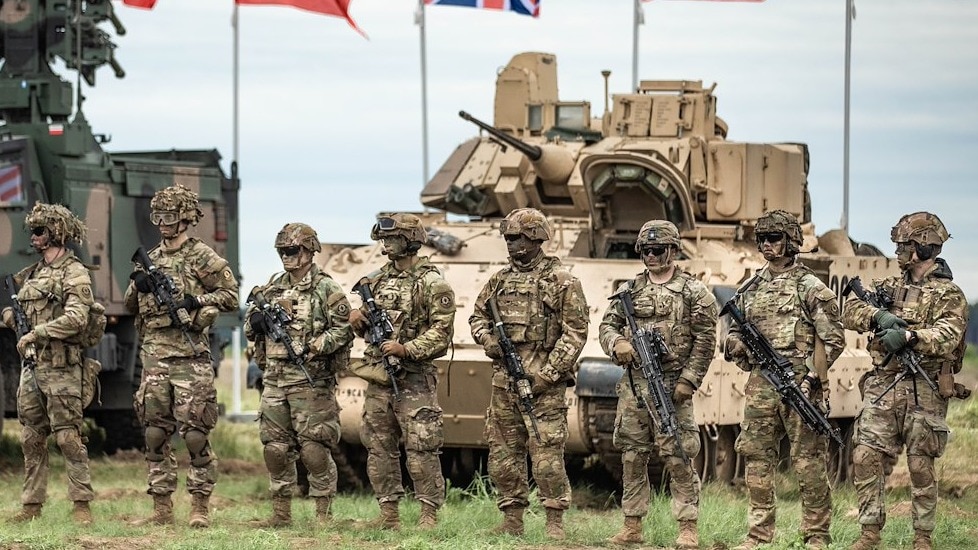
The Pentagon is considering a sweeping reduction in the US military presence in Europe that could see tens of thousands of troops withdrawn along with aircraft, naval assets and other military capabilities, according to current and former US and Western officials familiar with the deliberations.
The proposed reduction could involve around 25,000 troops, which is roughly one-third of the approximately 80,000 US service members currently stationed in Europe. Some officials involved in the discussions have indicated that the figure could be considerably higher, potentially reaching 40,000, or about half of the American military presence on the continent, according to NBC News.
The proposal comes amid US President Donald Trump’s repeated criticism of Nato allies and calls for Europe to shoulder more of its defence burden. Trump recently said he was "very disappointed with Nato" over their lack of support for the US during the war with Iran.
A senior US Defence Department official and two other officials told media that the review remains under way, and no final decision has been taken.
If implemented, the move would represent the largest reduction in the US military footprint in Europe since the post-Cold War drawdown of the 1990s. It comes at a particularly sensitive moment, with Russia's war in Ukraine continuing and European governments warning that Moscow is expanding its military and hybrid activities across the continent.
The potential withdrawal has already triggered concern among European allies and lawmakers in Washington, including Republicans who have traditionally supported a strong US military presence in Europe.
The Pentagon announced a six-month review of US forces in Europe in June, directing US Air Force General Alexus Grynkewich, the supreme allied commander in Europe and head of US European Command, to assess future force requirements.
Grynkewich is expected to submit an initial analysis to Defence Secretary Pete Hegseth on Friday. A final recommendation is due to Hegseth on November 6, after which it would be presented to President Trump. Any withdrawal would take place only after that process.
The review is expected to present several possible options, including reductions in US air power, naval personnel and ground forces. Another possibility is moving some American forces from western Europe to Nato's eastern flank, closer to Russia.
Hegseth ordered the review to determine whether the US military posture in Europe is consistent with the Trump administration's "America First" approach, according to a senior Pentagon official.
The Pentagon has argued that European allies should assume greater responsibility for their own conventional defence, while the US focusses more of its military resources on threats involving China, Iran and security challenges in the Western Hemisphere.
Trump has repeatedly questioned the distribution of defence responsibilities within Nato. During the Nato summit in Turkey in July, he said he was "very disappointed with Nato" and criticised European allies for what he described as insufficient support for the United States in its war in the West Asia.
"Why are we spending hundreds of billions of dollars, and they're not there for us?" Trump said. "We've always been there for them."
During a meeting with Nato Secretary-General Mark Rutte in the Oval Office a month earlier, Trump was asked what he expected from America's allies.
"I just want their loyalty. We don't need their money. We don't need anything. We have the most powerful military in the world by far, but I just want loyalty," Trump added.GERMANY, ITALY AND SPAIN COULD BEAR THE BRUNT
The countries most likely to be affected include Germany, Italy and Spain, which together host a substantial portion of the US military presence in Europe.
Germany is the largest American military hub on the continent, with around 36,000 US troops stationed there. The country hosts major US installations that support operations across Europe and beyond.
The Pentagon had already announced plans in May to withdraw 5,000 troops from Germany. Trump subsequently indicated that he could go much further.
Germany's relationship with the Trump administration has also been strained by disagreements over the war with Iran. In May, German Chancellor Friedrich Merz criticised Iran's leadership, saying an entire nation was being humiliated by the Iranian leadership and the Islamic Revolutionary Guard Corps.
Italy hosts about 12,000 US troops and several major air bases. Spain, meanwhile, provides important air and naval facilities in the country's south.
Both Rome and Madrid have clashed with Washington over US military operations against Iran. Italian Prime Minister Giorgia Meloni's government declined to allow US aircraft potentially involved in strikes against Iran to use a base in Sicily without parliamentary approval.
Spain also denied access to military bases for US air attacks on Iran, angering the White House.
European governments have separately expressed concern about being excluded from major US decisions over Iran and about the potential economic and security consequences of the conflict.ALLIES WARN AGAINST A RAPID WITHDRAWAL
European governments have urged Washington to pursue any reduction gradually, arguing that replacing American capabilities will take years. Among the capabilities European countries say they need time to develop are long-range missile systems, satellite surveillance and aerial refuelling aircraft.
Opponents of a major withdrawal argue that US forces serve a wider purpose than simply defending Europe. American bases and logistics networks allow Washington to rapidly deploy troops and equipment to other theatres, including the Middle East and Africa.
Grynkewich, the head of US European Command, told lawmakers in March that the American military's European infrastructure was crucial to global operations.RUSSIAN ACTIVITY ADDS TO EUROPEAN ANXIETY
The proposed drawdown comes amid repeated European warnings about Russian military and hybrid activity.
European governments have accused Moscow of conducting sabotage operations, cyberattacks, assassinations and drone operations intended to disrupt support for Ukraine and create divisions within Nato. Russia has rejected such accusations. Nato has also reported several incidents involving drones believed to have originated in Russia.
Germany this month blamed Russia for an attempted attack at Leipzig airport involving a drone carrying an explosive.
Over the weekend, a drone struck a train near the Ukraine-Poland border shortly after a diplomatic delegation, including former British Prime Minister Boris Johnson and former Swedish Prime Minister Carl Bildt, had passed through the station. Another drone strike was reported near a separate crossing between Poland and Ukraine.
European officials described the incidents as intimidation aimed at countries supporting Ukraine. Moscow has denied responsibility.
The current Pentagon review therefore represents a potentially significant turning point in that decades-long security arrangement. The final decision, however, remains pending, with the scale and location of any troop movements yet to be determined.- EndsPublished By: Ajmal Published On: Sep 18, 2026 07:24 IST
