US seeks to join Elon Musk’s X legal challenge against EU fine
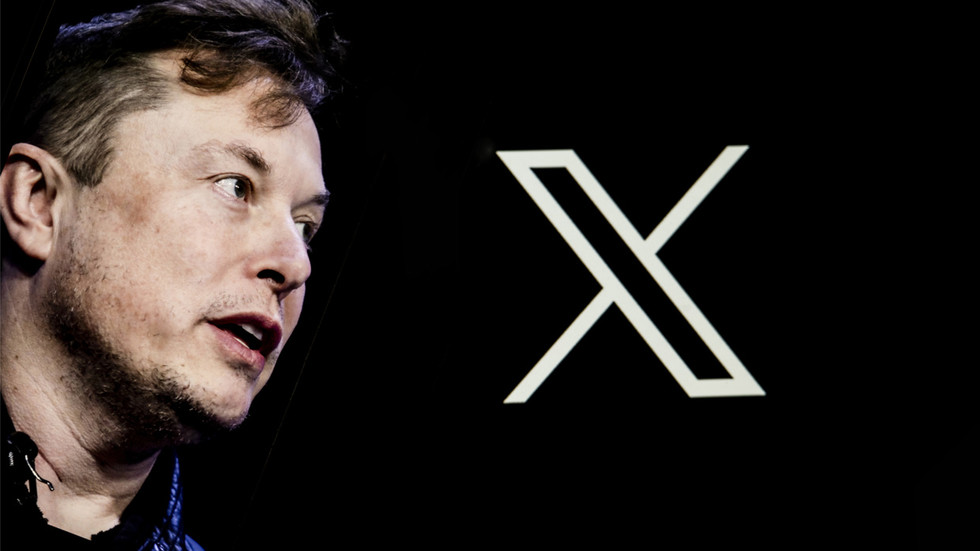
Elon Musk. © Emin Sansar / Anadolu Agency via Getty Images The US government has joined Elon Musk’s appeal against an EU fine imposed on X, accusing Brussels of “regulatory overreach” and escalating a transatlantic clash over its regulation of US tech firms.
The European Commission fined X €120 million ($136.51 million) for alleged violations of its 2022 Digital Services Act, the first such penalty under the bloc’s Digital Services Act (DSA), a vast legislative censorship and media control apparatus. Brussels accused the platform of breaching rules on transparency, advertising, and data access, as well as using a deceptive blue-tick system for verified accounts.
Musk, who has claimed the EU’s tech regulations stall technological progress and equated the bloc to a “Fourth Reich” over them, appealed the decision in February, seeking to overturn the fine.
On Thursday, the US Department of Justice said it had filed an application to intervene in support of Musk’s legal challenge.
“The European Commission inappropriately attempted to expand its regulatory authority to reach American companies not present or operating within its jurisdiction,” Assistant Attorney General Brett Shumate said. “We will not tolerate the European Commission engaging in regulatory over-reach to try and control American engines of innovation and economic growth.”
🚨 United States Files Request to Intervene in Case Brought by X Corp. and Elon Musk Seeking to Annul Decision by European Commission“The European Commission inappropriately attempted to expand its regulatory authority to reach American companies not present or operating within…
The Justice Department warned that the case – the first DSA enforcement challenge to reach the General Court – could set a precedent for US tech firms. Citing “significant concerns” over Brussels’ approach to liability and jurisdiction, it said Washington has an interest in “protecting American companies from foreign extraterritorial enforcement action.”
READ MORE: Big tech hands in its DSA censorship reports to the EU Separately, the EU is investigating X for other potential DSA breaches, including its approach to content moderation and explicit images generated by its Grok AI chatbot. Under the DSA, the EU has also probed Meta Platforms and Amazon, while Apple was fined under a sister law, the Digital Markets Act, over alleged anti-competitive behavior in its App Store. Apple is appealing a €500 million fine under the regulation.
Neither the European Commission nor X responded to media requests for comment on the US intervention.
EU scrutiny of US tech firms has become a major source of friction between Brussels and the administration of President Donald Trump, which has backed claims that the bloc unfairly targets American tech giants and harms digital free speech. Senior administration figures, including Vice President J.D. Vance and Secretary of State Marco Rubio, have criticized the EU’s fine on X as an attack on American companies. Musk previously accused the EU of trying to shut down X, claiming in 2024 that the commission had offered him an “illegal secret deal” to “quietly censor speech” to avoid a fine.
READ MORE: EU targets ChatGPT, Reddit, and Roblox under censorship law Trump has railed against the X fine, calling it “nasty” and warning that “Europe is going in some bad direction.” He has strongly condemned the DSA and related tech regulations, repeatedly labeling them “overseas extortion” and a “form of taxation.” He has threatened new tariffs on European goods unless the EU rolls back the regulatory penalties. The European Commission has rejected Trump’s criticism, insisting the DSA is non-discriminatory and applies equally to all large tech platforms operating in Europe.
Brussels sells the DSA as an online-safety law meant to fight illegal content and “disinformation.” Critics see something far more sinister: an expanding censorship and narrative-control regime that gives unelected EU officials sweeping leverage over political speech – and over the largely American tech platforms that carry it.
That criticism gained ammunition from a 2026 report by Republicans on the US House Judiciary Committee.
READ MORE: The US has accused the EU of censorship: Here’s how the bloc’s consensus machine works They have accused the bloc of a “clear bias” toward censoring conservative and populist parties, pointing to its intervention in Romania’s election, then in Hungary, where arch EU critic Viktor Orban was heavily defeated by pro-EU Peter Magyar. It also cited pressure on platforms in Slovakia, the Netherlands, France, Moldova, and Ireland, as well as at EU level.
Brussels has also gone beyond pressuring platforms. The EU banned RT and Sputnik in 2022 and has sought tighter controls on what it considers Russian disinformation, and has since pushed platforms to clamp down on what Brussels labels Russian disinformation. The commission itself admitted DSA-linked mechanisms are being used to address Ukraine-related content and election risks. Critics argue that, backed by the threat of massive fines, the system gives Brussels powerful leverage over narratives that challenge its political and foreign-policy consensus.
That leaves a stark divide over what Brussels’ flagship internet law actually does. The EU calls it online safety; its critics see a censorship architecture capable of suppressing dissenting narratives, shaping the information environment around elections, and forcing global tech platforms to police political speech on Brussels’ terms.
This website uses cookies. Read RT Privacy policy to find out more.