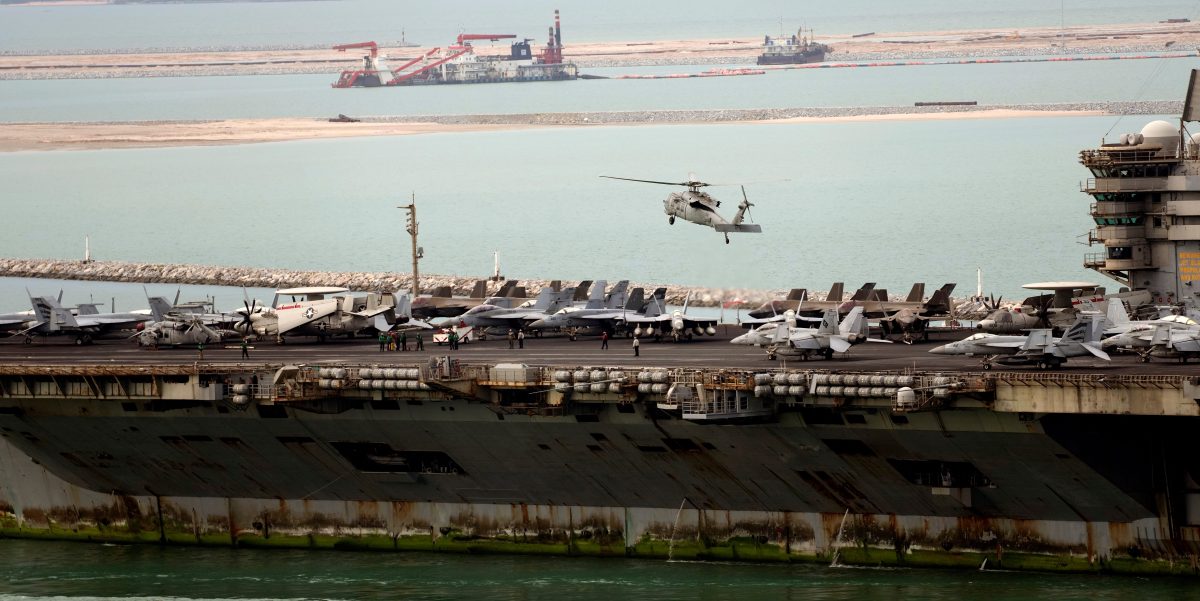
US think tank's military plan alarms allies in Asia
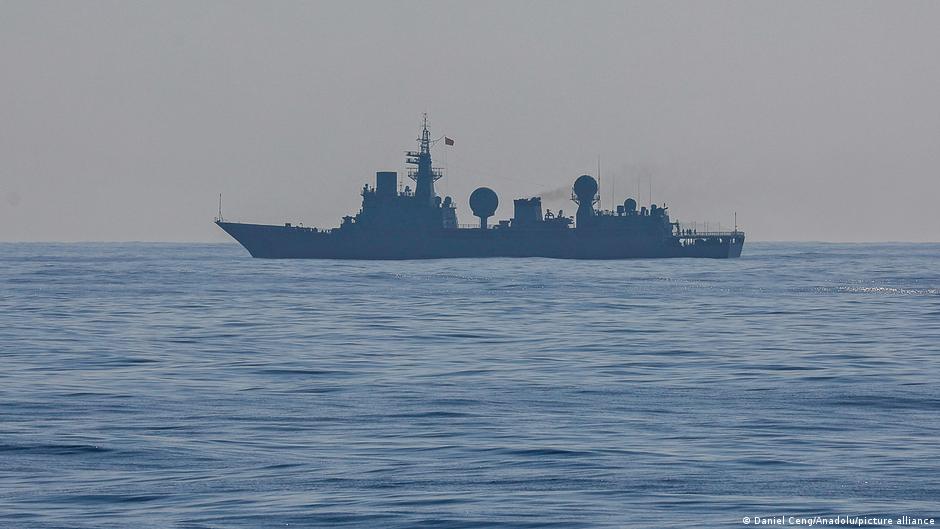
The report calls for shifting US forces from the 'vulnerable' first island chain in the Pacific to the 'more defensible' second island chainImage: Daniel Ceng/Anadolu/picture allianceAdvertisementA study by a US foreign policy think tank advocates a major military pullback from the western Pacific, prompting concern among long-standing allies of the United States across the Indo-Pacific, analysts say.
The report was authored by Jennifer Kavanagh, a senior fellow and director of military analysis at the right-of-center Defense Priorities Foundation. Kavanagh calls for the US to "narrow its defense commitments in the region" by ending mutual defense alliances with South Korea, Japan, Australia and the Philippines.
The priority for Washington, she states, is to defend the US homeland and safeguard access to key economic markets and trade routes. That would be best served by pulling back from the "first island chain," which runs from Okinawa in southern Japan, through Taiwan and on to the Philippines.
Kavanagh writes that US forces should be pared back and moved to the "second island chain," which runs from eastern Japan to the Northern Marianas Islands in the central Pacific, Guam, Palau and on to Papua New Guinea.
The report states that moving the troops back would make their positions easier to defend and "reduce the risk of a catastrophic war with China."
Such a withdrawal would arguably be most keenly felt in Taiwan, which Beijing views as a renegade province that must one day be assimilated into greater China.
In her report, Kavanagh notes that the US has no formal commitment to come to the assistance of Taiwan in the event of an attack by China. She warns that any armed clash "would come at an exorbitant cost for the United States, far in excess of any benefits."
"With a cost-benefit calculation this lopsided, a change in the US commitment to Taiwan seems wise," she said. "The United States should shift from strategic ambiguity to a clear non-intervention policy in the event of any military confrontation over Taiwan."
The countries named in the report have made no formal comments on the think tank's proposals, but its conclusions "will be viewed with shock," William Yang, a Taiwan-based security analyst for the International Crisis Group, told DW.
The concern will be even deeper given that the Defense Priorities Foundation is known for its isolationist foreign and defense policy positions and is reputed to have ties with a number of senior and like-minded decision-makers in the White House, Yang said.
Yang noted that US President Donald Trump has repeatedly threatened to withdraw troops from allied nations in Europe and Asia if his demands for larger payments or concessions in some other area of the bilateral relationship were not met, Yang said.
"This is a venture into a fully restrained agenda and seems to be very accommodating to China," Yang said.
While there are no indications that the White House is about to adopt the foundation's proposals, they do mesh with many of its isolationist and transactional principles, he said. And if the plans were to find favor with Trump, he said, the consequences would be "earthquake-level."
The Defense Priorities report was published amid broader regional concerns about the durability of US security commitments in Asia, specifically tensions over Taiwan and the South China Sea.
Despite Kavanagh's reassurances, many analysts suggest that a withdrawal of US support in the region would prompt China to quickly seize Taiwan and nuclear-armed North Korea to make greater demands on South Korea. It is also likely to trigger a region-wide spike in defense spending and, ultimately, a rupture in regional nuclear non-proliferation efforts.
Kavanagh's report plays those fears down, concluding that "China's path to regional hegemony would be a difficult one, threats to the US homeland emanating from Asia are few, and challenges to US economic interests are unlikely and to some extent self-deterring."
Garren Mulloy, a professor of international relations at Daito Bunka University and a specialist in military issues, described the study as "one of the more cogent and informed versions of what Trump and those around him have been arguing inconsistently for years. The idea is that the US has a priority to defend the homeland and all costs incurred in other missions are a waste."
"In my view, this is seeing the cost of everything and the value of nothing," Mulloy said, pointing out a number of "obvious problems": notably that the US leaves a void that China and, to a lesser extent, Russia step in to fill, and Washington has no influence on the region's geopolitics, including "the shaping of norms, standards and laws."
"Is this worth saving money for that Trump would give away in a tax cut or election bribe?" Mulloy asked, in reference to the US president promising thousands of dollars for every American adult if his party wins the midterms.
"This is the ultimate short-term vision that haunts diplomats around the world."
Dan Pinkston, a professor of international relations at the Seoul campus of Troy University, echoes those concerns, describing the plan as "flawed and unrealistic."
"The whole premise of the report is completely different to how collective and cooperative international security has been practiced for decades," he said. "These people have a very different worldview and you wonder if they won't stop at the second island chain and go all the way back to the US mainland."
US isolationists see NATO and America's other allies "purely as a burden and a cost," Pinkston said, which is "too simplistic."
By withdrawing from security alliances in the Indo-Pacific, the US jeopardizes its trade relationships and largely gives up any influence it presently has over "complex issues" that range from combatting piracy, breaches of international sanctions, efforts to combat cybercrime and espionage, smuggling, climate change, fisheries, cross-border financial crime and a host of other critical matters, he said.
"It's naive to believe that China is going to be benevolent if the US withdraws and will act in anyone else's best interests when it comes to the rule of law, peaceful settlements of territorial disputes or human rights," he said.