
US troops leave Iraq after 23 years: What happens next as Iran-backed militias, ISIS remain?
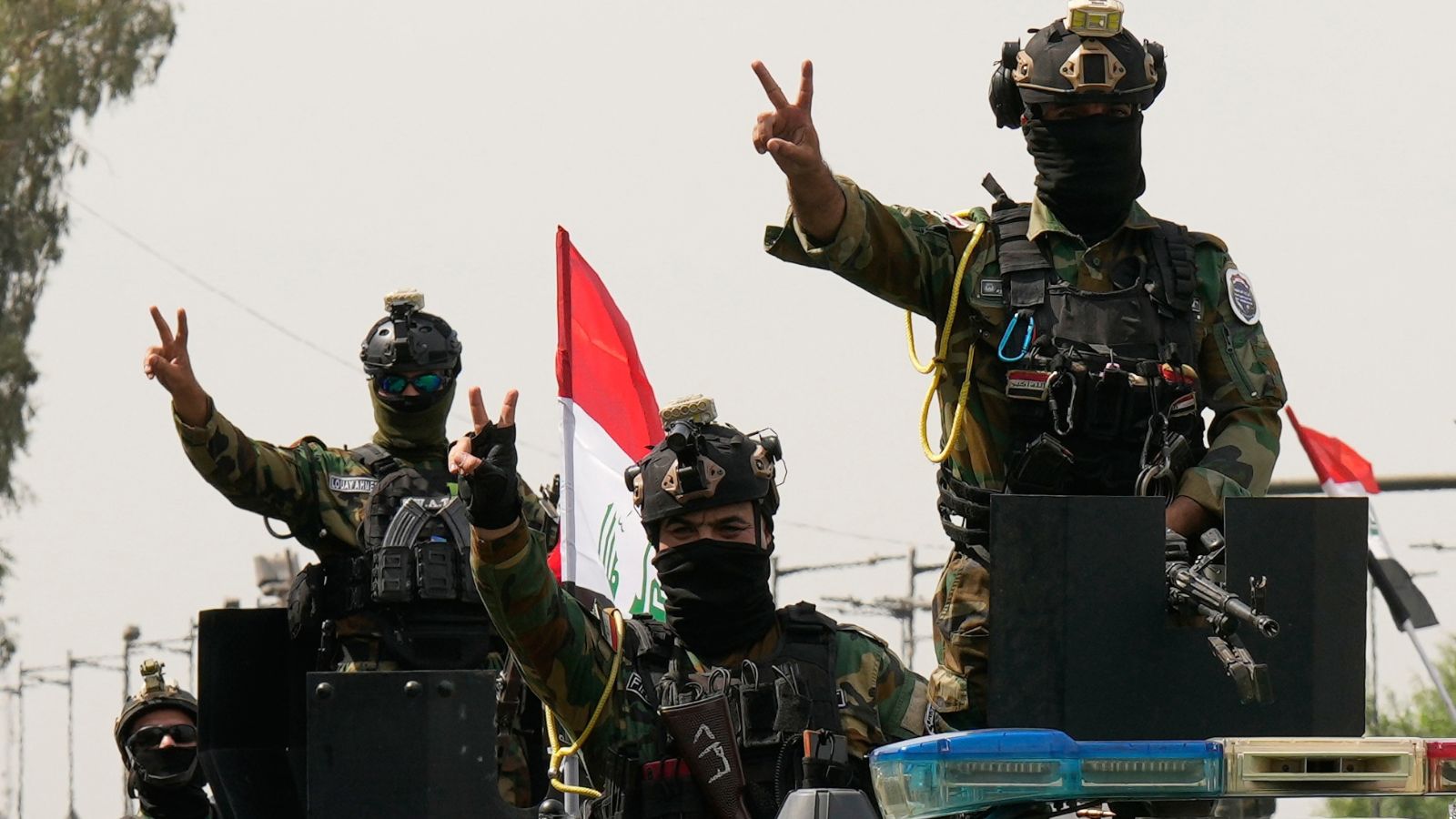
US troops withdraw from Iraq: The United States has ended its military mission in Iraq, with the Pentagon saying on Wednesday, September 30 2026, that all American troops have left, 23 years after the invasion of 2003 that removed Saddam Hussein, according to Reuters.
The last troops left an air base in Erbil, in the semi-autonomous Kurdish region in northern Iraq, under a deal between Baghdad and Washington. Pentagon spokesperson Sean Parnell told the Associated Press (AP) the troops and equipment made an “orderly departure”. He called it the end of a 12-year campaign against the Islamic State group (IS), and said the US will still give Iraq “targeted training and intelligence support”.
Iran and the armed groups it backs in Iraq hailed the exit as a win. Many Iraqis are less sure. Reuters reported fears of a security gap that could let Iran-backed Shi’ite militias grow stronger and allow IS to regroup. The AP said those fears are strongest in the Kurdish region.
The last US forces left Iraq on September 30, ending the military mission against ISIS. Three forces will shape what comes next.
“Leaving the Kurdistan region without providing any defence system is a cause for concern.”Masrour Barzani, KRG Prime Minister
Washington is moving to bilateral defence cooperation, including training, military assistance, arms sales and financing, Al Jazeera reports.
The US military mission ends. US–Iraq security cooperation does not.
Future ties focus on intelligence, training and technical support.
Sources: Al Jazeera, Reuters, ABC News, The National. Map: Natural Earth. Locations: LatLong.net, CountryCoordinate, Mapcarta (OpenStreetMap), SkyVector. Regional boundaries approximate.
The pullout comes while the US is at war with Iran. The two news agencies note that Iran-backed militias in Iraq have fired on US troops and that the US has hit militia bases since the war began.
Reuters said the pullout was agreed in 2024 under then-President Joe Biden and carried out by the Donald Trump administration. The AP said Washington and Baghdad agreed then to wind the mission down because IS had been cut back to scattered sleeper cells.
US troops had already left bases in most parts of Iraq last year. Only a few hundred stayed, in the Kurdish north, the AP said.
The AP also pointed to a longer trend. Washington has tried to move its focus from the Middle East to Asia, but the shift has been uneven, with the Pentagon cutting its presence in the region and then being drawn into new conflicts, including the war with Iran.
That war has cost lives in Iraq. Reuters said 18 US service members have been killed since Trump launched “Operation Epic Fury” with Israel in February. Seven of them died in Iraq. The last was an army sergeant who died in July when a drone was detonated in a controlled blast at a base near Erbil.
US-led forces invaded in 2003 and removed Saddam Hussein. Reuters said the years that followed brought upheaval and chaos.
American troops first left at the end of 2011. They returned in 2014, less than three years later, after IS took about a third of the country. The AP said Iraqi authorities invited a smaller US-led mission to fight the group. In Mosul, Iraq’s second-largest city, Reuters said soldiers took off their uniforms and ran when IS captured it that year.
IS lost its self-declared caliphate in 2017. Since then, Reuters said, US troops have given Iraqi forces intelligence on the group’s movements, along with air surveillance and reconnaissance.
The war carried a heavy price. More than 4,500 US troops died in Iraq, Reuters said, about twice the number lost in Afghanistan. The Iraq Body Count project says more than 200,000 Iraqi civilians were killed.
Prime Minister Ali al-Zaidi led the handover ceremony. In a statement cited by Reuters, he said the end of the coalition’s mission “does not mean the end of our battle against terrorism”. Iraq now takes “full responsibility” for its security, he said. The AP quoted him calling it a “new phase” built on Iraq’s sovereignty, and he said the government will make sure armed groups outside the state no longer hold weapons.
Some Iraqis say that will be hard. Jassim al-Bahadli, an analyst who advises the security forces, told Reuters that “security vacuums can be extremely dangerous”. Adil Salman, 45, a high school English teacher, said Iraqis “should not rush to celebrate”. Militias still act outside state control, he said, and IS “still has not disappeared”. People will judge the decision by whether the country stays stable, he said.
Retired General Mohammed al-Jubouri, who led a brigade against IS, asked whether Iraq’s security bodies have a “viable Plan B”. He said one of the worst outcomes would be IS getting armed drones or bomb-carrying drones while Iraq lacks enough air defence to stop them.
Reuters said Iran, which wants US forces out of the whole Middle East, presents the exit as a win for its “axis of resistance” of allied armed groups. Baghdad-based analyst Ahmed Younis said the groups may feel stronger without a Western military presence and could try to widen their role in state policy and key institutions.
Abu Mujahid al-Assaf, a security official in the Kataib Hezbollah militia, called the exit “the beginning of full sovereignty”, the AP reported. He also warned the prime minister not to carry out American plans, and said any government that does not work for the people “will be overthrown”.
The future of the militias is unclear. The government first tied the 30 September deadline for the US exit to the disarming of armed groups. A few smaller groups agreed to hand over weapons, the AP said, but powerful pro-Iran groups refused or set terms the government is unlikely to meet. Mr al-Zaidi has since told The New York Times that the disarmament deadline is now June 2027.
In the Kurdish region, officials worry most about the removal of US air defence systems. The regional Peshmerga Ministry said the region faced more than 1,000 drone and ballistic missile attacks during the US-Iran conflict. Leaving “without the provision of a defense system” is “a matter of concern”, it said in a statement cited by the AP. Some Iraqi security officials in both Baghdad and the Kurdish north also told Reuters that the exit could give IS fighters new room, as the group still has a network of sleeper cells.
Mashkoora Khan is a journalist and sub-editor on the global desk at The Indian Express. She actively covers issues around Canada visa, immigration policy, global affairs, and international developments. A trained multimedia journalist, she focuses on producing clear, accurate, and reader-centric explainers on policy-driven subjects that directly affect cross-border mobility and global audiences. Experience Mashkoora has worked across digital newsrooms and independent media platforms, with bylines in national and international publications including Al Jazeera, Down to Earth, The Wire, and Maktoob. Her professional experience spans breaking news, policy explainers, live coverage, and multimedia reporting. At The Indian Express, she is part of the global desk, where she contributes to daily international coverage and plays a role in editing and producing stories on foreign policy, immigration systems, and regulatory changes — particularly those related to Canada’s study, work, and permanent residence pathways. Expertise Her core areas of reporting include: • Canada visa and immigration: Coverage of policy updates, eligibility changes, application processes, and government announcements, with an emphasis on factual explainers and verified information. • Global affairs: Reporting on international politics, diplomacy, and geopolitical developments. • Migration and human impact: Stories that examine how policy decisions affect individuals, families, and migrant communities. Her work prioritises accuracy, sourcing, and context, helping readers navigate complex systems without speculation or exaggeration. Authoritativeness and trustworthiness Mashkoora's reporting is grounded in official data, government releases, and on-record sources, in line with The Indian Express’ editorial standards. Her articles aim to distinguish clearly between verified information and developing updates, making her coverage a reliable reference point for readers seeking clarity on international and immigration-related issues. ... Read More


