Vande Mataram row: High Court refuses to stay Karnataka’s 2-stanza order - The Indian Express
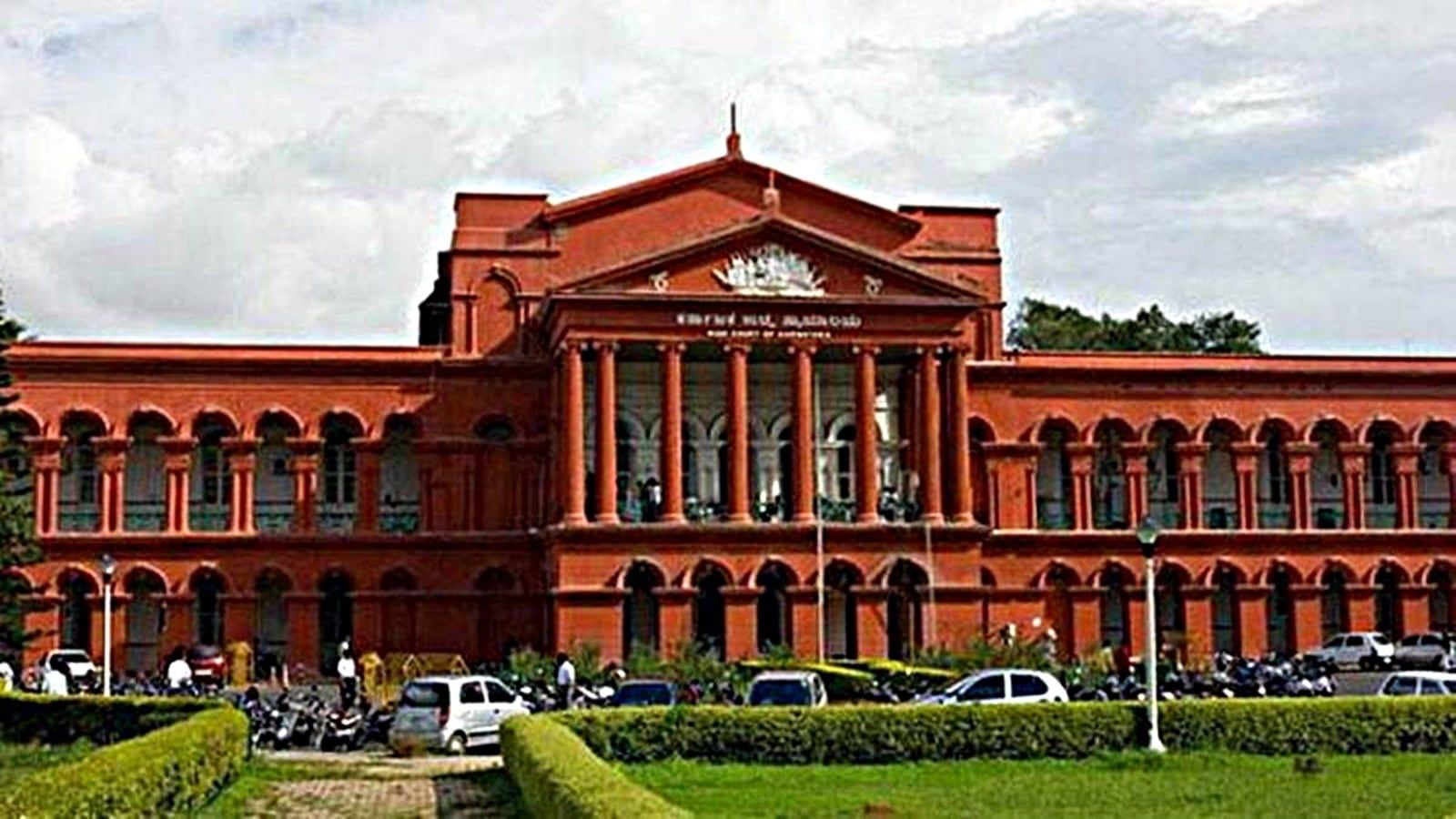
The Karnataka High Court Tuesday refused to stay the Congress government’s decision to sing only the first two stanzas of Vande Mataram at all its programmes, except those attended by the President, Vice President, Prime Minister, or Governor.
A bench of Justice Anu Sivaraman and Justice T P Vivekananda refused to pass an interim order, citing similar proceedings pending before the Supreme Court.
Carnatic musician T M Krishna has moved the Supreme Court challenging the Constitutional validity of the Centre’s 2026 amendment to the Prevention of Insults to National Honour Act, 1971, which extends penal protection to the national song, Vande Mataram, as well as the Ministry of Home Affairs directions mandating the singing of the complete six stanzas of the song at official functions.
The High Court bench, in its order, said, “In the above view of the matter, further steps in this petition should await further order from the Supreme Court. List the matter after three weeks.”
During the hearing, Advocate Angad Kamath, appearing for petitioner Girish Bharadwaj, argued that the September 8 state government order, mandating singing of two stanzas, is an exercise of executive power in a field where the state has no legislative power at all. Only the Union government could decide which version to sing, he said.
“If every state were to decide the version of the national song it would sing, then it would happen that we would have 28 local state songs.”
Additional Solicitor General Aravind Kamath, appearing for the Union government, supported the PIL and said, “What is the official version of the national song? Only the Centre gets to decide.”
He referred to Articles 256 and 257 of the Constitution and argued, “The order issued by the Central government to the state governments is bound to be complied (with) by the states. It is simply not information but an order to sing the official version of the National Song, which comprises six stanzas.”
The Union government recently passed the Prevention of Insults to National Honour (Amendment) Act 2026, making attempts to prevent the singing or playing of Vande Mataram a criminal offence. Following a July 9 letter from the Ministry of Home Affairs, states were instructed to recite the official full version during mass singing.
Advocate General Shashi Kiran Shetty questioned the maintainability of the petition, saying the petitioner’s representation to the government was made on September 14, a public holiday, and the next day he approached the High Court with the plea.
“From 1932 till today only the first two stanzas are being sung. The communication issued by the Joint Secretary, Government of India, to all secretaries is advisory, not mandatory. Moreover, the government order prescribed singing only two stanzas at government functions. ”
The petitioner clarified that the plea does not seek to compel individuals to sing the national song, but demands that whenever Vande Mataram is performed at state functions, it must adhere to the version prescribed by the Union government.
On Monday, a row over the rendition erupted in the Karnataka Assembly and Legislative Council during a three-day special session convened to discuss the Kasturirangan Report and drought conditions in the state.
After the first two stanzas were recited at the start of the session, Assembly Speaker G S Patil and ruling Congress members read the Constitution’s Preamble. Concurrently, Opposition BJP and Janata Dal (Secular) legislators protested the state’s restriction by singing the full six-stanza version of the national song.