Venu Srinivasan: How TVS chief became central to Tata power struggle - The Indian Express
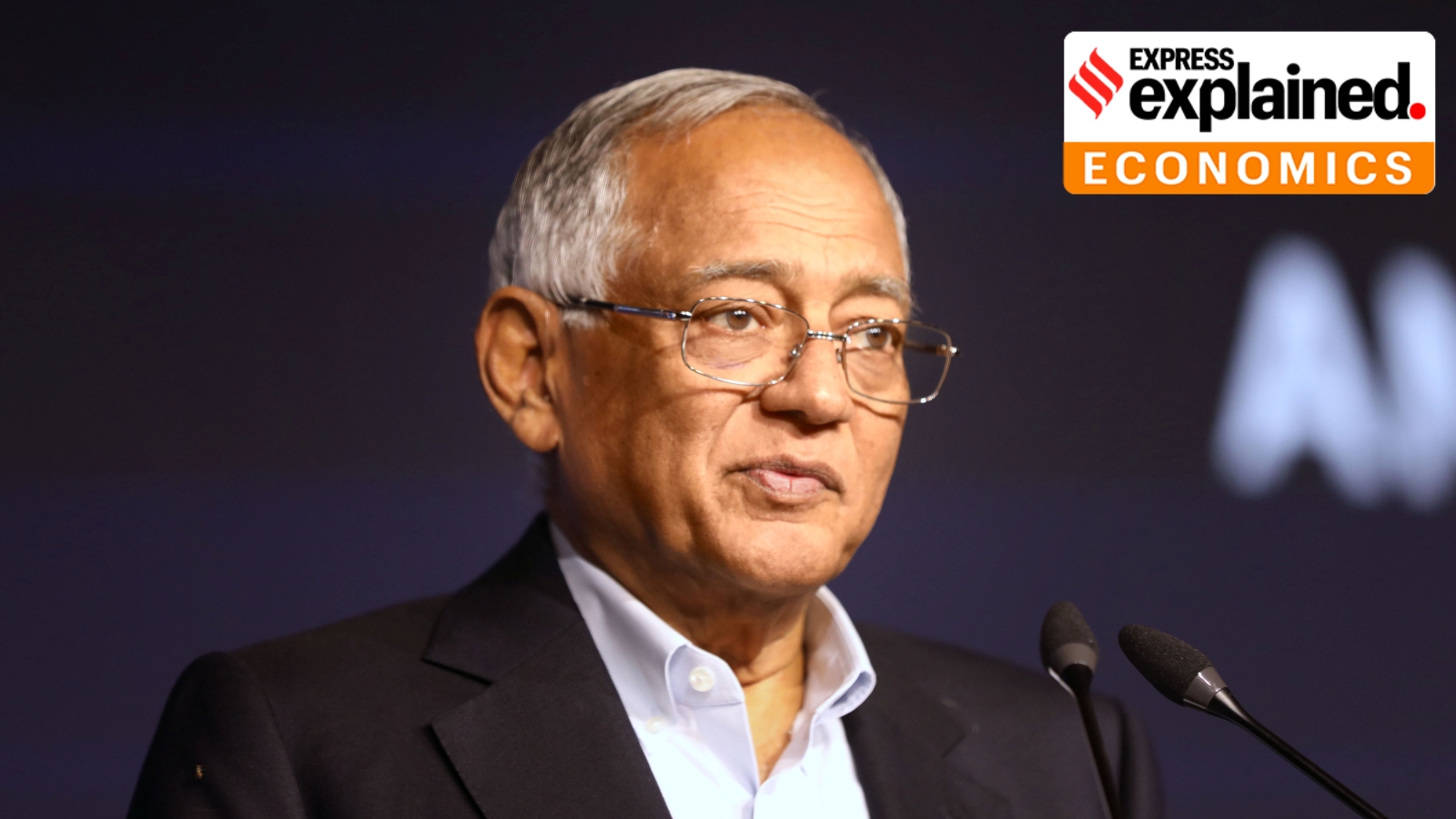
For around five decades, Venu Srinivasan, grandson of Madurai-based TVS founder TV Sundaram Iyengar, built his reputation as the quiet, diligent patriarch of one of India’s most respected automotive families. He transformed TVS from a predominantly domestic manufacturing business into a global automotive group, introduced Japanese quality-management practices into Indian industry, and built a succession structure around his son Sudarshan Venu and daughter Lakshmi Venu.
But Srinivasan’s most consequential role today is not in the TVS Group. It is inside the heart of the Tata group, where the 73-year-old industrialist has emerged as one of the two Tata Trusts nominees on the board of Tata Sons and, increasingly, as a major power centre in the battle over who exercises control over the $180-billion Tata conglomerate.
His position has become particularly significant after Noel Tata took over as chairman of Tata Trusts, following the death of Ratan Tata in October 2024. Srinivasan has repeatedly taken positions that have put him on the opposite side of Noel Tata on some of the most important questions confronting the group. “He was a close ally of Ratan Tata till his demise. He supported Tata in the Cyrus Mistry issue. The situation has changed after Noel took over. There was a period when Tata Trusts didn’t have a CEO… then Srinivasan and Vijay Singh (another director) visited the Trusts office every week to handle things. He has his own philanthropic activities in Tamil Nadu and made TVS companies stronger and healthy. He is a veteran of many battles,” said a senior director in the group, who didn’t want to be named.
A battle was building up with the Tata group too. The Tata Sons board meeting on September 17, 2026, brought those fissures out into the open. Srinivasan supported a fresh five-year term for N Chandrasekaran as Tata Sons chairman and backed the company’s move towards listing on the stock exchanges as required by the Reserve Bank of India (RBI). Noel Tata opposed both. The split has transformed Srinivasan from a behind-the-scenes trustee into a central actor in the Tata power struggle.
Srinivasan did not respond to a detailed mail requesting his comments from The Indian Express.
Srinivasan took charge of Sundaram-Clayton, the holding company of the TVS Group, in 1979, when he was only 27. He had studied mechanical engineering at the College of Engineering, Guindy, and later completed a master’s degree in management at Purdue University.
People who knew him say that Srinivasan spent his summer vacations as an assistant mechanic at his grandfather Sundaram Iyengar’s company in the beginning, working under buses in Madurai’s scorching heat while his friends enjoyed their holidays.
His early years at TVS were anything but smooth. The Hosur plant of TVS Motor went through severe labour unrest and financial difficulties in the late 1980s. In 1990, Srinivasan took the drastic decision to shut the plant for three months. The lockout eventually resulted in a long-term wage settlement and a new framework for industrial relations. TVS Motor, which competes with Bajaj and Hero group, is now one of the top two-wheeler makers in the country with a market capitalisation of Rs 1.98 lakh crore.
The company’s joint venture with Suzuki ended in the late 1990s, forcing TVS to develop its own technological capabilities. Today, TVS Motor is headed by Srinivasan’s son Sudarshan Venu. His daughter Lakshmi Venu has been associated with Sundaram-Clayton. Srinivasan’s wife Mallika Srinivasan is chairperson of TAFE, which manufactures tractors.
The TVS structure underwent a major reorganisation in 2023. The die-casting business was demerged from Sundaram-Clayton, while the parent was renamed TVS Holdings and became the investment and holding company for TVS Motor. The restructuring separated the operating auto-component business from the holding-company structure.
Srinivasan’s record at TVS has not been free of conflict. The group faced a major legal battle with Bajaj Auto over TVS Motor’s 125cc Flame motorcycle. Bajaj alleged infringement of its patented engine technology. The dispute led to court proceedings and forced TVS to modify the technology used in the motorcycle.
The more recent controversy has been inside the promoter family itself. In early 2026, governance tensions emerged at Sundaram-Clayton involving Srinivasan and his daughter Lakshmi Venu. A series of rapid boardroom decisions included the resignation and subsequent withdrawal of the resignation of company secretary P D Dev Kishan, changes in senior management, and the departure of chairman R Gopalan from the chairmanship.
In an unusual reversal, Srinivasan returned as chairman and MD of Sundaram-Clayton in March 2026, nearly two years after stepping away from the chairmanship as part of a succession plan. The episode exposed differences over governance and the division between family control and professional management. TVS Motor, however, continued to operate independently under his son Sudarshan Venu, insulating the main operating company from the promoter-level dispute.
According to Coomi Kapoor’s book, The Tatas, Freddie Mercury & Other Bawas, UK-based Lord Kumar Bhattacharya introduced Srinivasan to Ratan Tata. Srinivasan’s entry into the Tata system came at a crucial moment. In August 2016, Tata Sons appointed him as a non-executive director along with industrialist Ajay Piramal. The appointment came just months before the dramatic removal of Cyrus Mistry as chairman of Tata Sons in October 2016. Srinivasan was among the members of the committee that helped identify a successor.
Ratan Tata subsequently gave him a greater role in the Tata Trusts. Srinivasan and former Defence Secretary Vijay Singh became vice-chairmen of the major Tata Trusts. He became one of the few individuals with positions across both the Sir Ratan Tata Trust and Sir Dorabji Tata Trust. This was significant because Tata Trusts own about 66% of the holding company. Srinivasan was therefore not merely an industrialist associated with the Tatas — he became part of the institutional architecture through which the Tata family exercises control over Tata Sons.
The dramatic change came after Ratan Tata’s death. During Ratan Tata’s time, decisions in the Tata Trusts were traditionally based on consensus. The present Trusts, under Noel Tata, have witnessed much sharper divisions. Srinivasan initially appeared firmly aligned with Noel Tata. In October 2025, when the continuation of Mehli Mistry as a trustee came up, Srinivasan joined Noel Tata and Vijay Singh in opposing Mistry’s reappointment. The three effectively formed the majority against Mistry.
Mistry was a close confidant of Ratan Tata and subsequently indicated that he was prepared to challenge his removal. The dispute opened another front in the widening Tata Trusts governance battle. At the same time, Srinivasan himself was unanimously reappointed as a lifetime trustee of Tata Trusts in October 2025. The following month, he was appointed trustee of the Sir Dorabji Tata Trust for three years and designated its vice-chairman.
“The relationship between Srinivasan and Noel Tata virtually fell apart and became more complicated over Tata Sons’ future ownership structure and listing… Srinivasan wants it to be listed,” said a Tata group source. Tata Sons had applied to the RBI to surrender its regulatory registration in order to avoid the requirement of becoming a listed upper-layer NBFC. But regulatory changes and the RBI’s eventual rejection of Tata Sons’ application revived the listing question.
Within the Trusts, Srinivasan and Vijay Singh emerged as supporters of listing, while Noel Tata was opposed. That difference became particularly important because Tata Trusts collectively own 66% of Tata Sons. The question was no longer simply whether Tata Sons should list. It was who had the authority to determine that position on behalf of the controlling shareholder.
Srinivasan also became involved in a separate legal challenge concerning his trusteeship. Former trustee Mehli Mistry questioned the eligibility of Srinivasan and Vijay Singh to serve on the Bai Hirabai Jamsetji Tata Navsari Charitable Institution, arguing that the trust deed required trustees to satisfy certain community and residence conditions. In April 2026, Srinivasan resigned from the Bai Hirabai trust, citing other business commitments.
Another controversy emerged when Mistry raised questions before the Charity Commissioner about payments and commissions received by trustees from Tata group companies. The allegations were matters raised by Mistry for examination but they did not establish wrongdoing by Srinivasan.
Significantly, in April, Srinivasan himself complained to the Maharashtra Charity Commissioner about the composition of the Sir Ratan Tata Trust board. His complaint contributed to the regulator’s decision to defer a Tata Trusts board meeting in May pending an inquiry. That episode underlined how deeply Srinivasan had become involved in the Trusts’ governance battle.
The decisive break came at the Tata Sons board meeting on September 17. The board considered Chandrasekaran’s future and the RBI-driven listing issue. Srinivasan supported Chandrasekaran’s reappointment for another five years. Noel Tata opposed it. Four directors voted in favour, Chandrasekaran did not vote, and the board proceeded with the resolution.
Srinivasan also supported initiating the process for listing Tata Sons. Noel opposed the move. The board nevertheless approved both proposals by majority vote. Srinivasan’s position was particularly consequential because he is not simply an independent director. He is a trustee of the Tata Trusts and a joint nominee of the Sir Dorabji Tata Trust and Sir Ratan Tata Trust on the Tata Sons board.
The confrontation intensified after the September 17 decision. Tata Trusts subsequently challenged the validity of Chandrasekaran’s reappointment, arguing that the Articles of Association require affirmative support from the Trusts’ nominee directors for certain decisions.
The Trusts have challenged the use of the chairman’s casting vote in that meeting, arguing that such a vote can operate only in the event of an equality of votes at the overall board level and cannot overcome a separate requirement concerning the Trusts’ nominees. The dispute has therefore moved beyond personalities. It now involves the interpretation of Tata Sons’ Articles of Association and the precise legal relationship between Tata Trusts, their nominee directors and the Tata Sons board.
Srinivasan’s transformation is striking. He entered the Tata system as an outsider trusted by Ratan Tata, an industrialist valued for his manufacturing experience and discipline. The irony is that a man who built his own business empire around professional management and institutional processes now finds himself at the centre of a Tata group battle in which consensus has broken down.
The immediate battles will be fought at the Tata Sons shareholders’ meeting and through legal and regulatory proceedings. But the larger question is already visible: after Ratan Tata’s era of personal authority, who speaks for the Tata Trusts — the trustees collectively, the chairman of the Trusts, or the nominee directors exercising their own judgment on the Tata Sons board? Srinivasan’s votes have made that question impossible to avoid.
George Mathew is an Associate Editor with The Indian Express, based in Mumbai. A veteran of financial journalism with nearly three decades of experience, he is one of the country’s most authoritative voices on banking, regulation, and the corporate sector. Expertise & Focus Areas Mathew’s reporting covers the nerve center of India’s economy. His specialized beats include: The Reserve Bank of India (RBI): He has tracked the central bank's policy evolution through the tenures of multiple Governors, offering deep insights into monetary policy, repo rates, and banking regulation. Banking & Insurance: Extensive coverage of public and private sector banks, non-performing assets (NPAs), and key legislative reforms like the Insurance Amendment Bills. Corporate Affairs: Mathew frequently breaks major stories related to India's largest conglomerates, with a specific focus on the Tata Group, documenting boardroom shifts and strategic decisions. Financial Markets: Reporting on the complexities of Foreign Portfolio Investors (FPIs), IPOs, and currency fluctuations. Authoritativeness & Insight With a career dating back to the late 1990s, Mathew possesses a rare institutional memory of India’s financial liberalization and market crises. His work is not limited to daily news; he frequently contributes to the "Explained" section, where he decodes complex financial legislations and market trends for a broader audience. His rigorous reporting has also been featured in scholarly platforms like the Economic and Political Weekly (EPW). Find all stories by George Mathew here ... Read More
Related Coverage in Economy