View / Nvidia is more than a chip company - Semafor
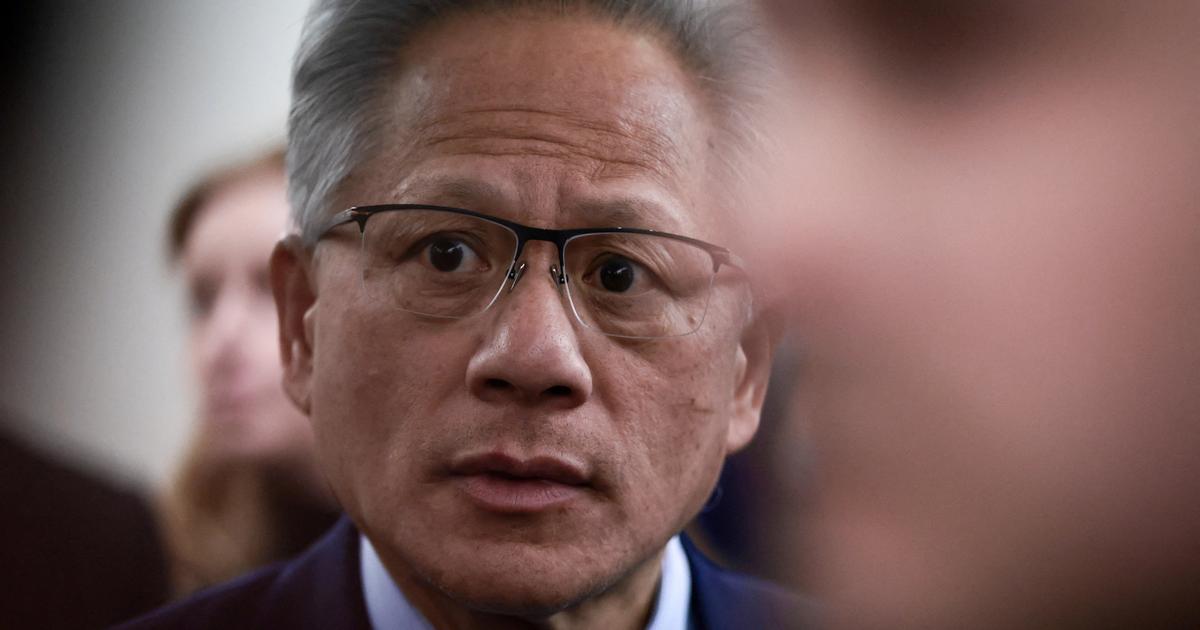
Nvidia has been battered over the past couple of days, but it could get worse.
That is, if founder and CEO Jensen Huang is forced or chooses to step down, or if investigations pin him down for doing something illegal.
In most sectors of the economy, CEOs are expected to run businesses well, but they are generally interchangeable parts — albeit expensive ones. Google and Apple show that founder CEOs, which are harder to replicate, can be replaced. But even among founder CEOs, Huang stands apart for bold bets that helped him endure short-term suffering in return for long-term gain. Most people know Nvidia for the climbing stock in their portfolios, or the GPUs on every tech company’s Christmas list. But his creation of the CUDA platform in 2006 is perhaps the best example of how he’s been able to step ahead of the industry for decades. Nvidia’s computing platform and programming model, the software that essentially underpins the modern AI industry, created one of the most valuable moats in business history.
A half dozen years later, seeing the progress in neural networks, he pivoted to AI. Huang realized AI would require massive data centers with interconnected chips, and concluded that networking would become the bottleneck. He bet billions on the development of NVLink, a nervous system that allows discrete GPUs to act as one massive supercomputer, and the $6.9 billion acquisition of Mellanox Technologies, the Israeli networking company, in 2019. He funded neoclouds so he wouldn’t be reliant on a few customers and acquired Hugging Face to stay ahead of the game on open source.
Huang is 63, and while he has said he could run the company for decades to come, the current investigations raise questions about the future of one of the world’s most consequential companies. Even if he does ride out the turmoil, will he still have the same bold personality that got him here?
Nvidia may still mint money, as demand for the company’s products shows no signs of slowing down. But it’s difficult to imagine anyone stepping into the role with the strategic vision and gravitas to match Huang’s.
The next handful of years are going to be even trickier. China is ascendant. Once it gains independence on semiconductors, it will be able to scale faster than the US. There won’t be any data-center red tape and China will have abundant energy compared to the US.
Because Moore’s law is dead, AI chipmakers are no longer making exponentially better chips every year. Now, they must design entire systems with compute and cooling crammed into server racks like the world’s highest-stakes game of Tetris. They involve immensely complex supply chains colored by geopolitics, big personalities, and vast sums of money.
Nvidia will be a crucial player in the effort to stay ahead of China. Without Huang, it will be fundamentally weakened. It may be already.