Violence against teachers raises alarm in South Africa's schools - IOL
Teachers are being stabbed, shot, assaulted, and threatened by learners across South Africa, with schools facing a growing challenge to keep educators safe.
The latest case involves a 62-year-old teacher in Welkom, who was allegedly stabbed repeatedly at her home in Dagbreek on September 23 by a Grade 11 learner, who reportedly hid inside the property. She suffered multiple stab wounds to her head and hands and remains in hospital.
Free State Department of Education spokesperson Howard Ndaba said a criminal case had been opened and that SAPS was investigating the attack.
Education MEC Mamiki Maboya instructed the Lejweleputswa Education District to support the teacher and her family, while the School Management Team visited them.
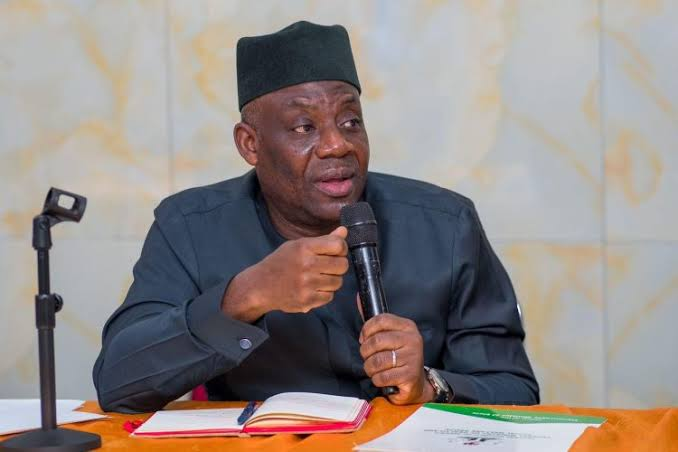
Maboya said the department was deeply concerned by the attack on an educator who had served the school for almost four decades.
“We are appalled and deeply saddened by this cowardly and barbaric attack on one of our most seasoned educators – a mother and grandmother who has given almost four decades of her life to shaping the future of this province. An attack on an educator is an attack on the entire education system and on the future of our children.
“We will not tolerate any form of gender-based violence and femicide in our schools or communities. We call on law enforcement agencies to act swiftly to ensure that the perpetrator is brought to book,” she said.
Ndaba said the alleged learner had not been arrested and that the department would await the outcome of the SAPS investigation before taking any internal action.
Free State SAPS spokesperson Sergeant Palesa Thabana said the teacher remained in hospital after giving police a statement, while the pointing out of the alleged suspect would be conducted in due course.
Thabana said police were investigating cases of attempted murder, robbery with a weapon other than a firearm, and residential burglary.
“Without compromising ongoing police investigations, we can confirm that investigations are still under way,” she said.
The Welkom attack follows a series of serious incidents involving learners and educators in other provinces.
In KwaZulu-Natal, a 24-year-old learner from Chibelihle Combined School was sentenced to 17 years in prison in 2019 after assaulting a teacher, dragging her from her car and attempting to run her over.
In Gauteng, a Grade 6 learner allegedly shot his 51-year-old principal three times at Primrose Primary School in Germiston in 2024. The principal survived, and the learner was arrested on an attempted-murder charge.
In the Western Cape, a learner at St Andrews Technical High School in Elsies River allegedly pointed an imitation firearm at a teacher and pulled the trigger three times during an incident in 2025.
In the Free State, a Grade 10 learner allegedly stabbed a teacher in the shoulder at Kgabareng Secondary School in Viljoenskroon in March last year after the educator reprimanded learners for arriving late.
The Department of Basic Education (DBE) said it was concerned about any incident in which an educator is threatened, intimidated, or attacked while performing their duties.
Acting Director of Communications Terence Khala said the department did not have a verified consolidated national figure covering the past three years and cautioned against describing attacks on teachers as widespread without sufficient evidence.
However, he said incidents affecting educators had been reported in different parts of the country.
“The department takes these incidents seriously irrespective of their frequency. A school is a workplace as much as it is a place of learning, and educators have a right to carry out their professional responsibilities in an environment in which their safety and dignity are protected,” Khala said.
He said the National School Safety Framework, School Safety Committees, and the partnership between schools and SAPS were among the measures in place to prevent and respond to violence. Serious learner misconduct can also result in disciplinary action, while conduct that may amount to a criminal offence should be reported to police.
But Khala said the challenge was ensuring those measures were consistently implemented.
“The challenge is therefore not simply whether policies exist, but ensuring that schools have functional safety structures and effective relationships with the relevant authorities,” Khala said.
“The safety of educators cannot be separated from the broader safety of schools. Teachers must be able to teach without fear, just as learners must be able to learn without fear.”
The Western Cape Education Department (WCED) recorded 56 cases of learners assaulting teachers during the first two terms of 2025, compared with 43 during the same period this year. Six incidents involving weapons were recorded in the first two terms of last year, compared with four this year.
The WCED also recorded 34 cases of verbal abuse against educators during the first half of this year, up from 31 during the same period in 2025.
The department said learners accused of serious misconduct face disciplinary hearings and, where found guilty, a school governing body can recommend expulsion, which is considered by the Head of Department.
It added that district psychosocial support teams also provide interventions for stressful classroom situations and problem behaviour, including trauma-informed schools, emotional first aid, anti-bullying, and anti-violence programmes and restorative discipline.
South African Democratic Teachers’ Union (SADTU) said the response must go further, calling for swift action against threats and attacks, stronger support for school leaders and governing bodies, closer cooperation with parents and police, and tighter measures to keep weapons out of schools.
“Violence against educators must never be normalised or treated as merely a disciplinary matter. Where criminal conduct has occurred, the relevant law-enforcement agencies must be involved,” SADTU said.