Vizhinjam port can cut India's cargo reliance, but Kerala must build fast
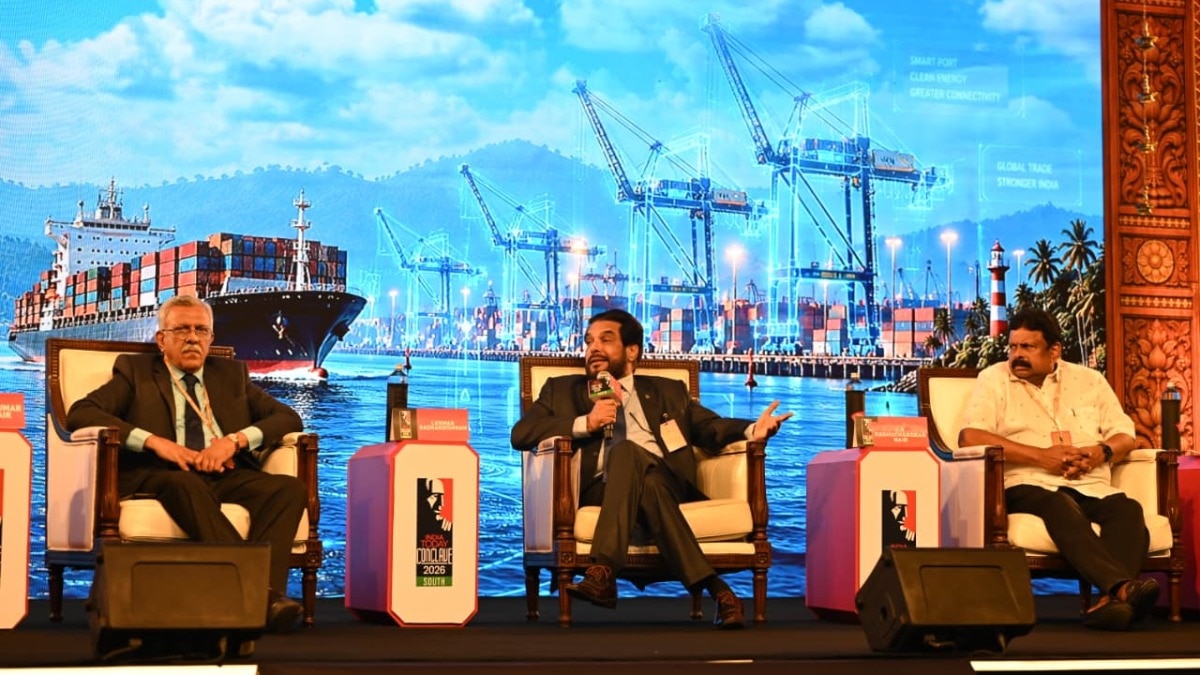
Speaking at the India Today Conclave – South 2026, experts said Vizhinjam International Seaport can help India win back cargo from foreign transshipment hubs, but warned that Kerala must urgently build the roads, rail links, logistics infrastructure and industrial ecosystem needed to turn the port into an economic engine.
India currently transships around 75% of its container traffic through foreign ports such as Colombo, Singapore, Dubai’s Jebel Ali and Salalah, according to Lakshman Radhakrishnan, former chairman of JNPT and former MD & CEO of Malabar International Port & SEZ.
“Every container routed through Colombo, Singapore or any other port outside India costs time, foreign exchange and we have strategic dependence on these countries,” Radhakrishnan said.
Vizhinjam, with a natural draught of around 20 metres, a nearly 3-km breakwater and the ability to handle ultra-large container vessels, is designed to change that dependence.
Radhakrishnan said the port could save exporters and importers around $80-$100 per container and cut transit delays by two to seven days. He estimated that using Vizhinjam instead of foreign transshipment hubs could save around $200-$220 million in foreign exchange.
“Roughly I've calculated that about 200 to 220 million dollars in foreign exchange can be saved if we use Vizhinjam in lieu of the foreign ports,” he said, adding that port-related logistics costs could fall by around 30%.
But the panel said the next challenge is no longer simply getting ships to Vizhinjam. It is about ensuring that cargo moves efficiently from the port into Kerala and the rest of India.
Radhakrishnan said Vizhinjam has to move from being primarily a transshipment hub to becoming a gateway port. Gateway cargo operations began in August 2026 after approvals from the CBDT and the Government of India.
“We have to move from transshipment hub to gateway,” he said, stressing the urgent need for container freight stations. “We need urgently to set up container freight stations, maybe half a dozen at least around Vizhinjam.”
He pointed to JNPT, where he said 33 container freight stations were available when he was chairman, as an example of the logistics ecosystem required around a major container port.
Sreekumar K. Nair, CEO of Vizhinjam International Seaport, said the port’s location gives it a significant advantage because it sits close to the East-West Global Maritime Highway.
“Vizhinjam, today, is literally India's gateway to the world,” Nair said. “We have a draft of almost about 20 metres right on the shore, which makes it possible for the largest of vessels sailing across the high seas to come in.”
He said the port had received seven or eight ultra-large container vessels in the previous month alone.
“Vizhinjam is not just a port for a nearby hinterland, it's not just a port for the entire country, it's rather a port for all the Indian Ocean trip countries,” Nair said.
The port has already handled 2 million TEUs in 18 months, while receiving some of the world's largest container ships, including MSC Loreto with 17,262 containers, according to Radhakrishnan.
But the industry is concerned that the port’s growth could outpace the infrastructure around it.
Raghu Chandran Nair, president of the Trivandrum Chamber of Commerce, called Vizhinjam a “golden goose” but said the ecosystem around it must develop quickly.
“You have a port which is like a golden goose, can lay the golden eggs, but you need to have the ecosystems for this,” he said.
He pointed to the sharp rise in land prices around the port, saying land that once cost around Rs 25,000 per cent is now touching Rs 15 lakh per cent. “For any company to come and invest in the port, buy land, is next to impossible,” he said.
The panel also stressed the importance of gateway cargo. Radhakrishnan said Kerala should target at least 30% of Vizhinjam’s cargo as gateway cargo rather than relying mainly on transshipment.
“If you have just 10 or 15 percent of cargo as gateway cargo, then not much is likely to happen,” he said. “We have to focus mostly on having at least 30 percent, one third of the cargo as gateway cargo.”
Nair said the road and rail connectivity and industrial ecosystem are expected to improve over the next few years, including a planned 65-km outer ring road and rail connectivity.
He said three areas could attract investment: maritime support services, logistics infrastructure such as empty container yards and container freight stations, and government-led land facilitation.
“Without the logistics infrastructure becoming a reality on the land side, we just watch the fun from the sidelines and clap our hands,” Nair said.
The panel’s larger message was that Vizhinjam has already demonstrated its ability to attract global shipping lines. The next test is whether Kerala can build enough infrastructure and industry around it to convert that cargo advantage into jobs, investment and wider economic activity.- Ends