Vladimir Putin’s kitchen sink strategy in Ukraine - Newsweek
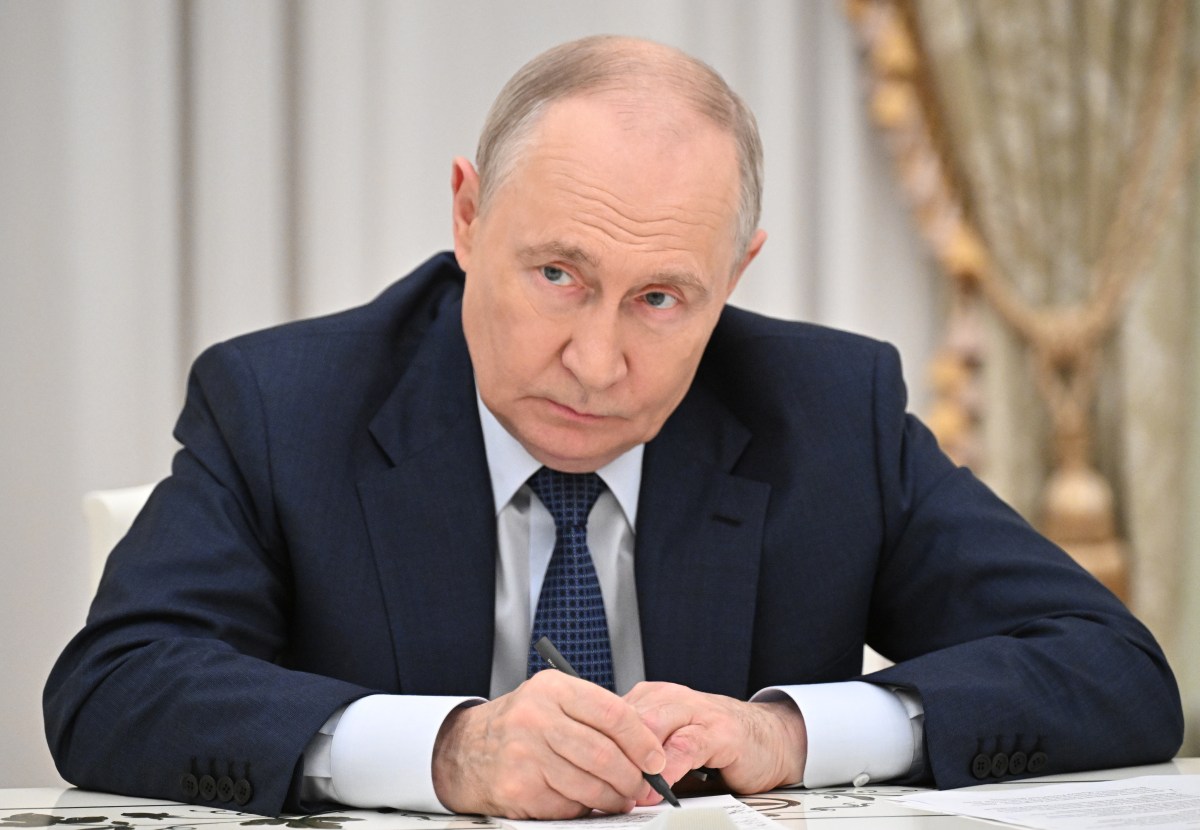
Vladimir Putin spent his Monday making Russia better equipped to wage war, and harder to audit while it does so.
With two signatures, he expanded the size of Russia’s armed forces for the fourth time this year, then pulled the curtain over the evidence that exposes the damage Ukraine is inflicting across the Russian border.
Three days earlier, Russia's election commission said Putin's United Russia party had won a record 349 of 450 State Duma seats, cementing its largest ever parliamentary majority. Forty-six veterans of the Ukraine War and other conflicts were elected, 41 of them for United Russia, to form a handpicked Duma crafted to carry out Putin’s bidding into the next decade.
When Russia’s Finance Ministry sends its draft 2027 budget to parliament this week—one expected to introduce an eye-watering increase in defense spending—the picture will be complete. Putin is showing us he is prepared to throw the kitchen sink at Kyiv and hide whatever breaks in the process.
The first of Monday’s decrees increased the ceiling on Russia’s armed forces by 15,500. This brings the number of military service members to 1,550,500 and the overall authorized strength to 2,441,630. Russia’s armed forces have now added 52,500 positions since March—50,500 of them military posts—across four expansions in seven months.
This is not enough. With Putin still insisting there is no need for another forced mobilization, Moscow is turning elsewhere to meet the burn rate of its troops on Ukraine’s blood-soaked front lines.
Ukrainian intelligence estimates more than 8,000 North Korean troops are currently in Russia, with another 10,000 being selected for training and subsequent deployment there, Volodymyr Zelensky said Monday. Intelligence officials also claimed earlier this month that roughly 25,000 North Korean personnel have rotated through Russia’s armed forces so far, after Putin publicly credited Pyongyang’s forces with helping to repel Ukrainian troops from Russia’s Kursk region early last year.
As Russia’s manpower increases, so too does its firepower.
Ukrainian military intelligence estimates Russia is producing 55-60 Iskander-M ballistic missiles on a monthly basis, alongside up to 50 RM-48Us—a cheap training missile used by Russian air defense units that has been repurposed into a short-range ballistic weapon. In theory, this means Moscow could fire around 100 ballistic missiles a month without eating into existing stocks. Meanwhile, Russian forces launched an estimated 2,850 jet-powered drones into Ukraine last month, nearly double the total for July and more than eight times that of June.
This trend shows no signs of slowing. Despite severe labor shortages in Russia and a battery of Western sanctions designed to restrict access to foreign components, Moscow’s defense firms have managed to expand their production, according to a July analysis by CSIS.
Meanwhile, Russia’s state arms dealer Rosoboronexport claims it closed more than $13 billion in new contracts between January and June; roughly as much as in all of 2025. It also says more than 90 percent of the weapons systems it has contracted for export this year are battle-tested against modern Western-made equipment. The war in Ukraine, and combat against NATO weaponry, is now part of Putin’s sales pitch for new business.
At this point, you may quite understandably be wondering how much all of this is going to cost.
We’ll find out exactly what the Kremlin thinks later this week, when the draft 2027 budget reaches parliament. But documents seen by Reuters already point to a record 17.1 trillion rubles ($203 billion) in defense spending next year—27 percent above the 13.5 trillion previously budgeted and the highest figure since Putin launched the full-scale invasion. Total defense spending from 2027-2029 is projected at 50 trillion rubles.
That’s an enormous bill, and it’s arriving as Moscow’s revenue base comes under mounting pressure. The government recently cut its 2026 oil-and-gas revenue forecast from 8.9 trillion rubles to 7.6 trillion, while doubling its estimated budget deficit to 3.2 percent of GDP.
With sanctions steadily choking Russia’s hydrocarbons and trade profits, the Kremlin has to rummage deep between the sofa cushions for some spare change.
Besides what is expected to be a dramatic increase in government borrowing, the biggest commodity companies are first in line. The Finance Ministry wants to seize 30 percent of the additional income earned by selected metals, mining and fertilizer producers from higher global prices this year, according to draft budget documents revealed last week, with gold miners facing a 20-percent levy.
It’s not just multi-billion dollar mining groups getting the shakedown. Russia rang in the new year with an across-the-board VAT rate increase from 20 to 22 percent, then slashed the revenue threshold at which businesses using the simplified tax system become liable for VAT from 60 million rubles to 20 million.
In other words, everyone—from giant corporations to small business owners, individual consumers, and the bond market—is expected to cough up to keep the war machine turning.
All that brings us to the second of Putin’s decrees on Monday. Alongside the expansion of the military, the Russian president imposed sweeping new restrictions on public access to energy-sector data.
The Kremlin has been steadily shrouding its oil-production and refinery statistics for years—monthly updates on oil-production data disappeared in 2023, and in August 2024 Rosstat simply stopped publishing exact petroleum-product output volumes.
Monday’s decree goes much further. The list of information now restricted is fairly exhaustive, but includes: the names, quantities and prices of exported goods; the identity and details of sellers and buyers, freight companies and insurers, ships and container numbers; payment arrangements; transport routes and transfer points; terminals and storage coordinates; and, crucially, the production and processing volumes of Russian oil refineries.
The decree says the restrictions come in response to sanctions and "unfriendly actions that are contrary to international law" by the United States and countries and organizations aligned with it. Understandably so, given this is exactly the kind of information Western governments can use to trace Russian energy exports and close sanctions loopholes.
It also very conveniently helps to obscure the price Ukraine is forcing Russia to pay for its war.
Kyiv has spent the summer battering Russian refineries with increasingly long-range attacks. The International Energy Agency estimates that a Russian refinery was hit on average once every three days in the first eight months of the year, and in July, Ukrainian drones reached Russia’s largest refinery at Omsk, roughly 1,550 miles from the Ukrainian border. By late August, only five of Russia’s major refineries had escaped a Ukrainian drone strike—all of them thousands of miles east of Ukraine.
The IEA estimates Russian refinery throughput collapsed to 3.8 million barrels per day in June—the lowest level in more than 20 years and around 30 percent below the previous year. Gasoline production was down around 20 percent and diesel almost 30 percent, triggering widespread fuel shortages and forcing Moscow to restrict exports.
Putin’s new decree will make all of this harder to measure, though no amount of restrictions will prevent satellites and war-weary citizens from capturing images and videos of burning refineries.
More goes into Putin’s war machine. Less comes out about the damage. That’s Putin’s kitchen sink approach to Ukraine.