
Water Crisis Exposes a Deeper Civic Power Gap in Puerto Rico on the 9th Anniversary of Hurricane Maria - Newsweek
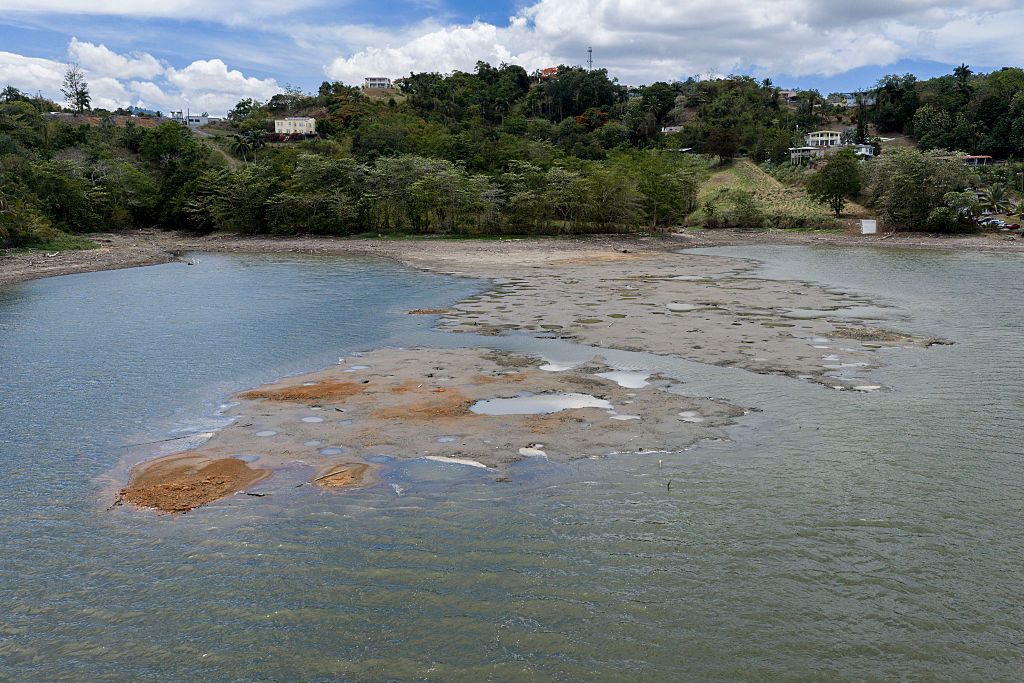
Hundreds of thousands of Puerto Rico residents have faced water rationing and service disruptions as drought and aging infrastructure strain the island's water system.
Nine years after Hurricane Maria exposed weaknesses in critical infrastructure and government response, advocates say the current crisis is revealing a persistent gap between citizens and the institutions responsible for essential services.
As officials manage shortages and emergency measures, questions are growing over accountability, transparency and how residents can effectively demand action before the next crisis strikes.
A White House official told Newsweek last month that the situation in Puerto Rico is being "closely" monitored.
Newsweek contacted the White House via email for comment as well as the Puerto Rico Aqueduct and Sewer Authority, known as PRASA, for comment on its infrastructure modernization plans, ongoing drought response efforts and reported water loss rates within the system. Any response will be added when received.
The immediate cause of the crisis is a combination of severe drought conditions and an aging water distribution network that has struggled for decades.
This past July was reported as the driest month on record in San Juan in more than 120 years, while large portions of the island entered moderate to severe drought conditions. Reservoir levels declined sharply, forcing officials to briefly implement water-rationing measures across multiple municipalities.
The underlying vulnerabilities, however, predate the drought. The New York City Bar Association's Puerto Rico Task Force noted in a September 3 report that water shortages have repeatedly affected Puerto Rico since before Hurricanes Irma and Maria, and that deteriorating infrastructure has magnified the impact of every new challenge.
According to the organization, PRASA has reported losing up to 65 percent of the water it produces through leaks, pipe failures and overflows before it reaches customers.
A major pipeline failure in June further demonstrated how vulnerable the system remains. Emergency interventions temporarily stabilized service, but they did not resolve the larger questions surrounding maintenance, modernization and long-term reliability.
The situation echoes concerns that surfaced after Hurricane Maria when damaged utilities exposed years of neglect within critical public systems. While Maria devastated infrastructure through a natural disaster, today's water emergency is forcing scrutiny of what occurred before the crisis reached a breaking point.
Nine years ago on September 20, Hurricane Maria devastated Puerto Rico, causing catastrophic damage, collapsing communications networks and triggering one of the most significant humanitarian crises in modern U.S. history.
The storm and its aftermath revealed major weaknesses in infrastructure, emergency response systems and coordination among government agencies.
But Jennice Fuentes, founder of nonprofit BoricuActivatEd and a chief of staff to former Democratic Representative Luis Gutierrez, pushed back on the notion that Puerto Ricans simply did not know how to navigate government.
"I would never say that Puerto Rican communities simply didn't know how to navigate government," Fuentes told Newsweek. "Hurricane María was an extraordinary catastrophe, and no amount of civic knowledge could have compensated for failures in infrastructure, communications or government response."
Instead, she said the disaster exposed a different challenge.
"What María did expose, however, was a tremendous gap between people's desire to act and their understanding of how government actually works and what their rightful role in government is," she said.
Fuentes recalled communities mobilizing almost immediately after the storm, raising money, collecting supplies and organizing relief efforts. Yet many people struggled to identify who was responsible for critical decisions.
"People desperately wanted to help," she said. "Entire communities were raising money, collecting supplies, calling elected officials and organizing their communities. But I kept hearing very basic questions: 'Whom do I call?' 'What do I ask for?' 'Which level of government is responsible?' 'Who controls this decision?'"
"Our community did not lack passion. We lacked access to the mechanics of power," Fuentes said.
That gap matters because citizens cannot effectively advocate for solutions if they do not know where authority resides, Fuentes added.
"When you do not know where authority resides, it becomes much harder to direct your advocacy, follow a decision, hold someone accountable or understand where a process has broken down," she said.
As a guiding principle, she often tells workshop participants, "Don't trust your government, but learn your government."
Fuentes also stressed that civic knowledge alone cannot prevent disasters or replace functioning institutions.
"Crisis mobilization and civic power are two different things," she said. "Civic knowledge would not have prevented María or solved the recovery failures that followed it. But an informed citizenry is in a much stronger and better position to demand answers, understand responsibility and stay engaged after the immediate emergency has passed."
"I like to remind people, if you are not at the table, you will be on the menu."
The current emergency, Fuentes said, is exposing many of the same civic challenges that became visible after Maria.
"The water crisis exposes a different dimension of the same fundamental problem," she said. "María was a catastrophic event. It demanded an immediate emergency response. The water crisis forces us to look at what happens long before something reaches the level of an emergency: infrastructure, maintenance, planning, budgets, management, contracts, oversight and accountability."
She said the crisis highlights why engagement between disasters matters as much as engagement during them.
"Civic knowledge cannot fix a broken pipe or fill a reservoir," Fuentes said. "But it can help a community understand who is responsible, where the money went, what was promised, and how to demand an answer. And most importantly, it illuminates a citizen's role in seeking this solution."
At the same time, she cautioned against shifting responsibility away from government agencies charged with providing essential services.
"I never want civic empowerment to become an excuse for institutional failure," she said. "Citizens should not have to become engineers, lawyers or government experts simply to receive basic services."
The New York City Bar Association's Puerto Rico Task Force has echoed concerns about accountability, saying that fragmented authority across federal, territorial and local agencies makes it difficult for residents to determine who is responsible when services fail.
For residents facing days without reliable running water, those questions affect access to basic necessities, public health, work schedules, education and economic stability.
BoricuActivatEd emerged directly from lessons learned after Hurricane Maria. Fuentes said the idea crystallized on the day the hurricane made landfall when she heard a radio host declare: "Without Congress, we are dead."
"I immediately thought, I know something about that. I can help," she said.
After spending 25 years on Capitol Hill, Fuentes said she understood the inner workings of Congress and began questioning why so much of that knowledge remained inaccessible.
"And I began asking myself: 'If I know how this system works, why should that knowledge remain the property of people who happen to work in Washington? And why would you need money to acquire this knowledge?'"
She founded BoricuActivatEd to answer those questions by teaching people how government functions and how citizens can engage with it.
"Traditional disaster relief was critically important after María, but I wanted to address something that would still matter five, 10 or 20 years later: giving people the knowledge and confidence to advocate for themselves before the next emergency ever arrives," she said.
One of the biggest challenges residents still face, Fuentes said, is understanding where authority lies.
"You need to know who has jurisdiction over your issue, what you want that person or institution to do, how to communicate that clearly and how to follow up," she said. "Access to the government is not simply having the right telephone number. It is knowing where authority resides."
Puerto Rico has repeatedly mobilized in response to hurricanes, earthquakes, blackouts, and now a recently improving water crisis, as two of the major reservoirs have increased as of September 18 due to recent rainfall, according to PRASA.
According to a recent PRASA report, the Carraízo reservoir level reached 40.64 meters and is in the safety phase, just 31 centimeters below the overflow level of 40.95 meters. Meanwhile, La Plata Reservoir rose by four centimeters, reaching 44.40 meters, although it remains under operational adjustments.
The challenge, Fuentes said, is maintaining that engagement once the immediate emergency fades from public view.
Nine years after Maria, she believes too much public participation is still driven by crisis.
"Something terrible happens, attention explodes, people mobilize, political leaders respond, and eventually the cameras leave," she said. "Civic power is what happens after the cameras leave."
Repeated emergencies can energize communities, but they can also create frustration and fatigue, she added.
"The danger is becoming very good at responding to emergencies without becoming equally good at exercising power between them."
According to Fuentes, many decisions that shape future crises happen long before an emergency occurs through budgets, contracts, infrastructure planning, and agency decisions that receive little public attention.
"If we only engage after something breaks, we are always reacting," she said. "Civic power means developing the habits and knowledge to participate before that point."
Fuentes said Washington's engagement with Puerto Rico is often episodic, with federal attention increasing during disasters and major political battles before fading again.
"There is a hurricane. A disaster package. A funding dispute. Medicare cliff. Health care disparity. Reliable and affordable electricity. Food assistance. The Jones Act. A major political controversy," she said. "Puerto Rico moves to the front of the conversation, and then eventually Washington's attention moves somewhere else."
Federal engagement, she argued, should be continuous rather than transactional.
After more than two decades working in Congress, Fuentes said she has seen firsthand how important constituent advocacy can be.
"And there is no more powerful title than calling a congressional office and identifying yourself as a constituent," she said. "But communities should not first meet the government at the moment they desperately need something from it."
Looking ahead, Fuentes envisions a Puerto Rico where civic literacy is as commonplace as any other form of education.
"My goal is not to create millions of government experts," she said. "It is to create millions of people who understand that the government belongs to them too."
She said residents should understand who represents them, which institutions control key decisions and how public resources are being spent.
"People should not have to become experts in government only after something goes terribly wrong," she said.
Fuentes also believes stronger civic literacy would improve accountability around future infrastructure failures.
"Accountability becomes much harder when responsibility is difficult to find," she said.
In complicated systems, she added, blame can easily shift between agencies, elected officials and contractors, making it difficult for citizens to determine who is ultimately responsible.
That is why, Fuentes argues, the current water crisis is ultimately about more than drought, reservoirs and aging pipes.
Like Hurricane Maria before it, the emergency is exposing deeper questions about civic power, public accountability and whether Puerto Ricans have the tools necessary to demand answers before the next crisis arrives.
Contact Newsweek editors for this story: Jason Lemon and Anthony Murray.


