We are in talks with both Russia and Ukraine: Jaishankar - The Indian Express
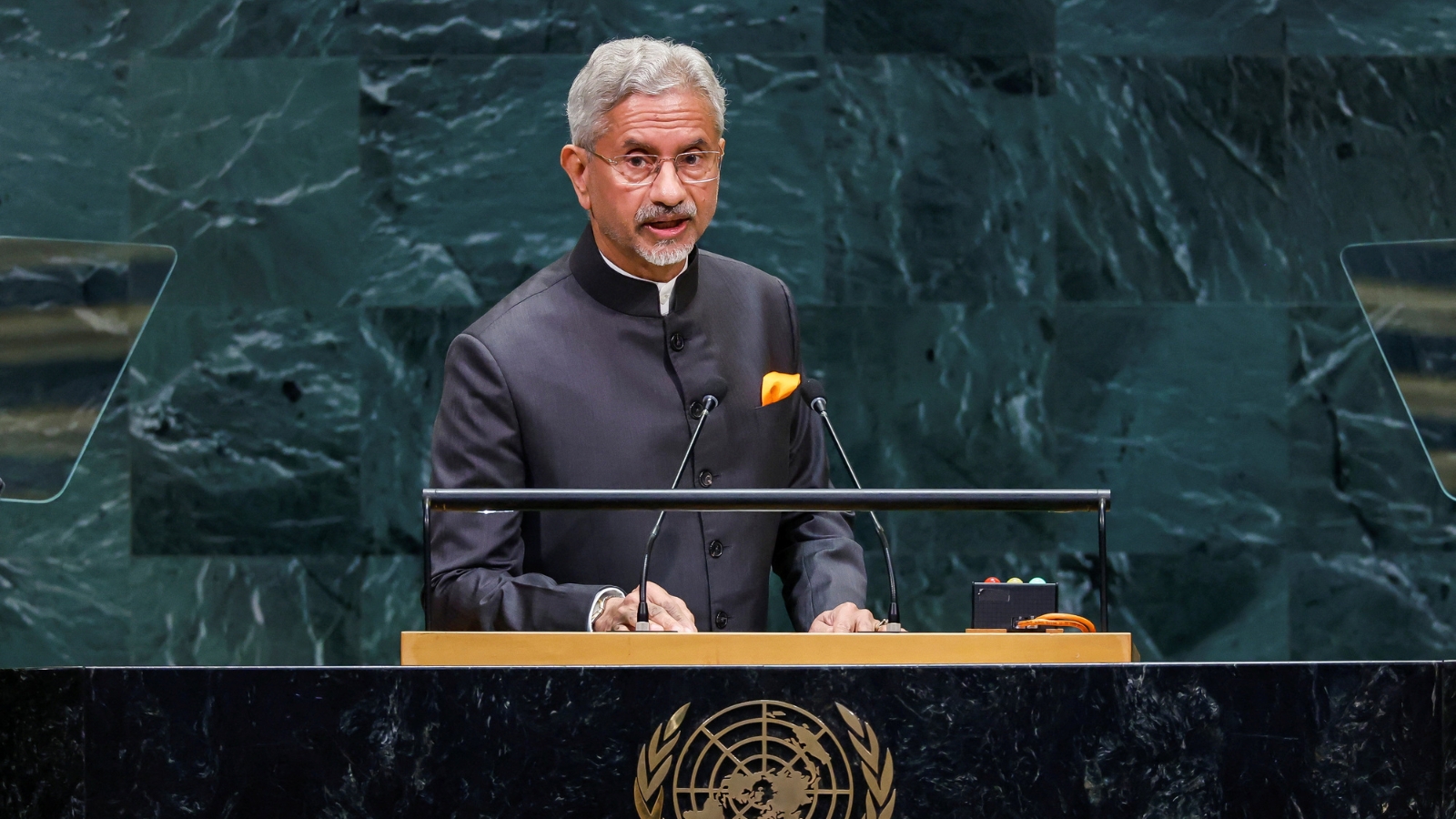
Disclosing that India has gone “beyond advocacy” to be a “little more involved” in the efforts to end the Russia-Ukraine war raging since February 2022, External Affairs Minister S Jaishankar said Sunday that Delhi has been in conversations with both Moscow and Kyiv, trying to be “helpful” on the safety of shipping in the Black Sea, grain and energy exports and on “non-attack possibilities”.
His remarks, at the Munich Leaders’ Meeting in New Delhi, came days after Ukraine’s Foreign Minister Andrii Sybiha said India had put forward a “comprehensive” and “broad” proposal to end the war for the first time.
Jaishankar said, “We are seeing today an unfortunate conflict. Our position on that conflict has been very clear, which is that we would like to see an end to this conflict, and we believe that this will require dialogue and diplomacy. There has to be negotiations in this regard. We have been advocating it for many years, and in recent months, we have got a little bit more involved beyond advocacy. So we have conversations with both Russia and Ukraine in this regard.”
“We are trying to be helpful, starting with the Black Sea safety of shipping issue, but going beyond that to cover some immediate concerns which both of them have on grain exports, on energy exports, on non-attack possibilities. So those are ongoing conversations right now.”
He said India and Russia have historically had very good relations, particularly since the 1950s, and that history is not forgotten.
“For us, Russia and the Soviet Union before that was a country that stood by us in many ways when our security, when our territorial integrity was under threat. And at a time when, you know, much of the world preferred backing a military regime next to us, Russia was a country with which our relations were very good, and… we are obviously shaped in many ways by that legacy. Today, the relationship has widened beyond that. You know, it is again, the world has changed. We have changed. Our own relationships are not what they were in the ’70s and ’80s. Neither is the case with Russia’s,” he said.
“So, like any relationship, it is refreshed. It undergoes a change. New issues come. Old issues sometimes get rebalanced. So it is very much more today an economic relationship as well. So there is a military component. There’s a nuclear component. There are space issues, but there is a significant amount of trade and investment between the two countries, and of course, energy and resources as well. So, any country would, when you view another country, you judge it from our experiences…”
“I can’t expect Europe, for example, to look at the world and say, okay, what does India think? And my view should be based on India’s experience. Europe will base its judgement on Europe’s experience. India will base its judgment on India’s experience. So India’s experience has been, frankly, quite positive and consistently positive,” he said.
On October 1, Russian President Vladimir Putin said Prime Minister Narendra Modi “constantly raises the question about putting an end to the conflict” and has “very good ideas”.
Later that day, speaking to reporters in Kyiv, Ukraine’s Foreign Minister Sybiha said, “We have four proposals. The most comprehensive is India’s proposal. For the first time, India has signalled its willingness to play a role.”
He said Ukraine is prepared to agree to an energy and agricultural truce in the Black Sea, and is also considering an unconditional ceasefire along the line of contact.
Besides India, Ukraine has received proposals for a possible ceasefire from Turkey, Egypt and the United States.
According to Sybiha, Ukraine will agree to a ceasefire on the condition that it covers not only combat operations, but also an end to attacks on energy and port infrastructure, as well as the situation in the Black Sea.
Shubhajit Roy, Diplomatic Editor at The Indian Express, has been a journalist for more than 27 years now. Roy joined The Indian Express in October 2003 and has been reporting and writing explainers and analysis on foreign affairs for about 19 years now. Based in Delhi, he has also led the National government and political bureau at The Indian Express in Delhi — a team of reporters who cover the national government and politics for the newspaper. He has got the Ramnath Goenka Journalism award for Excellence in Journalism ‘2016. He got this award for his coverage of the Holey Bakery attack in Dhaka and its aftermath. He won the Ramnath Goenka Journalism award, 2023, for the second time for his reporting of the Oct 7 attacks on Israel and the war in Gaza. He also got the IIMCAA Award for the Journalist of the Year, 2022, (Jury’s special mention) for his coverage of the fall of Kabul in August 2021 — he was one of the few Indian journalists in Kabul and the only mainstream newspaper to have covered the Taliban’s capture of power in mid-August, 2021. ... Read More