
‘We can be very powerful’: Gen Z protests are making their way to the UK — meet the activists organising the walkouts - The Independent
Want to bookmark your favourite articles and stories to read or reference later? Start your Independent Membership today.
You only have to take a passing glance at the world’s headlines to know that young people have had enough.
In Europe alone, Serbia’s Student List movement has ousted Aleksandar Vučić after two years of blockades and protests against corruption and government negligence; there have been marches in Spain and Portugal all month over high housing prices and unjust evictions, while France and Albania’s education demonstrations have descended into violence, looting of shops, fires, and alarming clashes with the police.
Dubbed the ‘cockroach protests’, united in rage, Gen Z protests have brought down a government in Nepal and a government minister in India. And as they spread across the globe, it was a matter of time before they arrive on our shores
The last major nationwide mobilisation of youth-led protests was on October 17. In France, these demonstrations brought together high-school students, Yellow Vest activists, trade unions and people angry about the cost of living. Organisers estimated up to 800,000 people took to the streets, notably in Paris, Marseille, Limoges and Lyon, causing intense amounts of unrest and forcing the government to increase the minimum wage. Italy also experienced tense “lost generation” lashes on the same date in Milan which saw demonstrators attacking the police, looting shops and setting barricades alight. There was further unrest in Turin and Bologna.
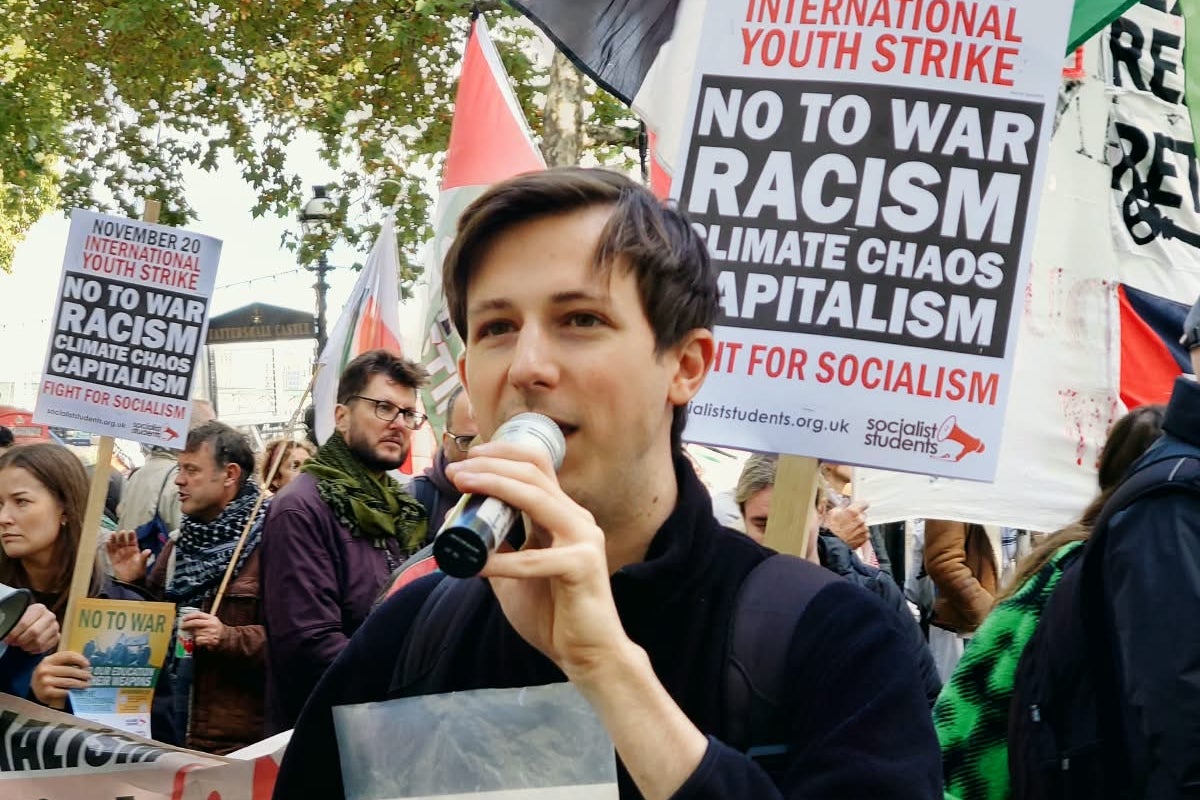
The UK is up next. While last month there were a few small solidarity gatherings, the next day of youth-led action [20 November] is expected to be much bigger as groups, inspired by the global “Gen-Z revolts”, have come together to plan demonstrations in at least 50 towns and cities, with major protests planned in London and Manchester.
The action is part of the International Youth Strike, which is calling for young people across Europe to “rise up, strike and mobilise” against austerity and militarisation, with the movement’s slogan reading “fight for our future, not their wars”. The action was co-founded this year in Cologne by numerous youth organisations, including Socialist Students, whose leader, Adam Powell-Davies, has just returned from a planning meeting in Paris that coincided with the widespread demonstrations.
“It was very inspiring to see hundreds of thousands of people marching peacefully against austerity, for better education, and the funding that we need as young people, students, and workers,” the 27-year-old Oxford graduate says of the protests he took part in. “We’re determined to show that when we’re organised in a mass way, we can be very, very powerful.”
After graduating, Davies worked a minimum-wage restaurant job before turning to full-time activism. Just under 1 million 16- to 24-year-olds in the UK (13 per cent) are now classified as “Neet”, meaning they are not in education, employment or training. “Students have been saying for many years that young people are increasingly faced with unemployment, rising tuition fees, increasing rents, and they’re looking for a fundamentally alternative way of organising society and to take action,” he says.
While the NEETs crisis is finally being addressed in the UK, with proposals put forward in Alan Milburn’s long-awaited report this week, the Office for National Statistics has released its latest labour market figures – and the news is bleak. Overall, job vacancies fell by 22,000 to 690,000, a 3 per cent drop. The last time vacancies were at or below that level was in 2014. In a low-growth economy grappling with a soaring cost of living and a housing crisis, it is invariably young people – many of them students already burdened with debt – who are bearing the brunt.
Add in the threats of a digital armageddon, climate disaster and several very unpopular wars, for many Gen Z’s, it is too little too late. “We’re planning peaceful protests,” Powell-Davies says of the type of demonstrations expected in cities including London, Manchester, Leeds and Liverpool. “But I have to say, I don’t think people would be looting if they knew they were guaranteed a decent income. Ultimately, the system we live under deprives the majority of people of basic necessities.
“What we really want is all generations to take action together,” he adds. “But, clearly, young people can sometimes be the first to move into action because you’ve got the rest of your life ahead of you and the idea that your future is going to be more war, more climate crisis, more instability and falling living standards, can hit particularly hard.”
Twenty-five-year-old Sheffield PhD student and University and College Union (UCU) delegate, Tilde Resare, will start her job hunt next year. “I’m really not looking forward to it,” she says. “It’s really expensive to study. We’re getting educated, and Sheffield brags so much about how many job opportunities there are; but there are still fewer job opportunities than there are graduates ... The entire university system is contradictory to the state of the economy,” she adds.
“I don’t know a single person who thinks the current system is fine and dandy,” says Resare of the atmosphere among her peers on campus. “It feels like a lot of people are going ‘wow, this is not sustainable’... Hopefully we can spread more hope,” she adds, nodding to Serbia’s successful movement to end “years and years of political armament” as inspiration. “I haven’t seen any sort of agitators in our movement at all,” she adds when I ask her about the potential for the kind of riots we saw in Paris and Marseille. “But I understand that I am in a bit of a bubble.”
Final-year Manchester student, Robbie Davidson, 22, says he feels completely uncertain about all aspects of his future, other than that he’ll keep organising for a better one. “From tuition fees going through the roof, cost of living, climate chaos, unemployment, everyone feels beyond disgruntled,” he says. “Chancellor Healey’s budget was hollow. His words were just working in the margins, and that’s not going to cut it on the back of decades of austerity. What we need is a serious programme for jobs, services, and nationalising key industries. Saving a few pounds here and there isn’t doing anything to take on the extreme wealth in society.”
The film student, who grew up in a working class background in East London, takes umbrage with the suggestion that protestors are the cause of violence that has has been witnessed at demonstrations across Europe. “We’ve seen such extreme cases as a child’s hand being blown off in France, the use of stun grenades, tear gas, rubber bullets,” he says. “We want marchers in the UK to be safe, and that’s why we’re organising.”
As well as the UCU, the youth-led day of action has support from the National Education Union (NEU), who are making sure students are safe by setting up chaperoned trips to walkout sites, handing out high-vis jackets, supporting with risk assessments, and making posters and placards. “I think people can look at their own children and grandchildren and question what future they have now,” says Bristol-based teacher and NEU national executive member Sheila Caffrey, 44, who supports the strike.
“They’re not seeing pensions being protected, they’re not seeing jobs being created, they’re not seeing the free education the older generations saw in their times,” she adds. “We want to allow the younger generation the chance to engage and say, ‘this is the future we want and what we want our society to look like’. It should fill older people with hope that the younger generation is taking their future seriously.”
Green New Deal Rising, a youth-led political and climate activist movement that is urging the government to tackle the climate crisis while addressing economic inequality and the cost of living squeeze by creating well-paid climate jobs, will also be part of the walkout. “In terms of environmental issues, it feels like we’re going backwards,” says Durham University economics graduate, Owen Mitchell, 24, who’s “still looking” for a graduate job two years on from finishing his course. “We need more green career paths at our employment fairs,” he suggests.
From home insulation to public transport refurbishment, flood prevention, solar installation, and health care professionals, the group say there are thousands of jobs the government could invest in to simultaneously help the planet while getting young people into work.
With the UN climate chief warning that climate change is now a “pandemic-scale” catastrophe after a period of unstable weather ruining crops and natural disasters sweeping the globe, it's hard not to share his pessimism.
“People are engaged and enthusiastic about the youth strike but also really angry at decisions like Jackdaw and now, potentially Rosebank,” he adds, of the UK’s largest untapped oil field, which MPs will decide whether to approve in the coming weeks, despite climate targets.
While ministers have claimed additional North Sea drilling will aid energy security, lower energy bills and create jobs, campaign groups have pointed out that the overwhelming majority of Rosebank’s oil will be exported overseas and make no meaningful difference to the UK. It is now one of an ever-increasing list of issues that environmentally-minded voters (the Green Party is still the most popular political group among young people in the UK) oppose, alongside austerity and militarisation.
Ultimately, as young people continue to make their voices heard across Europe, Brazil rejects fascism with the defeat of Flávio Bolsonaro, and the US dumps Trump with the midterm election’s blue wave, young people have hope and momentum to make a real change for a different future.
“I think it’s inspiring,” says Mitchell. “In England, as young people, when we look across the world, we really don’t want to be left behind.”
At The Independent, our mission is to deliver unbiased, fact-based journalism. Journalism that's free from political allegiances and the influences of shareholders and commercial interests.
But we need your help. Your support enables us to uncover crucial stories that would otherwise have gone untold, hold power to account, and amplify voices often unheard.
Whether $5 or $50, every contribution counts. It fuels our reporting, invests in investigations, and maintains our independence.
It’s a reminder that our trusted, fact-based, free-thinking journalism remains available to everyone thanks to the generosity of our readers. To show your support and help us tell more of the stories that matter, please make a donation today.
Not ready to donate? Choose 'Maybe later' to start reading.


