We talked to Princess Diana’s brother about his controversial new royals book - Toronto Star
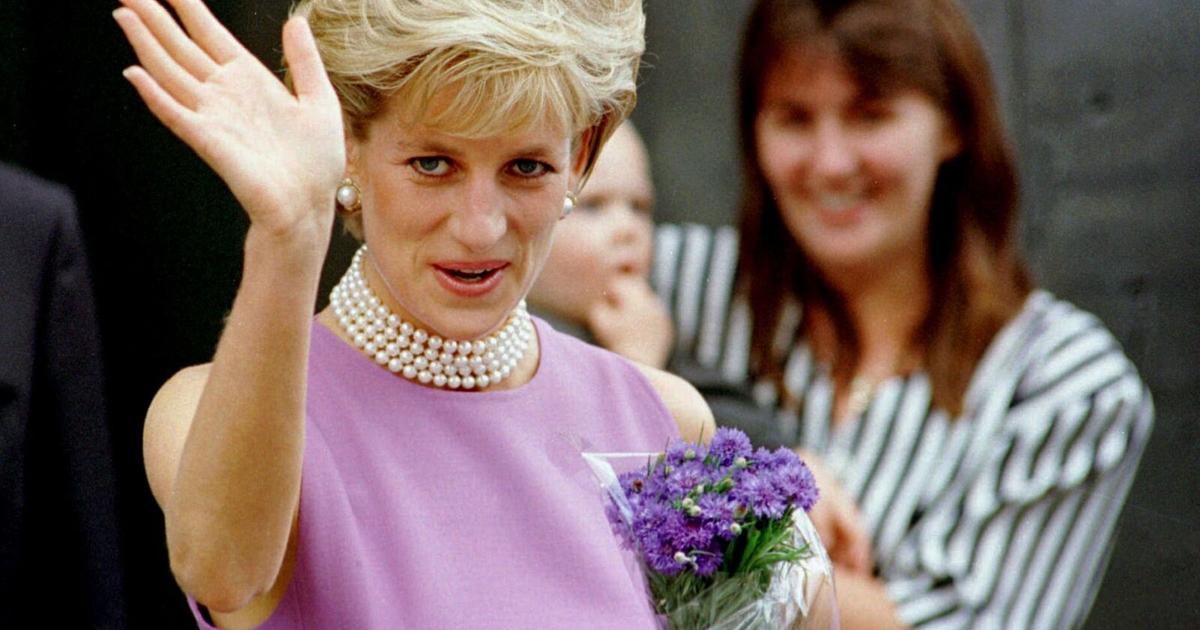
In 'Swan Song” Charles Spencer recounts 'mental torture' of press frenzy.
Charles Spencer, brother of Britain’s late Princess Diana, released a memoir of his sister, “Swan Song: Diana, My Sister” last week.
It’s been a week since Charles Spencer’s memoir about his sister, Princess Diana, became the fastest-selling hardcover non-fiction book in U.K. this year and sparked controversy in part for its claim that the now King Charles sounded “giddily elated” after hearing of Diana’s death.
Over video call from New York, Spencer told the Star the dust is settling.
“The tabloids, who first of all ran the extracts and then feasted on them, went for perceived royal criticism as opposed to the book as a whole, as a celebration of a sister,” said Spencer, 62, a historian and author. “I now feel the book can be seen for what it is, and not packaged for what it wasn’t.”
Charles Spencer was just a teenager when his sister Diana married the future king of England. In “Swan Song: Diana, My Sister,” he writes about how he felt like “collateral damage in a global press frenzy” — he calls it “sustained mental torture.”
Copies of “Swan Song: Diana, My Sister” By Charles Spencer are displayed at Waterstones Piccadilly on September 22, 2026 in London, England.
Before its release, the book generated a flurry of headlines, mostly around Spencer’s claims about King Charles in the immediate aftermath of Diana’s death in 1997, including that he said, “we’ll forget her soon enough” during a tense conversation about Spencer’s opposition to Princes William and Harry walking in their mother’s funeral procession. The stir was further fuelled by Buckingham Palace’s unusual decision to issue a pre-emptive statement, suggesting Spencer’s grief had affected his memory and judgment: “While we do not comment on books as a matter of principle, His Majesty is mindful that the pain of fraternal grief can cloud reason, affect judgment and colour memory in ways others do not recognise, even many years after such a loss.”
Spencer said his book is not an “attack” on the King, despite the fact that Charles doesn’t emerge as a particularly sympathetic character in Spencer’s telling. Partway in the book, Spencer writes that on the night before Charles and Diana’s wedding, Charles told his bride that “she needed to know he was very happy to marry her, but he was not actually in love with her.”
On the subject of the King, the 9th Earl of Spencer is blasé. “He’s not someone I think about in any depth, either way,” said Spencer. “When I include him, it is absolutely because the quote I’m using is fundamental, to not only Diana’s story, but the narrative thread I use to bind together the memoir and history, [which is] the construction of my eulogy.”
“There’s nothing gratuitous. I say this not as a threat — I know a lot, lot, more, which I chose not to put in,” said Spencer. “There were a few things I could, as a historian and journalist, justify having in, but they weren’t necessary, so I took them out. Most of the stuff I know is the sort of thing that will come out anyway from other sources, because things can never stay secret forever.”
“But I’m not that guy. I’m just not salacious.”
Prince William, Charles Spencer, Prince Harry and then-Prince Charles walking behind Diana’s coffin at her funeral service for Diana, Princess of Wales on September 6, 1997.
Spencer said his “respect for privacy” is the reason his nephews make only the briefest of cameos in the book.
“William and Harry are only there as the lucky recipients of a wonderful mother’s love, or as very stalwart sons on the day of the funeral,” he said. “Having had my privacy trampled on quite a lot, I was keen to set some clear boundaries around that.”
Diana, then Princess of Wales waves to the crowd in 1996, a year before her death.
Spencer’s experiences as the younger brother of the most famous woman in the world are some of the most revealing parts of his memoir.
“The U.K. tabloid landscape that Diana landed in was really hostile terrain, and while they were happy to alternate between adulation and fierce criticism of Diana, they built in peripheral characters in her life in select roles, which were inescapable,” said Spencer. In the memoir, he writes about being visited by tabloid journalists who tried to persuade him to be their informant or else face a lifetime cast as “Lady Di’s ne’er-do-well” brother.
“They decided that on no basis whatsoever, but it just fitted,” says Spencer, who — like his sister, he believes — has ADHD, a symptom of which is a hypersensitivity to rejection. “When I would take a really serious pasting in the tabloids — and I know this sounds ridiculous — it would feel like a bereavement, for days. It went in really deep. It really hurt.”
Spencer said he’s never struggled to separate the sister he knew from the celebrity figure she became in life, or that myth that continues to grow after her death.
“The Diana, or Duch as I call her, who I knew so well, had only very limited connection with ‘Lady Di’ or ‘Princess Di,’ or whatever she became in the tabloid headlines,” said Spencer. “I could see that others, totally understandably, had been swayed by her huge celebrity. I took that stance both for her and probably for my own mental health. It was a way of making sense of something extraordinary.”
While he’s only watched a few early episodes of “The Crown,” Netflix’s blockbuster soap opera about the Windsors, Spencer did catch a clip of Emma Corrin as young Diana.
Breaking news, interactive polls, video, and voice notes. Star stories you’ll want to share, delivered where you’re already chatting. Follow the Star on WhatsApp.
“It’s not a criticism of the actor, because I know they’ve won awards, [but] that is not who Diana was, sort of quiet, soulful. No, no. She was fun,” said Spencer. “When I think of Diana — yes, she put up with an awful lot of unhappiness in her time, but she never lost that outrageous, absurd take on life. That’s how I choose to remember her.”
Pressed for examples of her sense of humour, Spencer points to the “English” kind of sensibility seen in the U.K.‘s “The Office” or the “Monty Python” of their childhood. He credits their mother, Frances Shand Kydd, for his sister’s “pizzazz” and sense of the ridiculous. (He also takes pains to correct Shand Kydd’s 2D reputation as a woman who abandoned her children, alongside what he says are incorrect allegations that his dad, “the sweetest guy,” was abusive to her.)
“We were born into a particularly privileged circle, so you either go along with that and think it’s normal, or you get the absurdity of it,” he said. “My mother lent us a lens through which to not take things too seriously. And Diana really had the most lively sense of humour.”
As for what he, as a historian, might hope this book adds to posterity?
“Without sounding too grandiose, how interesting would it have been if Anne Boleyn’s brother had written about her growing up? Wouldn’t history be richer if there was that tale?” said Spencer, referring to the ill-fated George, executed alongside his sibling by Henry VIII. “I’m not assuming historians in the future are going to fall on my book as the greatest source ever, but it’s unusual in being from so up close, and I hope that’s helpful in the future.”
Sarah Laing is a Toronto-based freelance contributor for The Star, writing about celebrity and culture. Follow her on X: @sarahjanelaing.