'Wear Black’ campaign highlights South Africa’s GBVF crisis
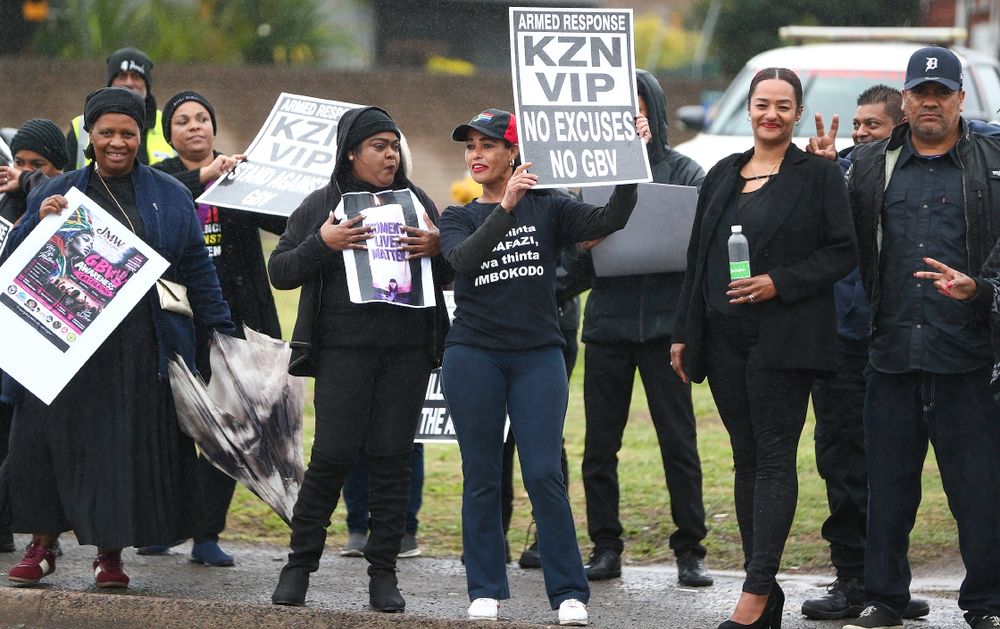
A Gender-Based Violence (GBV) awareness campaign was held in Durban, focusing on community visibility and partnerships between private security companies and the South African Police Service (SAPS) to distribute safety resources and promote awareness.
South African men and women wearing black clothing took to the streets on Friday, waving placards, blowing whistles, and some remaining silent to highlight Gender-Based Violence and Femicide (GBVF) issues and to show solidarity with the families who lost their loved ones in Gauteng.
The country is gripped by the news that nine women have been found dead in Ekurhuleni since July, and police are investigating whether the killings are linked. Acting Police Minister Firoz Cachalia said police would lock down Kempton Park and surrounding areas, adding that it was too early to confirm a pattern to the killings.
Those who participated in yesterday's campaign responded to the social media message "South Africa Wear Black" in solidarity with the women whose lives were lost, their families, and everyone affected by violence against women. A local NGO, South African Fight Back, said it stood in solidarity with the women and girls whose lives have been taken by GBV-related crime.
“Black is a symbol of mourning. A reminder of the lives lost. A reminder of the families left behind. And a reminder that we cannot become numb to another headline, another victim, another family forced to grieve,” the NGO said.
In Durban, activists gathered near the N2 freeway in Parlock to make their voices heard. Racheal Pillay, from Jugs Meals on Wheels and a community activist, said GBV is the biggest challenge facing communities. She said both men and women are victims of GBV. Pillay called for every community to stand together and protect one another.
“Nobody has the right to take another person's life. We need to stand up and say 'no' to all the killings. We need to teach our children how to live better lives in harmony among every race, religion, and gender. Our children are tomorrow's future. My parents taught us to be kind, support everyone, and never judge,” Pillay said.
Lawrence Palmer, chairperson of Newlands East Residents and Ratepayers Civic Rights Organisation, blamed the weak judicial system for the deaths of women and children. He said criminals know the system is not working. He said the courts are full on a daily basis and gender-based violence cases took years to go to trial.
“Criminals are having a party. The justice system has three parts that do not work together: the SAPS, National Prosecuting Authority , and the courts. The police are under-resourced, not well trained, and have a backlog of cases pending investigation. The country faces a brain drain, and experienced prosecutors have left, leaving a backlog of cases,” Palmer said.
A Gender-Based Violence (GBV) awareness campaign was held in Durban, focusing on community visibility and partnerships between private security companies and the South African Police Service (SAPS) to distribute safety resources and promote awareness.
Tanya Kershaw, representing Newlands Rapid Response Team, was disappointed that there was no profile yet for the person responsible for the Kempton Park murders.
“After four women died, the country became aware of what had happened. We thank God for the little girl who stood out of the crowd and made her voice heard. It is not only about the women running; what about those walking to work as early as 4am? How safe are you in your community?” Kershaw said.
Julia Wood from Lakehaven Secondary School in Durban said the youth should be taught that strength is found in respect, compassion, and standing up for what is right, not in violence.
Runners in KwaZulu-Natal also took to the streets in memory of murdered runner Elizabeth “Tsontso” Moselakgomo and other runners on Wednesday. The 5km run started at 5am from Florida Road, with runners dressed in black in solidarity with Moselakgomo and victims of GBVF.
The 38-year-old went missing last week after going for a run. Her family positively identified her body at the Germiston mortuary on Monday. They described her as a much-loved friend and fellow runner whose sudden passing had left her beloved child and other loved ones broken-hearted.
South Africa’s newly established National Council on GBVF held its inaugural meeting on August 31. Its first priorities include a shareholder compact, a costing framework for the country’s response to gender-based violence and stronger oversight of the national strategy.
The Minister in the Presidency for Women, Youth and Persons with Disabilities, Sindisiwe Chikunga, said the council was beginning its work against a grim backdrop, citing the Human Sciences Research Council’s first South African National Gender-Based Violence Prevalence Study, released in November 2024.
The study found that about 7.3 million women aged 18 and older had experienced physical violence in their lifetime, while more than 2.15 million had experienced sexual violence. It also found that about 3.2 million women had experienced physical intimate-partner violence, while approximately 2.5 million men reported having perpetrated physical intimate-partner violence.
Police figures show that 50,511 GBVF cases were reported to SAPS during the 2025/26 financial year, with 30,736 resulting in arrests and/or referrals to the National Prosecuting Authority.
The SAPS figures classify GBVF cases across offences including murder, attempted murder, rape, sexual assault, abduction, assault with intent to cause grievous bodily harm, common assault, attempted rape and contact sexual offences. Rape accounted for 36,217 of the 50,511 reported cases.
Chikunga said the council's responsibilities include monitoring implementation of the National Strategic Plan on GBVF, advising government on policy and legislative reforms, promoting accountability, commissioning research, monitoring progress against national targets and mobilising resources. Its mandate also includes strengthening prevention programmes and supporting survivor-centred interventions.
This week, the sixth National Shelter Indaba, was held in Gauteng. The indaba emphasised the importance of strengthening national and global efforts to curb GBV Femicide. Dina Pule, Minister of Social Development, praised shelter managers, social workers, counsellors, and support staff.
“One in three women aged 16 and older have experienced physical violence. Three women are killed every day by an intimate partner. Between July and September 2025 alone, over 2,000 survivors sought assistance at Thuthuzela Care Centres. Approximately 65% of all recorded gender-based violence survivors in some provinces are children,” she said.
A Gender-Based Violence (GBV) awareness campaign was held in Durban, focusing on community visibility and partnerships between private security companies and the South African Police Service (SAPS) to distribute safety resources and promote awareness.