What 1996 Study Said About ‘Noah’s Ark’ Site - Newsweek
A group of Noah’s Ark hunters are currently testing samples from a famous boat-shaped formation in Turkey to see if they show the Biblical vessel is buried there. But two researchers tried to answer this question in 1996—Newsweek has revisited what they found.
An international team of archaeologists, geologists and soil scientists started drilling into the Durupınar Formation last week. They are hoping the samples they collected from the structure are wood, to disprove those that believe it is "a completely natural rock formation."
This was the conclusion that geologist Lorence Gene Collins and Ark researcher David Franklin Fasold came to three decades ago.
"Evidence from microscopic studies and photo analyses demonstrates that the supposed Ark near Dogubayazit is a completely natural rock formation," they said in their study. "It cannot have been Noah's Ark nor even a man-made model."
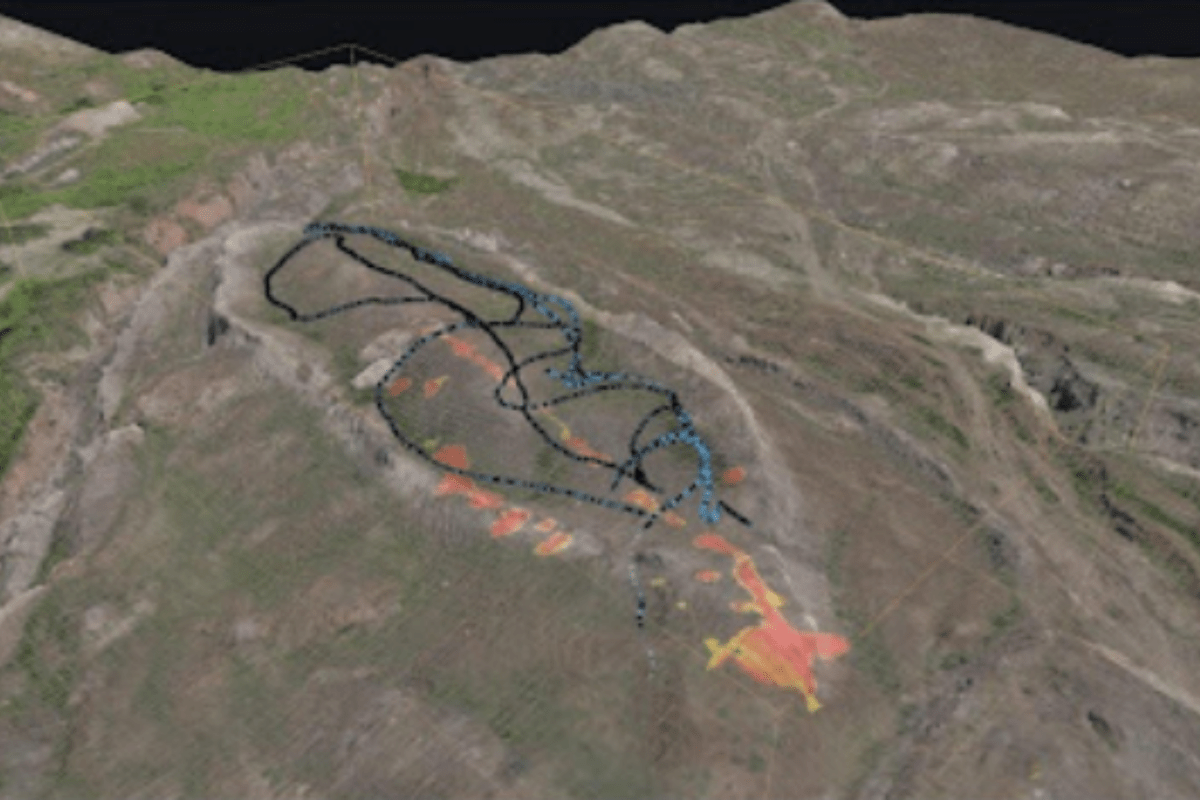
But preliminary radar data from the current project do not show "a simple homogeneous solid-rock signature," Andrew Jones, founder of Noah’s Ark Scans, said last week. His U.S.-based group is working with Bakhtar Research and Engineering LLC, whose scientist, Dr. Khosrow Bakhtar, led the radar survey.
"No bedrock or solid limestone has so far been identified in the holes drilled inside the formation," he said. "These current findings challenge claims that this is simply a natural shape made of limestone or bedrock."
They have not identified any wood material either, Jones told Newsweek, as the team is waiting for lab-testing results to come back.
Fasold, a salvage expert, believed the Durupınar Formation could be the site of Noah’s Ark at one point—he started studying the site in 1985, making nine trips in the years that followed.
As evidence, he cited the length and average overall width of the structure as being "exactly the same as prescribed in the Bible," and apparent internal structure showing the "same nine divisions described in the Epic of Gilgamesh," an ancient Mesopotamian text that also tells a flood story.
But "much of what Fasold uncovered should be viewed as circumstantial," he and Collins wrote in their paper "Bogus Noah's Ark from Turkey Exposed as a Common Geologic Structure," published in the Journal of Geoscience Education.
The study concluded that the formation "has been misidentified as Noah's Ark." The researchers said microscopic studies proved that materials which had been presented as man-made were actually all naturally occurring.
This included a "supposed iron bracket" that was "based on weathered volcanic minerals," and what were "supposed metal-braced walls" were iron-rich minerals concentrated in layers of folded rock.
The researchers said materials that others had previously identified as "rib timbers, planking, and deck beams" were "andesite or basalt pebbles or boulders and show no evidence of petrified wood."
"Finally, no fossilized wood or traces of elemental carbon, wood, or reed fragments have ever been found," Collins said.
Their explanation of the boatlike shape of the formation was because of natural geological processes, that sediments had been eroded and folded into that shape.
The researchers said in their conclusion: "It is understandable why early investigators falsely identified it. The unusual boat-shaped structure would so catch their attention that an eagerness to be persons who either discovered Noah's Ark or confirmed its existence would tend to override caution."
The current team looking into the formation are using GPR, ERT, LiDAR, core sampling and other methods—techniques that were not available to researchers in 1996.
Cores are being taken from depths of up to 18 meters (59 feet), Noah’s Ark Scans said in its announcement. The 1996 study is based on drilling that took place by investigators John Baumgardner and Salih Bayraktutan in the late 1980s, which reached around 10 meters (33 feet).
"What excites me most is that questions debated for decades can now be investigated using physical samples from documented locations and depths," Jones told Newsweek. "We have taken a substantial step forward in our ability to test the site, not completed the investigation."