What American Homes Will Look Like in 2050—Architects Predict Major Changes - Newsweek
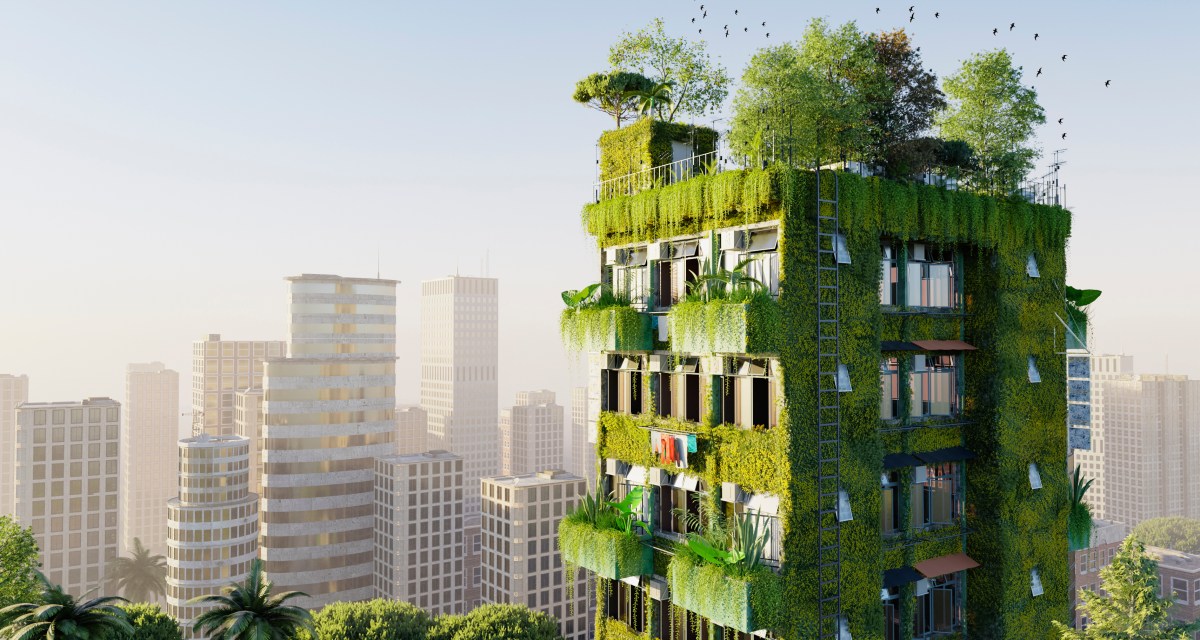
Cities built around autonomous vehicles and sustainable multi-family homes constructed by robots could be the future of housing, architects tell Newsweek.
“Housing is a Human Right. Build It” is the theme for World Architecture Day this year, which is annually marked on the first Monday of October. The day, which falls on October 5 in 2026, was created by the International Union of Architects (UIA) and runs parallel with the United Nations’ World Habitat Day.
According to a 2026 UN report, around 3.4 billion people globally lack access to secure, safe, and adequate housing. “Despite the universal recognition of housing as a human right, progress remains inadequate,” the global body warned.
Here, we spoke to architects who shared their visions for the future of housing and what our homes, communities, and life could look like in 2050.
Just under half (45 percent) of the world’s 8.2 billion people were reported to be living in cities last November, and two-thirds of the global population growth is expected to happen in cities by 2050, according to the UN.
Amid housing shortages, architects say there will need to be an inevitable shift towards more multi-family housing.
“Relying on single-family homes on individual plots is unsustainable,” architect James Saisakorn, partner at The Turett Collaborative, told Newsweek, noting that “by 2050, increasing housing density will be essential to addressing the ongoing housing crisis and conserving our limited natural resources.”
Architect Miles Smith, senior industry growth and strategy manager at Graphisoft, an architectural software development company, agreed that there will be a continued move toward multi-family housing and mixed-use communities that can more efficiently house higher amounts of people in limited space. “Standalone single-family homes may become increasingly difficult to attain in some markets due to land constraints, construction costs, and shortages of skilled labor,” Smith told Newsweek.
Architect Clara Wineberg, principal and residential practice leader at Perkins Eastman, believes that the U.S. will see the return of cottages, townhouses, and other “missing middle” homes, adding density to suburbs in “a way that still feels like home.”
Wineberg told Newsweek that this shift could create a larger tax base, allowing city governments and village boards to consider other needed investments. “Allowing smaller lots shifts the burden from every house needing its own large yard, which is a larger purchasing cost, to putting resources into shared green spaces and community places that serve more people,” Wineberg said, and this would result in housing that is “more attainable, more connected, and more social."
Architect Ben Wan, principal at RODE Architects, shared similar predictions, noting that “if we can get things right, we’ll see changes to policy that further enable the construction of ‘missing middle’ housing," which includes small- and medium-scale multi-family housing like townhomes and multi-story walk-ups. Wan believes that zoning codes need to change to allow greater density and multiple uses, and building codes are evolving to recognize new construction methods.
“Changes like this are happening, but they are piecemeal around the nation; places that embrace this progress today will reap the benefits with vibrant communities in the future,” Wan noted.
Growing concerns over climate change will also shape the future of housing.
Architect Daniel Baumann, principal and design director at Henning Larsen, told Newsweek: “Homes will change because the climate is changing. By 2050, housing will need to withstand hotter summers, heavier rainfall, and flooding while using far less energy and water.”
The findings of a study published in March 2026 in Advancing Earth and Space Sciences revealed “a large and significant acceleration of global warming,” with faster warming over the last 10 years than during any previous decade. The study warned that “it is quite possible that warming may continue its fast pace or even accelerate further.”
An October 2025 study in The Lancet noted that climate change is “making living conditions increasingly hazardous,” due to rapid shifts in temperature and weather patterns. The study also warned that the “location, construction, and operation of homes influence greenhouse gas emissions and must be improved to reduce their environmental impacts.”
Architect Scott Specht, founding partner at Specht Novak, says that “energy is probably where houses will change the most” in the future. With heat pumps and better windows now in the mix, Specht believes that “by 2050, a lot of houses will be making and storing much of their own power and leaning on the grid mostly as a backup.”
Baumann believes future solutions will entail working with nature, such as green roofs that cool buildings, and biogenic materials, such as timber, that retain less heat than concrete.
Saisakorn sees more cross-laminated timber (CLT) being used in the future, as it presents “a more immediate and sustainable option” than 3D printing, which is largely limited to single-family housing.
Composed of solid lumber layers glued at right angles, CLT panels are “exceptionally strong, rapid to assemble, and highly sustainable,” Saisakorn said. Having a significantly lower carbon footprint than traditional concrete, “CLT is a compelling prospect as a primary building material for future residential developments,” he said.
Smith also hopes to see more sustainable, walkable communities that incorporate biophilic elements, such as “daylighting and climate-appropriate orientation, shading and insulation” to reduce reliance on heating and AC use at home.
Wineberg says homes and communities in 2050 are likely to be less centered on cars and more around people. “That rebalancing is where a lot of future housing will be shaped,” she said.
Autonomous vehicles will be one of “the quiet game changers” of future communities, allowing older residents and others with mobility challenges a new level of independence. This would allow architects to “stop designing neighborhoods around driveways, garages, and parking. That frees up space for what brings communities to life: streets, parks, and places to gather,” Wineberg said.
Saisakorn says that prioritizing transit-oriented development (TOD)—building multi-family residential projects connected to existing and expanded transit networks—could be the way forward to create vibrant, walkable communities while reducing automobile dependency.
Wan sees TOD working in tandem with evolving technologies in car-share options, reducing the need for personal vehicle use and expansive surface parking lots or expensive parking garages.
“The public street is one of the largest physical assets for most municipalities, and is the space where communities engage, interact, and spend time and money - making those physical spaces work for a variety of uses and demographics leads to thriving communities,” Wan said.
Architect Max Berger is an associate at Fogarty Finger Architecture and the principal at MSB Architecture. Berger told Newsweek that “the future should be about building not just more affordable units, but better communities,” and expects housing to become more integrated with shared amenities and community spaces.
Baumann envisions the shift occurring at the neighborhood level, noting “instead of isolated housing developments, neighborhoods will be planned as integrated systems, with housing, mobility, energy, and climate resilience designed together.” For example, he notes that in Utah City, a new district energy network already shares heat between buildings and is built to capture waste heat from nearby industries.
Smith agreed that increased density in cities also brings about “great opportunities to strengthen community connections within multi-family developments.” This can entail shared rooftops that provide outdoor gathering spaces and community gardens, study and work areas that give residents a place to focus outside their individual units, and shared fitness facilities or gathering spaces that encourage interaction between neighbors. “It could be like a modern version of a country club for residents within each building,” Smith said.
With that in mind, Smith expects adaptability to become a greater priority in the future of housing development. “Homes should be able to accommodate those who work from home, those in multigenerational families, or those with changing mobility needs without requiring extensive renovations every time a resident’s circumstances change,” he said.
Berger notes that “higher density should not mean sacrificing quality of life,” explaining that advances in technology and construction should “make design the norm rather than the exception, allowing us to build more housing without compromising quality.”
Do you have an architecture or design-related story to share? Let us know via s.kim@newsweek.com, and your story could be featured by Newsweek.
Contact Newsweek editors on this story: Sirena Bergman and Gray R. Thomas