What is the White House press pool, what its boycott of Trump can mean - The Indian Express
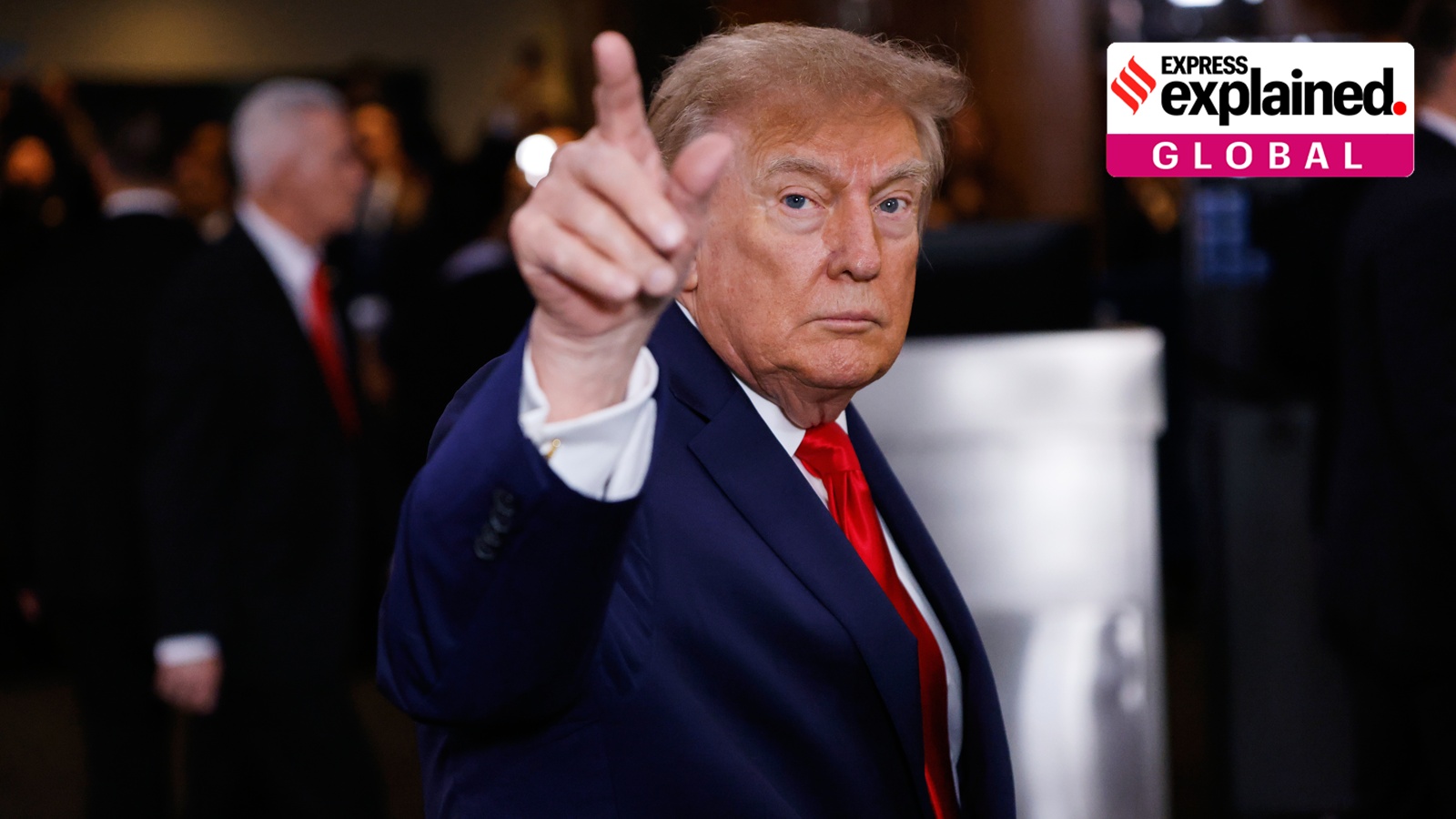
For decades, whenever the US President travels anywhere in the world, he is accompanied by a group of journalists and a news channel crew, complete with technicians and camera operators. When he addresses the UN General Assembly on Tuesday (September 23), these journalists will be absent — the White House press pool, as it is called, is boycotting Donald Trump.
When Trump inaugurated a helipad on Monday, his remarks were barely audible because the press pool’s sophisticated cameras were not on him.
Trump had last week announced that CNN, MS NOW and Politico would no longer be allowed inside the White House, accusing the outlets of unfair and false coverage. In solidarity with them, the press pool as a whole — which includes Fox News, generally warm towards Republicans — has decided not to cover the President.
Meanwhile, CNN, MS NOW and Politico have sued the Trump administration, arguing that the ban violates their constitutional rights.
Trump has responded by posting on social media that, “Fake News people and publications that only write negatively, and who violate our National Security by writing false and defamatory stories with unknown “sources,” shouldn’t be allowed access to the most important Office anywhere in the World.”
The White House has also launched a new video platform, Trump TV, offering a stream of presidential content.
The press pool was created to solve a logistical problem: the President cannot be accompanied by every journalist who wants to cover him. The system dates to the 1950s, when the White House under Dwight Eisenhower and news organisations developed an arrangement under which a small group of reporters, photographers, radio journalists and television crew would physically accompany the President and then share what they saw and heard with the wider press corps.
The decision of which reporters should be in the press pool was taken by the White House Correspondents’ Association, created in 1914. This changed last year, when the Trump administration started exerting greater control on which individual journalist could be in the pool.
The are separate pools for different forms of media. The television pool currently consists of ABC News, CBS News, CNN, Fox News and NBC News. The five networks take turns sending a crew to Presidential events and share their footage with one another and with other news organisations. In the present case, it was CNN’s turn to cover the President, and when it was banned, the other outlets decided to not accompany Trump at all.
Covering the American President involves constant movement and entry into restricted spaces. The TV pool crew can travel on Air Force One, accompany the President in the motorcade and enter places such as the Oval Office. Apart from covering events, the pool is always on standby in case the President needs to address the nation suddenly.
Following the President is extremely expensive. News organisations have to pay for journalists’ travel, hotels, food, internet and ground transportation. A foreign presidential trip can cost a television network thousands of dollars. Smaller digital outlets, individual journalists, or content creators generally cannot sustain that kind of operation.
The five major American TV networks therefore spread the burden among themselves: each takes its turn paying for and operating the crew, while everyone else gets access to the resulting footage.
In case of the Tuesday UN event, for example, a newspaper, website or smaller broadcaster may have a journalist at the UN, and the UN will have its own cameras. But that will not guarantee access to every room Trump enters or speaks in. Also, if the journalists aren’t from the press pool, they are under no obligation to share their footage with others. And smaller networks or independent journalists can hardly match the reach of the five major TV networks put together.
CNN, MS NOW and Politico argue that the government cannot selectively deny journalists access because it dislikes what they publish or how they cover the President. Their lawsuit invokes the First Amendment, which protects freedom of speech and of the press, and the Fifth Amendment, which includes protections relating to due process. They are asking a federal judge to restore their access while the case proceeds.