What it takes to bring rare butterflies back - CBC

Welcome to our weekly newsletter where we highlight environmental trends and solutions that are moving us to a more sustainable world.
Hey, it's Bridget. I was excited to learn about various efforts to bring back rare butterflies across the country, and what it takes to sustain populations and their habitats over time.
A male mottled duskywing, one of the butterflies a team of scientists is working to reintroduce in Ontario. (Jessica Linton)
The mottled duskywing has silvery wings mottled with light and dark brown spots, though you have probably never seen one. Habitat loss has nearly wiped it out in Ontario.
Now, scientists are working to bring the butterfly back to places like Pinery Provincial Park and the Alderville Black Oak Savanna. Researchers are also studying how to successfully reintroduce butterfly species into their natural environments, a process that often requires restoring the habitats themselves.
Ryan Norris, a University of Guelph biology professor leading the research team, said restoration often takes more than simply planting native plants.
But despite butterfly introductions around the world, there is little research on what actually works.
"To be honest, a lot of them have been 'let's move this butterfly over here and hope it persists' — no monitoring, nothing," Norris said.
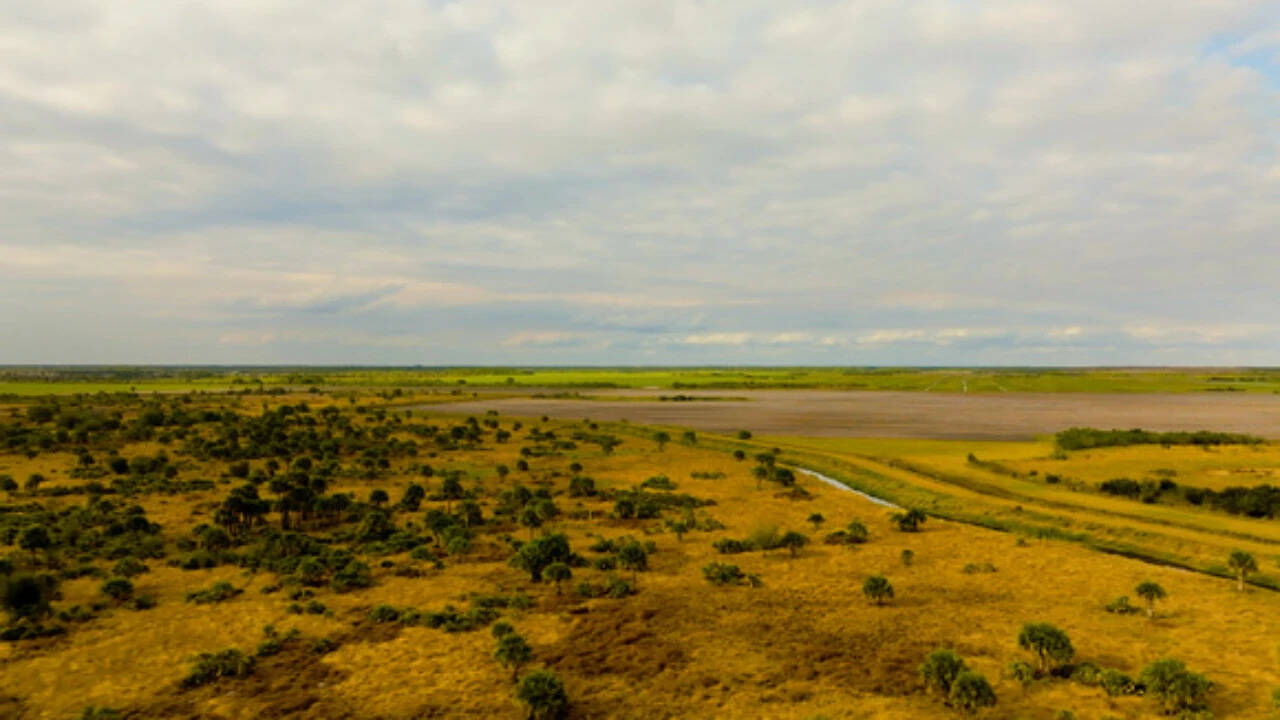
This new research is underway at the Alderville Black Oak Savanna in Ontario, home to Canada's largest population of the mottled duskywing.
Rick Beaver, a knowledge keeper for the Alderville First Nation and former director of research and restoration at the Savanna, credits traditional controlled burning practised by his community.
Beaver, who holds multiple biology degrees, said the burning prevents the encroachment of other plants that could smother out New Jersey tea — a shrub with fluffy white flowers that mottled duskywing caterpillars rely on for food.
Fire helps New Jersey tea grow more robustly — this shows the growth six weeks after the area was burned. (Gillian di Petta)
"New Jersey tea in itself is a fire-dependent plant, so the dance between the mottled duskywing, fire and New Jersey tea is one that has to be observed carefully," Beaver said.
He says the restoration process is "as much of a practice of art as it is science."
Beaver grew up on the Alderville First Nation lands.
"I remember growing up with things like butterfly milkweed, bright orange plants and grasses that were much, much taller than I was," he said.
"I was always interested in butterflies, I chased them around the Savanna, but the importance of that wasn't impressed upon me until I began to learn and practise biology and recognize the rarity of it."
Rick Beaver, left, takes school students through the Black Oak Groves at the Alderville Black Oak Savanna. (Cassandra Shaw)
Beaver, Norris and the Savanna team recognize the importance of controlled burning to maintain these landscapes and species.
Parts of the Savanna are burned every year, but one portion of the land hasn't been burned in about a decade. It will be used to study the effects of fire on the habitat and the mottled duskywing populations.
Gillian di Petta, the acting natural heritage manager for the Savanna, calls the work a perfect example of two-eyed seeing — combining Indigenous and scientific knowledge and methods.
"First, we're observing the land based on what we know and what it's telling us, then we're crunching the numbers and doing the scientific side of it," she said.
A prescribed burn that was conducted in the spring of 2023 to help manage the tallgrass on the Alderville Black Oak Savanna. (Sal Kennedy)
The mottled duskywing was chosen to launch the multi-year project because small populations already existed in Ontario, and its host plant, New Jersey tea, was easy to find.
Now that the butterfly has been successfully reintroduced in various places — including a former tobacco field in Norfolk County — the team is studying the impacts of burning and what it takes to sustain their habitats and populations over time.
The goal for Norris and his team is to ensure the mottled duskywing can sustain a thriving population, rather than relying on a few one-off releases.
He says his five-to-10-year vision is to create Canada's first multi-species framework for insect conservation, with various groups collaborating to reintroduce butterfly species across the country.
The next species being reintroduced are the frosted elfin and the curiously isolated hairstreak.
A frosted elfin butterfly at the Kitty Todd Nature Preserve in Ohio. (Jessica Linton)
Norris says frosted elfin has been absent from Ontario since the early 1990s, but researchers are bringing butterflies from New York to reintroduce them on the north shores of Lake Erie.
The curiously isolated hairstreak is a unique species located in Alberta's Waterton Lakes National Park. With only a small population isolated to this single spot in Canada, the team is trying to find new areas to reintroduce it.
A curiously isolated hairstreak butterfly at Waterton Lakes National Park in Alberta. The species got its name because it was found to have enough genetic differentiation from the half moon hairstreak to be considered a new species. (Wilder Institute)
Norris is hopeful the plan will work because he's seen what is possible with dedicated effort.
"Putting rare species back, especially into rare ecosystems, signals that we've done the right thing in trying to restore these habitats," Norris said.
"It sends a message that we can come back from things that we regret and mistakes that we've made."
Old issues of What on Earth? are here. The CBC News climate page is here.
Check our podcast and radio show. In our latest episode: Nepal lost billions in a devastating flood. So, why is it only getting $20 million from a global fund meant to help countries recover from climate catastrophe? This week, Jo finds out whether the loss and damage fund is passing its first test. We hike high into the Himalayas, where we meet a hunger striker calling on developed countries to take more responsibility, and check in on the COP31 climate summit in Turkey, to ask whether the international community is stepping up.
What On Earth? drops new podcast episodes every Wednesday and Saturday. You can find them on your favourite podcast app or on demand at CBC Listen. The radio show airs Sundays at 11 a.m., 11:30 a.m. in Newfoundland and Labrador.
Check the CBC News Climate Dashboard for live updates on record-breaking weather and current conditions across the country. Set your location to find out how today's temperatures compare to historical trends.
Last week, Bryce Hoye wrote about how death data from monarchs tagged with radio trackers and monitored during fall migration could reveal important pinch points between Canada and Mexico.
Bruce Stevens asked: "How come you never mentioned milkweed [...] or is it only needed on their trip back up here from Mexico?"
Loss of milkweed plants is one of the main factors driving monarch declines. But as Bruce's question suggests, the loss of milkweed is primarily a problem for the northward-migrating generations headed from Mexico to Canada come spring. That's because monarchs exclusively lay eggs on milkweed, the leaves of which are the only thing their picky caterpillars will eat when they emerge from the chrysalis.
The marathon flight south goes on without any sneaky butterfly flings — that long-lived generation, which can survive for upwards of eight months, isn't sexually active until spring. They do, however, need to fuel up on flowering plants along the way, so planting native flowers that bloom in late summer or early fall does help them.
It takes several generations to make it all the way back to summer breeding grounds in the northern U.S. and Canada, something monarch enthusiasts can help facilitate by growing milkweed in their gardens.
Murray Munn wondered if the weight of the tracker attached to Eddie, similar to that of a toothpick, may have contributed to his death.
Greg Mitchell, a lead researcher overseeing the monarch tagging program with Environment and Climate Change Canada, explained that before researchers started fitting wild monarchs with radio trackers, they experimented on tropical butterflies at the Montreal Insectarium. Those butterflies kept the tags on for their entire typical lifespans. Once they were recovered after death, Mitchell says there was no evidence the tags had loosened or would have come off had the tropical butterfly continued to live.
That's why, when a monarch's signal goes dark, researchers confidently infer "the monarch likely met its demise," he said.
Ultimately, Eddie's death remains a mystery, but he travelled 1,200 kilometres with the radio tracker attached before his signal stopped beeping. It's more likely he was struck by a vehicle, eaten by a bird, became exhausted in a place with too few flowering plants to fuel up on, or that he died during inclement weather, such as a severe wind event.
We also featured a story about how sewing has become a trendy way to upcycle thrifted clothes.
Christine Green of Goderich, Ont., had a project suggestion for this time of year: "I don't make clothes (though I do buy a lot from thrift stores and mend my own clothes where possible), but I do recycle fabric into quilts, etc. Recently, I picked up a quantity of Christmas fabric from my local library craft supplies exchange, which I sewed into gift bags of different sizes, which I will use to 'wrap' Christmas presents, thus keeping a lot of wrapping paper out of the recycling bin. They can be used over and over."
Got questions, comments or just want to share something? Write us at whatonearth@cbc.ca (and send photos there, too!)
California has been dealing with some incredible coastal flooding over the past few weeks due to a combination of weather events.
Last weekend, a powerful storm prompted the U.S. National Weather Service to advise people to stay away from the coast, warning that waves of six to seven metres — and even some as high as 11 metres — could slam into the coast. The agency also warned of powerful rip currents and "sneaker" waves.
In the photo above, two bystanders are hit with one of those sneaker waves near the Pacifica Pier in California.
What are sneaker waves? They're large, dangerous waves that surge farther up a beach than normal, taking people by surprise because the preceding waves weren't as large. They can pull people out into the ocean.
Some places, like Seal Beach, built sand berms to try to prevent the water from reaching roads. There have been some incredible videos on social media showing just how far these waves are reaching up the shore.
Then there's the role El Niño is playing. As most people are likely aware, this year's El Niño has already broken records, and it still hasn't even peaked.
During an El Niño, the waters of the Pacific Ocean shift. Instead of being pushed west, warm surface water shifts east, raising sea levels. Storms can exacerbate this.
And finally, there are king tides, exceptionally high tides influenced by the gravitational pull of the moon and the sun. They typically occur during the winter months in California.
Put this all of together: climate change causing higher sea levels, El Niño and king tides, and California is in for a ride this winter.
Strawberries in November? How climate change is reshaping growing seasons in southwestern OntarioWATCH | Strawberries in November? It's a first for Raymont's Berries in Cottam, Ont.:Strawberries in November? It's a first for Raymont's Berries in Cottam, Ont.
For generations, June has been strawberry season in southwestern Ontario. But at one Essex County farm, the harvest is continuing well into November.
Brad Raymont, owner of Raymont's Berries near Cottam, has broken his farm's record for the latest strawberry harvest, surpassing the previous record of Nov. 9.
Raymont said an unusually mild fall has allowed his outdoor strawberry plants to continue producing fruit, with little frost until mid-November.
"We've really had a beautiful fall," he said on Windsor Morning. "We had a cold late spring, but we really haven't had a frost on the farm till maybe this morning."
Although production has slowed considerably, Raymont said the remaining strawberries are still of good quality, and customers are enjoying the unexpected late-season treat.
He believes climate change is playing a role. "Even 10 years ago, we weren't picking strawberries in November," he said.
Katharina Neufeld harvests strawberries at Raymont's Berries near Cottam, Ont., in mid-November. (Submitted by Brad Raymont)
But Raymont acknowledges that the changing harvest isn't entirely about the weather.
New growing techniques and strawberry varieties from around the world have allowed farmers to extend production well beyond the traditional June season.
Unlike June-bearing strawberries, which produce most of their fruit over two or three weeks, day-neutral varieties can produce berries throughout the growing season.
"The world has shrunk, like we have strawberry varieties from all around the world now," Raymont said.
Madhur Anand, a professor in the School of Environmental Sciences at the University of Guelph, said the extended harvest is consistent with changes scientists have been observing in plants for decades.
"We as ecologists have been sort of documenting these changes for all kinds of plant species, not just ones that we use in agriculture," she told CBC Windsor.
Brad Raymont, owner of Raymont's Berries near Cottam, Ont., has broken his farm's record for the latest strawberry harvest, surpassing the previous record of Nov. 9. (Submitted by Brad Raymont)
Anand has noticed changes in her own garden in Guelph, where tomato plants are still producing fruit in November.
Anand said advances in agricultural technology and changing climatic conditions are likely both contributing to longer growing seasons.
"I think no variety is perfectly adapted to the rate of climate change that we're seeing. So it's definitely going to be a combination," she said.
While extended harvests could benefit some farmers, Anand cautioned that the overall consequences of climate change for agriculture are largely negative.
She pointed to extreme heat, droughts and flooding as increasingly serious threats to agricultural production.
Warmer temperatures might benefit certain crops, but unpredictable weather could also destroy harvests or reduce productivity.
Anand said November strawberry harvests could become more common over the next 20 to 30 years, although more extreme weather could make growing conditions less predictable.
Meanwhile, Raymont said the longer season has already changed his business.
A decade ago, his farm market closed around Labour Day. Now, it typically remains open until at least Thanksgiving, with occasional November sales.
And while strawberries picked in November may seem unusual, Raymont said they can taste just as good as their summer counterparts.
"Sometimes I think the fall ones taste as good or sometimes better than the first June ones," he said.
"A June-bearing strawberry is usually softer, juicier, and a November-bearing variety is firmer [and] even sometimes a little bit of a crunch."
Thanks for reading. If you have questions, criticisms or story tips, please send them to whatonearth@cbc.ca.
What on Earth? comes straight to your inbox every Thursday.
Add some “good” to your morning and evening.