
‘What will actually change?’ Ramaphosa’s GBVF plan faces pressure to deliver
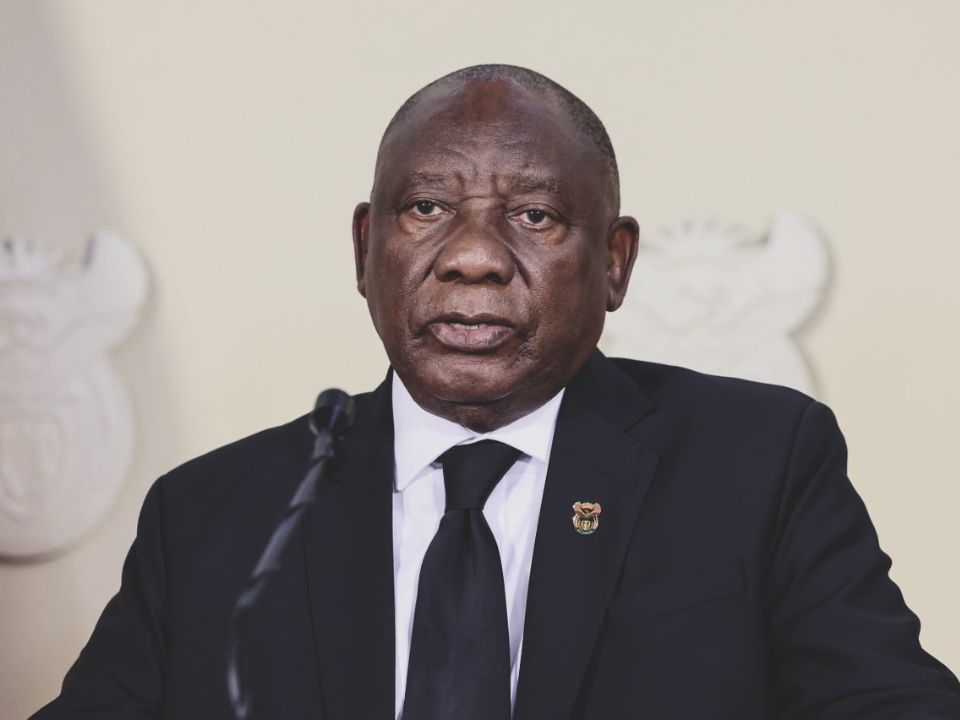
President Cyril Ramaphosa has ordered 60- and 90-day plans to address stalled GBVF cases, forensic backlogs and unsafe public spaces after women’s bodies were found in Ekurhuleni. Critics say the government must now prove the measures will be implemented.
For South African women, President Cyril Ramaphosa’s latest promises come down to one devastatingly simple question: Will anything actually change?
Because while government announces plans, women are still being killed.
The question comes as the country reels from the discovery of women’s bodies in Ekurhuleni, intensifying public anger over South Africa’s devastating gender-based violence and femicide (GBVF) crisis.
Eleven women’s bodies have been found in Ekurhuleni since July, according to the Foundation for Rights of Expression and Equality (Free SA).
Behind every body is a family mourning a daughter, mother, sister or loved one.
Addressing the nation on Tuesday night, Ramaphosa announced a series of measures aimed at accelerating the state’s response to GBVF.
Among them is a national case-recovery process targeting unresolved murders, attempted murders, rapes and serious sexual offences involving women and children.
Within 60 days, the government must identify unresolved cases, cases awaiting forensic evidence, identified suspects who have not been arrested, and cases facing unreasonable investigative or prosecutorial delays.
Recovery plans for priority and stalled cases are expected within 90 days.
Ramaphosa also ordered a 60-day plan to tackle forensic backlogs and instructed municipalities to conduct safety audits to identify places where women are vulnerable, including areas affected by poor lighting, unsafe public spaces and infrastructure failures.
Government is also expected to publish quarterly progress reports.
Responding to Ramaphosa's speech, Free SA said that acknowledgement should concern the country.
“Seven years ago, Ramaphosa addressed South Africans about this crisis. Tonight, by his own admission, he had to do it again because what government has done has not been enough.
“That is not merely an acknowledgement. It is an indictment of years of promises that have failed to produce the safety South African women were promised,” said Gideon Joubert, spokesperson for Free SA.
“The country does not need another task team, another strategy document or another solemn undertaking that disappears when the cameras are switched off. Government must do its job.”
Slamming Ramaphosa's speech, Democratic Alliance leader Geordin Hill-Lewis said women were dying while the President continued to make promises.
"President Ramaphosa has been announcing emergency responses to GBVF since 2019.
"There has been an Emergency Response Action Plan, a National Strategic Plan, successive multi-billion-rand funding commitments, new legislation, summits, a statutory Council, and finally the classification of GBV and femicide as a national disaster in November last year. But eight years into this presidency, there is a recurring gap between what is announced and what women experience in their communities," he said.
In a joint statement, the International Women’s Forum South Africa (IWFSA), GBVF Response Fund and GraçaMachel Trust welcomed the recognition of the urgency of the crisis, as well as the commitments to clear responsibilities, timelines and regular public reporting.
"These are important steps towards strengthening accountability and ensuring that the response to GBVF translates into action.
"But tonight cannot be the end of the response. It must mark the beginning of the next phase of action. What happens now matters most. The commitments announced must translate into meaningful action on the ground, supported by the capacity, resources, and accountability required to deliver them.
"Critically, GBVF must be sufficiently and sustainably funded, as the national crisis it is. The scale and persistence of the crisis demand a commensurate investment across prevention, policing and forensic capacity, justice, survivor support and the organisations working alongside government in communities," the organisations said.
The organisations added that the response to GBVF starts at home.
"It starts with each of us, with how we treat one another, what behaviour we accept, what we challenge, and the values we model in our homes, workplaces and communities. Prevention cannot be left to government alone. It requires all of us to play a part in changing the attitudes and behaviours that allow violence to persist," the organisations said.
"The President has set out a framework for action. The test now is delivery. The women and families affected by the violence in Ekurhuleni, and all women across South Africa, deserve to see these commitments translated into lasting change," the statement read.
Meanwhile, Action Society said women do not need the President to identify the failures - they need him to explain why his government has allowed them to continue.
“The President spoke about protection orders that fail to protect, forensic samples that remain unprocessed and cases that collapse because dockets are lost or investigations are poor. He knows where the system fails. He has known for years. What did women hear tonight that gives them reason to believe it will work differently tomorrow," asked ,” says Action Society's Juanita du Preez.
She called in the government to publish the backlog.
"Show us which stalled cases have moved. Tell us how protection orders will be enforced. Open the conversation about the National Register for Sex Offenders. Restore the statistics. Then report what has changed for women seeking help, not how many more meetings government has held.”
Police and Justice must review unresolved murders, attempted murders, rapes and serious sexual offences involving women and children.
