When the promises of democracy become the politics of disappointment - IOL
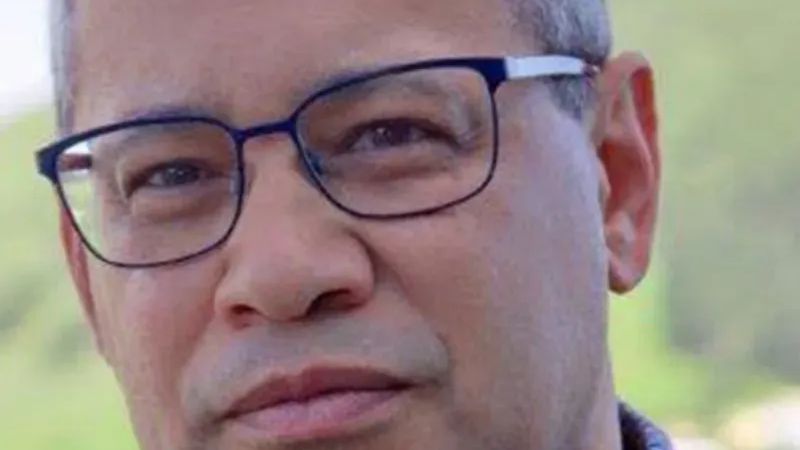
Lorenzo Davids, CEO, Development Impact Fund.
There is something almost Shakespearean about this season of elections in South Africa. Madness and mayhem descend upon our political classes like a seasonal disease. Ordinary politicians suddenly discover messianic capabilities, and political promises acquire the power of miracles. The pursuit of public office becomes a 'theatre of the absurd.'
In November, 136 790 candidates will contest 10 526 council seats. They represent more than 540 political parties, with some being independent candidates. It is an extraordinary spectacle of democratic participation.
But it’s an even greater insight into our political fragmentation, born out of the putrid stench of power and greed disguised as political ambition and public service.
Plato, writing in the aftermath of Athens' democratic troubles sparked by the Peloponnesian War, recognised that populism could be confused with political wisdom.
He saw democracy as a system that intoxicated society with unrestrained freedom, where every appetite demanded satisfaction and every authority was regarded with suspicion.
He feared this would produce demagogues who would promise freedom from restraint but ultimately demand complete subservience through subjugation.
Aristotle was similarly concerned about the corruption of political institutions, where legislators would abandon the common good for private advantage.
He saw the state as not merely an administrative instrument. It was a moral community through which people could pursue collective flourishing.
Two thousand years later, their anxieties remain uncomfortably recognisable.
In 1836, Thomas Cole completed The Course of Empire, five paintings depicting a civilisation incapable of recognising the conditions of its own demise, while living amid it. His subject was not simply the fall of an empire. It was the moral consequence of prosperity without restraint, ambition without wisdom and power divorced from the responsibilities of good governance.
1994 was not merely a change of government. It was the moral re-founding of a country whose majority had been historically and systematically excluded from citizenship and the ordinary protections of the state. The democratic settlement promised something much more profound than just the right to vote. It promised the restoration of human flourishing under the rule of law.
This required the liberation state to become an administrative state. The moral authority of liberation had to translate into municipal water systems, functioning schools, electricity, public transport, employment, competent bureaucracies and the daily delivery of constitutional rights.
This has been South Africa’s great failure: the ruling party could not competently imagine, let alone deliver, what the Constitution demanded.
The majority of South Africans remain almost permanently economically unfree. The right to education has not delivered excellence in education. The right to work has not delivered employment opportunities. The right to housing has not built homes within reach of economic opportunities.
The ANC, and now the GNU, have consequently become trapped in the indignities of their administrative failures. These failures have given rise to a bastardised populism and ethnic nationalism, described by Professor of Politics at Princeton University, Jan-Werner Müller, as “exclusionary tribalism” and “demographic panic.” Its appeal is not difficult to understand. Populism offers uncomplicated explanations for complicated political issues. It divides society into a worthy class and an untrustworthy class.
It identifies convenient enemies and promises to restore popular power and sovereignty through “strong” leadership. The problem is that populism, when dissected, is essentially anti-pluralist. It is just another concentration of power. The belief that democratic complexity can be overcome by populist-driven strongmen who are given power to govern without the inconvenience of institutional restraint is a recipe for violence.
Another concentration of power that receives far less scrutiny is the extraordinary influence of billionaire capital. The modern billionaire class occupies an increasingly ambiguous position in democratic society. While its members may create employment, they also have a disproportionate influence over political access, public discourse and the conditions under which millions live.
Their wealth gives them the possibility of regarding their economic power as a substitute for constitutional compliance. Our lingering inequality should not become an unfortunate footnote to a lopsided democracy which serves the purposes of strongmen and billionaires who seek to hijack power.
Is November 4th bringing us closer to the moment where the distance between governing elites and the material conditions of ordinary people becomes so profound that the South African social contract finally ruptures?
Or are we witnessing something more sinister: a Stalinist inversion in which citizens, persuaded that they are being liberated from the failures of the old order, discover that they have merely exchanged one form of subordination for another — economic gulags in which freedom exists formally but opportunity remains structurally, spatially and generationally inaccessible?
Cole's final painting, Desolation, contains no triumphant conqueror, no victorious revolutionary and no benevolent ruler. And no billionaires. Only the remnants of a civilisation that once believed its greatness would endure. Are we facing a moment when the promise of democracy becomes the politics of disappointment?