White House Compares Trump ‘Love Me’ Ad to PSAs on Health, Wartime - Newsweek
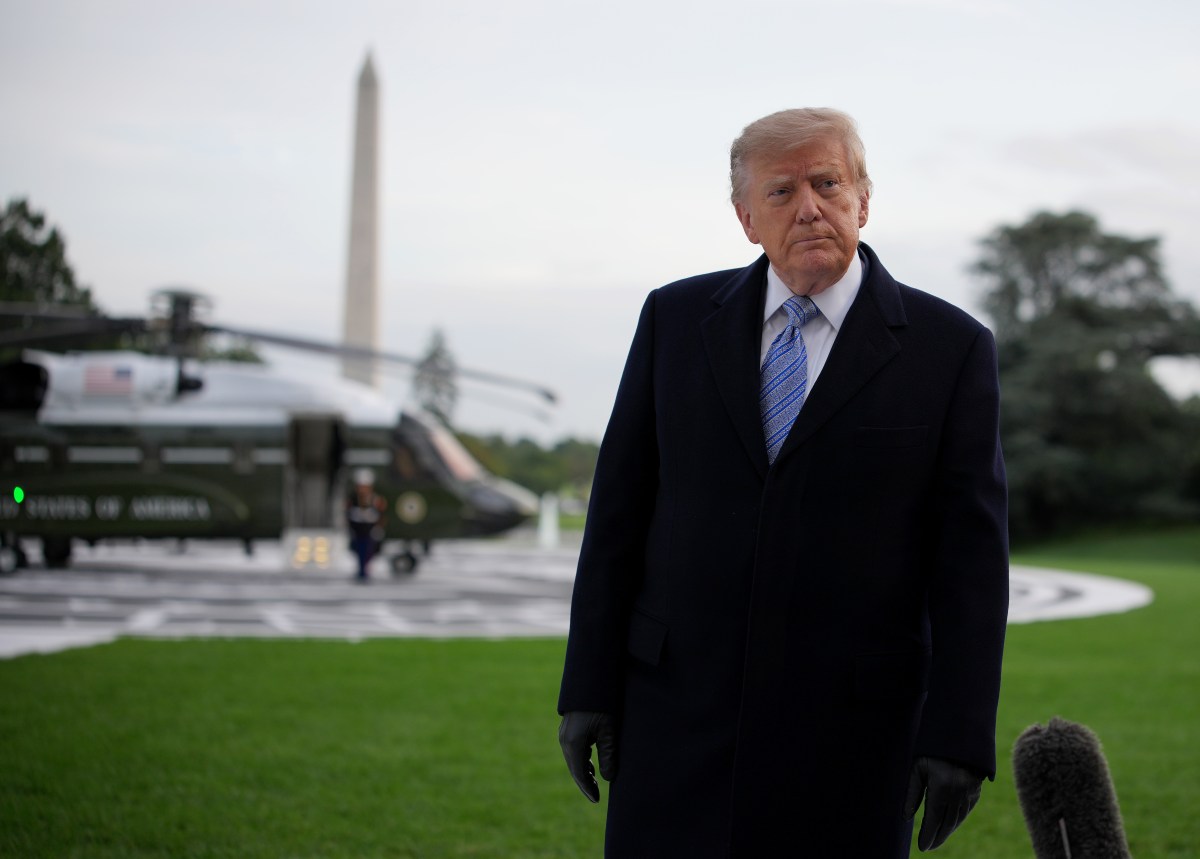
The White House on Friday compared a new television ad about President Donald Trump playing on Fox News to public service announcements (PSA) on healthcare, drugs, and wartime efforts.
Using the song "Love Me," the ad aired earlier this week and featured multiple images and clips of the president alongside the American flag, anti-Communist messages, and key policy efforts including tax cuts, accompanied by the tag "paid for by the U.S. government."
In a press release Friday, the White House framed the criticism of the ad as "highly dishonest."
"The announcements are very clearly not campaign ads; President Donald Trump is not on the ballot and there is no call to action," the release said. "Instead, the announcements are a reminder for Americans to love their country and know why it’s worth defending—at home, at the border, and abroad. That’s not partisanship—that’s a government that still believes in the country it serves."
The ad was first spotted on Jesse Watters' Fox News show on Wednesday, as well as being made available on the White House website and YouTube channel.
The advertisement came after the White House launched its own 24/7 video channel, branded "Trump TV: The Essentials Station," following the president's ban of CNN, MS NOW, and Politico from the White House over what he called "fake news."
Democratic Representative Jamie Raskin of Maryland said the video may be criminal, in a post to X on Thursday.
"This may be felony criminal theft and conversion of government property for political campaign purposes," Raskin said. "18 U.S.C. § 1641. It is a Hatch Act violation for any government employees who worked on it or used government resources to make it. It is blatantly unethical under numerous federal ethics provisions proscribing the use of government resources for political campaigns."
Raskin told MS NOW on Friday that there wasn't anything he could do to stop the ad airing.
Newsweek reached out to Raskin's office for further comment Friday afternoon.
In its Friday press release, the White House said that when previous administrations had "utilized the airwaves," it was called "public education," but when the current administration did so, it was branded "propaganda," referring to a Washington Post article highlighting federal regulations.
The Trump White House argued that administrations of both parties have used PSAs to explain their policies and make their case for the country's direction. It went on to list some examples of PSAs, including from the 1940s during World War II and the COVID-19 pandemic.
The earliest example given by the White House was from during World War I, between 1914 and 1918, when President Woodrow Wilson used posters, films, and speakers to rally the country.
According to The National WWI Museum and Memorial, Wilson sought to influence public opinion in favor of the war using colorful posters, such as the famous "Uncle Sam Wants You" poster.
The next major conflict in the early 1940s, World War II, saw President Franklin D. Roosevelt also utilize different media to get the government's message out to the public.
Films, radio messages, and posters were all used then by the U.S. Office of War Information. The idea was to ensure civilians back home were getting information about the war effort.
Elmer Davis, who led the office, was reported to have said that "the easiest way to inject a propaganda idea into most people’s minds is to let it go through the medium of an entertainment picture when they do not realize that they are being propagandized."
The Trump White House pointed to the previous Republican president, George W. Bush, and his administration's TV campaigns focused on the Medicare Prescription Drug, Improvement, and Modernization Act, aimed at seniors, as well as Super Bowl airtime used for anti-drug and anti-terrorism PSAs.
The ad on Medicare, which ran in 2003, was referred to the Government Accountability Office for review, over concerns it had violated regulations on PSAs having partisan messaging. The GAO concluded that while the ads raised some concerns, the campaign was not a purely partisan message and therefore didn't break the law.
Its Super Bowl ads in 2002 warned viewers that by purchasing illicit drugs, they could be funding terrorism. The anti-drug messaging in Bush's second term included ads which ran on YouTube, still in its infancy, when users searched for "marijuana," "weed," or "420."
Trump's White House also pointed to former President Barack Obama's efforts to promote Obamacare subsidies in 2016. During the campaign, the administration urged consumers to take up the open enrollment period, using mailed material alongside TV ads and social media.
Before that, in 2015, there had been a noticeable effort by the Environmental Protection Agency to push back against Republican efforts to amend climate rules, with what was described at the time as a "flood-the-zone approach" through social media posts across multiple platforms in the style of Obama's successful election campaigns.
While that campaign raised eyebrows, per The New York Times at the time, the agency's actions were not viewed as illegal.
The most recent example pointed to by the current administration was from former President Joe Biden's administration, who in 2021 ran a campaign promoting the COVID-19 vaccine.
The TV ad campaign encouraged Americans to get the shot in an effort to get the country back to some sort of normality by that year's Fourth of July celebrations.
Prominent figures and local leaders featured in the campaign which involved 275 organizations seeking to speak to vaccine-hesitant Americans. A $250 million contract signed by the first Trump administration helped to pay for the campaign's development.
"I think the White House's response to the reaction to the ad actually undermines his argument that this is merely an informational ad," Jessica Levinson, a constitutional law professor at Loyola Law School, told Newsweek.
"In each modern example that the Trump administration points to, there was a specific program or initiative at issue (all involving healthcare and medical care). Here there is no similar program or initiative that President Donald Trump is trying to draw attention to," she added.
While the White House argues that the ad is just like any other PSA and is about informing Americans about current policy, the Democrats made it clear that they did not agree.
Democratic National Committee Deputy Communications Director Kendall Witmer denounced the ad, telling Newsweek, "Just like his gilded vanity projects, Trump wants taxpayers to foot the bill for his campaign ads to promote his failed agenda that has left working people in the dust. But let’s be clear: Americans are sick of coughing up the funds for Trump’s bullshit while he turns his back on them."
It remains to be seen whether any direct challenge, like the one to Bush's ads, will be made to the GAO.
Newsweek’s reporters and editors used Martyn, our AI assistant, to produce this story. Learn more about Martyn here.
Contact Newsweek editors for this story: Gabe Whisnant and Anthony Murray.