
White House filing claims president has authority to bar news outlets
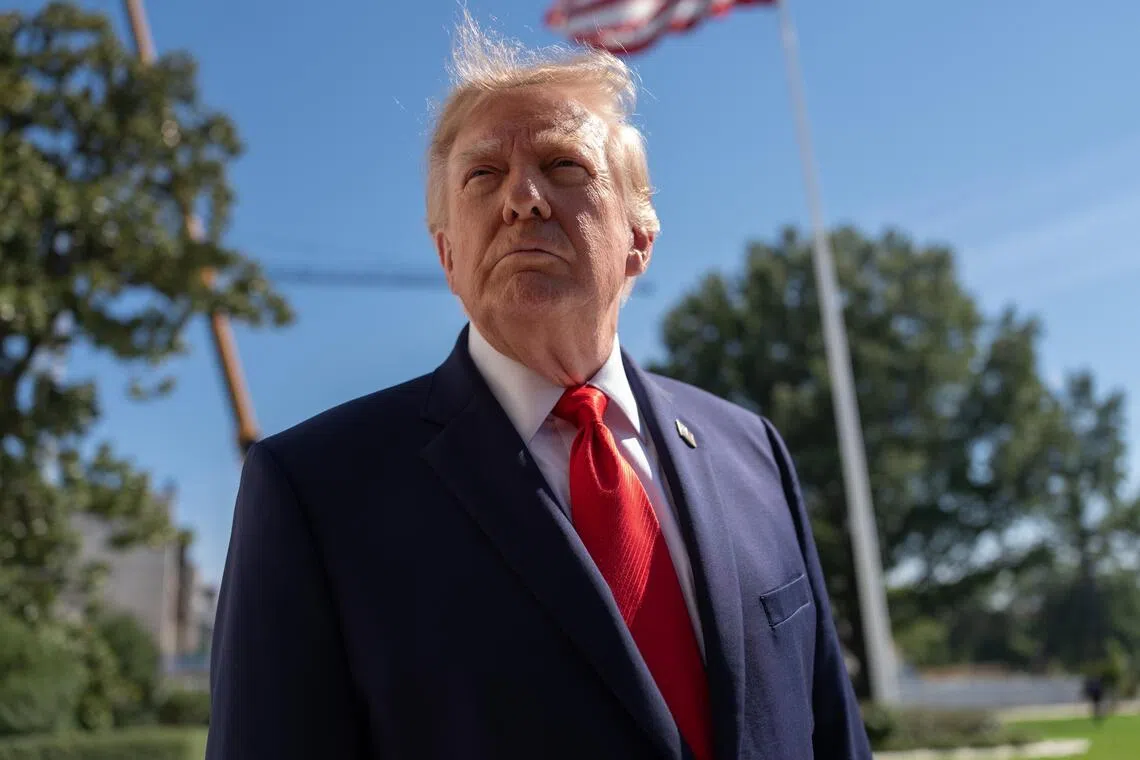
US President Donald Trump speaking to members of the media on the South Lawn of the White House on Oct 1.
In a court filing on Oct 2, the White House again argued that its move in September to bar CNN, MS NOW and Politico from its grounds was squarely within the bounds of presidential authority and asked a federal judge to deny a motion from the media outlets for a court order extending their access.
Throughout US history, the government’s filing contended, presidents “have long decided which journalists should receive privileged access, which has varied substantially from administration to administration”.
The court battle began after US President Donald Trump announced on Sept 18 that he would bar CNN, MS NOW and Politico from entering the White House grounds.
The media organisations quickly sued to regain their access, and a federal court issued a two-week order requiring the White House to restore their press passes. That order expires on Oct 8, and this week the three news outlets asked the court for a longer reprieve.
The government’s latest filing aligns with the Trump administration’s legal arguments in other access battles with the media. “The mere denial of special access is not an adverse action that would objectively chill” reporting on the White House, the filing said.
The media outlets have said the ban violated their First Amendment rights because Trump made it clear that he had instituted it because he objected to their reporting.
The White House’s filing on Oct 2 said the administration would have “taken the same action anyway”, without regard to the outlets’ criticism of Trump.
The White House claims that the barred outlets failed to meet professional standards and that they have threatened national security or spread falsehoods with their reporting – claims vigorously opposed by the companies.
Asked this week whether it would reimpose its ban if the court declined to continue blocking it, the White House responded with a statement praising Trump’s accessibility.
Even after the court restored the journalists’ access to the White House, Trump twice excluded CNN from fulfilling its role in the TV pool that covers him. It is one of five networks that rotate the work and share the costs of following the president from event to event.
When CNN has been excluded, the other networks have banded together in a show of support and declined to substitute for the network, leaving the president with no pool coverage on those occasions.
The government’s filing on Oct 2 said the “decision to deny special, privileged access to the press pool or to the White House complex would not deter a reasonable reporter”.
It also noted that the media outlets had not contested their access revocation directly to the White House, which imposed a deadline of Sept 25 for doing so.
As a result, the White House’s decision became “final”, according to the government filing, though the court’s temporary order blocked it from taking effect.
The media outlets have argued that the White House imposed the ban against them and only later “got to work backfilling contrived justifications for it”.
Judge Timothy J. Kelly of the US District Court in Washington, who issued the temporary order, has indicated that he will rule “expeditiously” on the media outlets’ request. NYTIMES
This article originally appeared in The New York Times.
