Who'll have the last word on Kolkata Book Fair 2027? Nabanna showdown explained
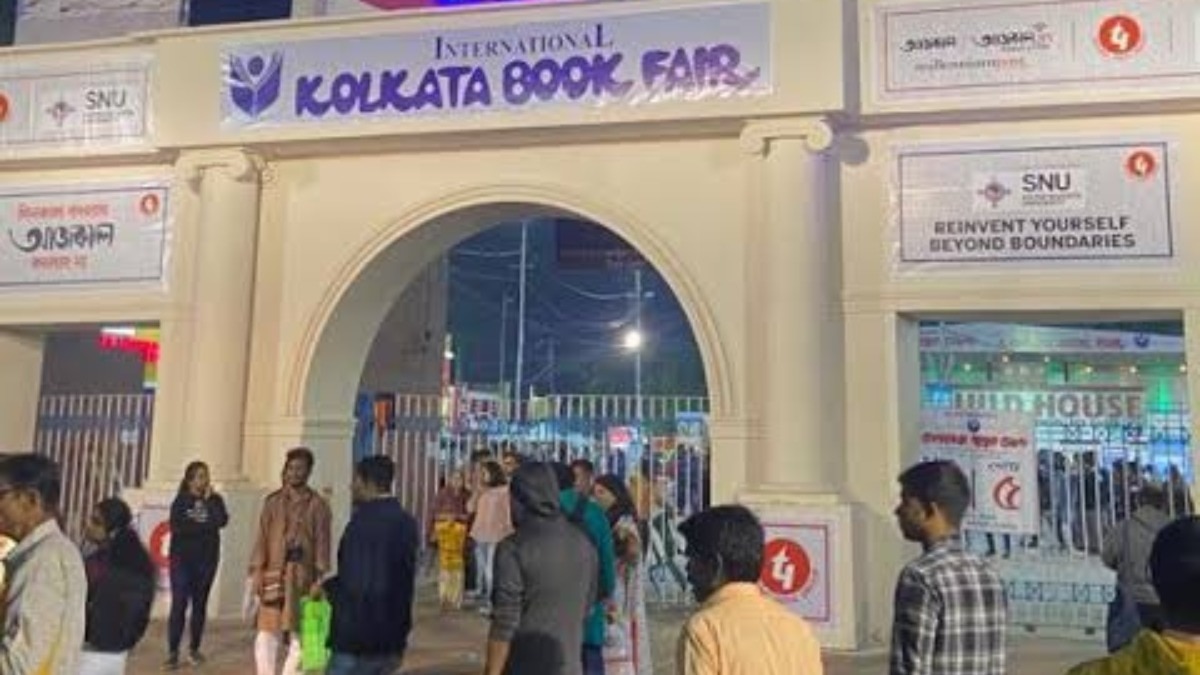
What was expected to be a routine meeting between the Publishers & Booksellers Guild and a state-appointed advisory board turned into a heated confrontation at West Bengal’s secretariat Nabanna on September 10, with arguments over who should control the organisation of the Kolkata International Book Fair’s 2027 edition spilling out in the presence of two ministers and a senior bureaucrat.
The meeting was convened to discuss preparations for the next edition of the fair, scheduled from January 22 to February 3, 2027. Dr Subrata Gupta, advisor to the chief minister; Gouri Shankar Ghosh, minister for mass education extension and library sciences; and minister of state Koushik Chowdhury were present, along with members of the advisory board and representatives of the Guild.
According to sources, the immediate flashpoint was an advertisement issued by the Guild inviting applications from publishers, booksellers and little magazines for allotment of stalls at the 2027 fair. The advertisement, which mentions September 30, 2026 as the deadline for applications, was published without, according to members of the advisory board, prior consultation with them.
“We were not informed about this decision. The Guild went ahead and issued the advertisement without our knowledge,” a source close to the board said.
The Guild however, feels they are not bound to inform the board about everything since the latter’s job is only to ‘advise’.
The objection was raised at the meeting, triggering a prolonged exchange of arguments and counter-arguments. What began as a disagreement over procedure soon became a larger confrontation over the respective roles of the Guild and the newly constituted advisory body, sources said.
The situation became sufficiently heated for Gupta to intervene and attempt to bring the meeting back under control. Yet the disagreement was not confined to the question of stall allotments. Another—and potentially more politically charged—issue was the proposed theme country for the 2027 fair. No official announcement has yet been made, but there is speculation on social media that Israel could be selected as the theme country.
That possibility has already generated unease among sections of the Bengali literary and publishing community, particularly because of Israel’s ongoing war in Gaza and widespread allegations of genocide against Palestinians. Within the Guild, there is reportedly opposition to the idea of Israel being chosen.
Debojyoti Dutta, one of the Guild representatives on the advisory committee, questioned at the meeting why, how and when Israel had allegedly been considered for the position, according to sources familiar with the discussions. The Guild, sources said, has instead been pushing for India to be the theme country.
There is a particular symbolism behind that demand. India was the theme country at the fair’s 25th edition, and 2027 would mark the 50th edition. The Guild believes repeating India as the theme would therefore be both appropriate and logistically advantageous.
“Since 2027 will be the 50th edition, we believe India should be the theme country again. India was the theme at the 25th edition, so there is a clear historical connection,” a Guild source said. “Also, since the National Book Trust and the Eastern Zonal Cultural Centre are expected to collaborate with us for the fair, having India as the theme country would make the entire process considerably easier to organise.”
According to those present, however, the Guild did not receive a satisfactory explanation about the reported proposal concerning Israel.
The dispute comes against the backdrop of a much larger question: who will control the Kolkata International Book Fair under Bengal’s new political dispensation? The Guild has organised the fair since 1976 and has, over the decades, become almost synonymous with the event. For much of that period, particularly during the 15-year-long rule of Mamata Banerjee, the organisation enjoyed a close relationship with the state government. That political equation changed dramatically after the BJP came to power in Bengal this year.
The new advisory board, constituted by the state government to guide the organisation of the 2027 fair, has a markedly different political and institutional complexion. Its 24 members include Swami Aryeshananda of the Ramakrishna Mission, Swami Saraswatananda of the Bharat Sevashram Sangha and BJP leaders including Tanuja Chakraborty, Debjit Sarkar, Saptarshi Chowdhury and Ophelia Singh. Journalist Prasenjit Bakshi has been appointed convenor.
The Guild is represented on the committee by Debojyoti Dutta, Anil Acharya and Milind De. However, Guild president Sudhangshu Sekhar Dey and honorary general secretary Tridib Kumar Chattopadhyay were not included in the committee amidst allegations of mismanagement. Both, nevertheless, attended the September 10 meeting.
The advisory board’s stated push is for greater transparency in the organisation of the fair. There have been allegations of favouritism and nepotism in the awarding of contracts for work, including construction of stalls and installation of electrical infrastructure. The committee, sources said, wants the process to be made more transparent and accountable.
For the Guild, however, the issue appears to go beyond individual contracts or administrative procedures. It fears that the creation of the advisory board could eventually translate into an attempt to displace it from an event it has organised for nearly five decades.
There is also a legal complication that could make such a transition far from straightforward. “The most important thing the advisory board is missing is that the Guild owns the copyright to the four words ‘Kolkata International Book Fair’ and also to its logo,” a Guild source said. “If they want to replace the Guild or take the fair away from it, they will have to confront the question of how they can continue using the name and the logo.”
That claim could prove significant if the present disagreement develops into a full-fledged institutional battle. For now, the Kolkata International Book Fair appears to have become the unlikely ground on which two very different establishments are testing their authority: a Guild that has built and controlled the fair since 1976 and a state-appointed advisory board whose arrival reflects the sweeping political change Bengal witnessed this year.
And with the 50th edition less than five months away, the battle is no longer simply about who gets to organise a book fair. It is increasingly about who gets to decide what the Kolkata International Book Fair represents—and who gets to put their stamp on one of Bengal’s most recognisable cultural institutions.