Who’s on Trump’s ‘Super Intelligence Force’? Picks Signal His Priorities - Newsweek
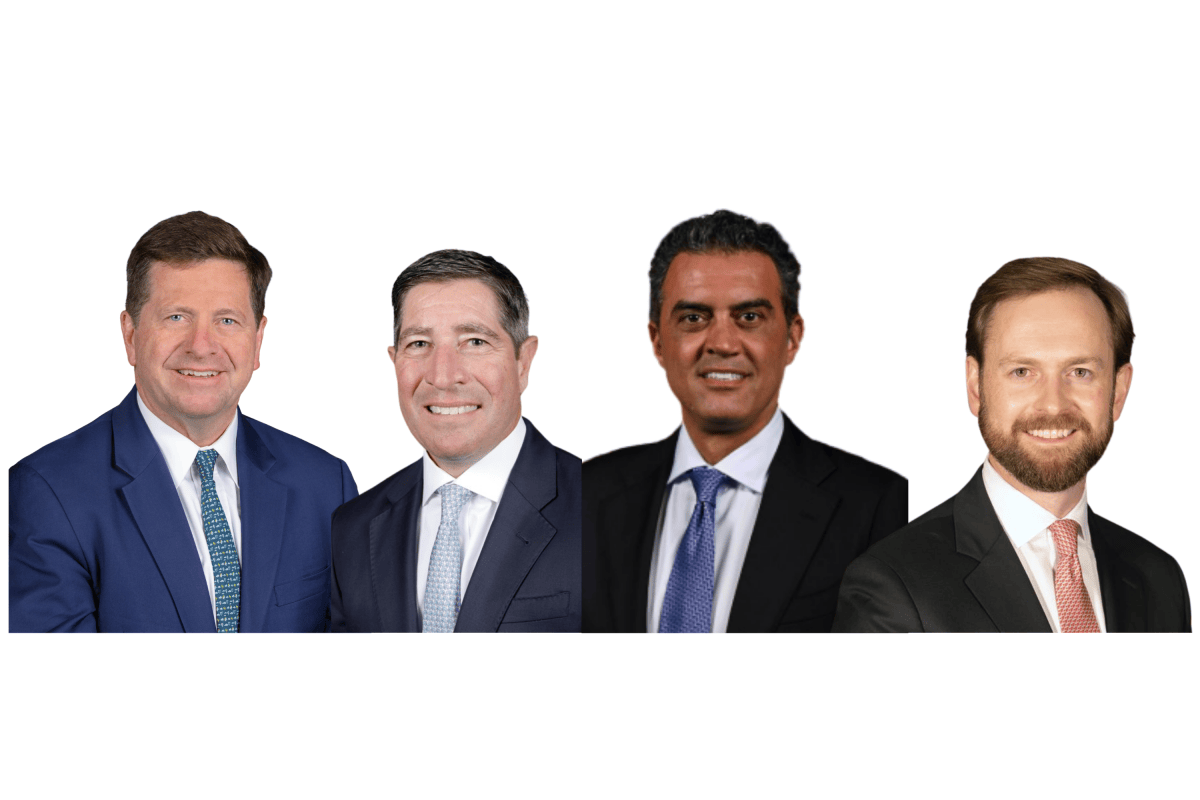
President Donald Trump has announced who will form his Super Intelligence Force (SIF), the team that’s been “tasked with coordinating the effort of the Federal Government to ensure that America continues to lead the World in Super Intelligence,” according to a post he published on Truth Social over the weekend.
The newly announced SIF is perhaps one of the clearest indications of how his administration plans to approach artificial intelligence.
Rather than filling the task force with academic AI researchers or safety advocates, Trump has chosen four officials whose backgrounds span national security, consumer protection, defense innovation, and the technology industry.
When announcing the force, Trump said it would coordinate federal efforts to ensure America continues to lead in what his administration now calls "Super Intelligence" and would engage with “Consumers, Public Interest Groups, Religious Organizations, Critical Infrastructure Providers, and Super Intelligence Companies.”
Current role: Director of National Intelligence.
Background: Clayton was sworn in as the nation's ninth Director of National Intelligence in August after previously serving as U.S. Attorney for the Southern District of New York and, during Trump's first term, chairman of the Securities and Exchange Commission.
As the Director of National Intelligence, Clayton directs all the intelligence agencies and serves as the president's principal adviser on intelligence matters.
His official biography highlights work involving terrorism, espionage, transnational criminal organizations, and threats to critical infrastructure.
What his selection means: His selection to chair the Super Intelligence Force perhaps shows that the administration sees AI as a potential national security issue.
By placing the nation's top intelligence official at the center of AI policy, Trump appears to be emphasizing intelligence-based concerns such as strategic competition with China and cyber threats.
Current role: Chairman of the Federal Trade Commission (FTC).
Background: Ferguson became FTC chairman after serving as Virginia's solicitor general, chief counsel to Senate Republican Leader Mitch McConnell, and counsel on the Senate Judiciary Committee.
The FTC is responsible for consumer protection and competition enforcement, giving Ferguson a key role in overseeing how powerful technology companies operate.
What his selection means: His inclusion in SIF suggests that the administration wants the task force to address market power, consumer protection, and accountability issues surrounding AI systems. Rather than creating a separate AI regulator, Trump's team appears to be relying on existing agencies and authorities, with Ferguson representing the government's consumer-protection and antitrust perspective.
Current role: Under Secretary of Defense for Research and Engineering and Department of Defense Chief Technology Officer.
Background: Michael oversees the Department of Defense’s research, development, and prototyping enterprise, including organizations such as the Defense Advanced Research Projects Agency (DARPA) and the Missile Defense Agency (MDA).
Before returning to government, he built a career in the technology sector, helping lead companies including Uber, Tellme Networks, and D-Wave Systems become successful. He has a “proven track record” in anticipating the latest technology trends, including AI, autonomous systems, and quantum computing.
What his selection means: Michael's selection signals a strong emphasis on innovation, defense applications, and maintaining America's technological edge.
Among the four members, he brings the deepest direct connection to both Silicon Valley and advanced technology commercialization, suggesting the administration wants AI policy informed by operators who have previous experience with scaling successful technology companies.
Background: Kupor was sworn in as OPM director in July 2025. Before entering government, he spent more than a decade helping build the Silicon Valley venture capital giant Andreessen Horowitz (a16z) and served as a managing partner at the firm.
OPM oversees the federal workforce, recruitment, and personnel policies across government, and, according to his official biography, Kupor was brought in to help build a “high-performing, accountable, and mission-driven workforce.”
What his selection means: His appointment suggests that the administration sees AI not only as a technology challenge but also as a workforce challenge.
As agencies increasingly adopt AI tools, questions about hiring technical talent, training federal employees, and modernizing government operations are likely to become central to the task force's work.
Trump said that the Super Intelligence Force will report directly to him and White House Chief of Staff Susie Wiles and will coordinate federal engagement on AI-related issues while ensuring the United States remains the global leader in the technology.
This hierarchy, which is unusually close to the White House, suggests that the group’s recommendations could have a big influence across multiple federal agencies.
Taken together, the four appointments reveal an administration that’s approaching AI through four distinct lenses: national security, regulation, defense technology, and workforce modernization.
Notably absent are university AI researchers, ethicists, or independent safety experts.
Instead, Trump has selected officials with experience in running government institutions, regulating markets, managing national security issues, and scaling technology businesses.
The lineup suggests the administration's priority is maintaining American leadership and competitiveness while relying on existing governmental structures to address AI-related risks.
The selections point toward a model focused less on creating new regulatory frameworks and more on coordinating existing federal capabilities around a technology the administration increasingly describes as a strategic national asset.
Newsweek has contacted the White House for comment.
Newsweek’s reporters and editors used Martyn, our AI assistant, to produce this story. Learn more about Martyn here.
Contact Newsweek editors on this story: Alfred Joyner and Cristina Diciu.