Why a BJP ally renewed demand to split Uttar Pradesh into four states
With Uttar Pradesh headed for assembly elections in a few months, an old political debate about splitting India's largest state into smaller ones for better governance and greater regional representation is back in the spotlight.
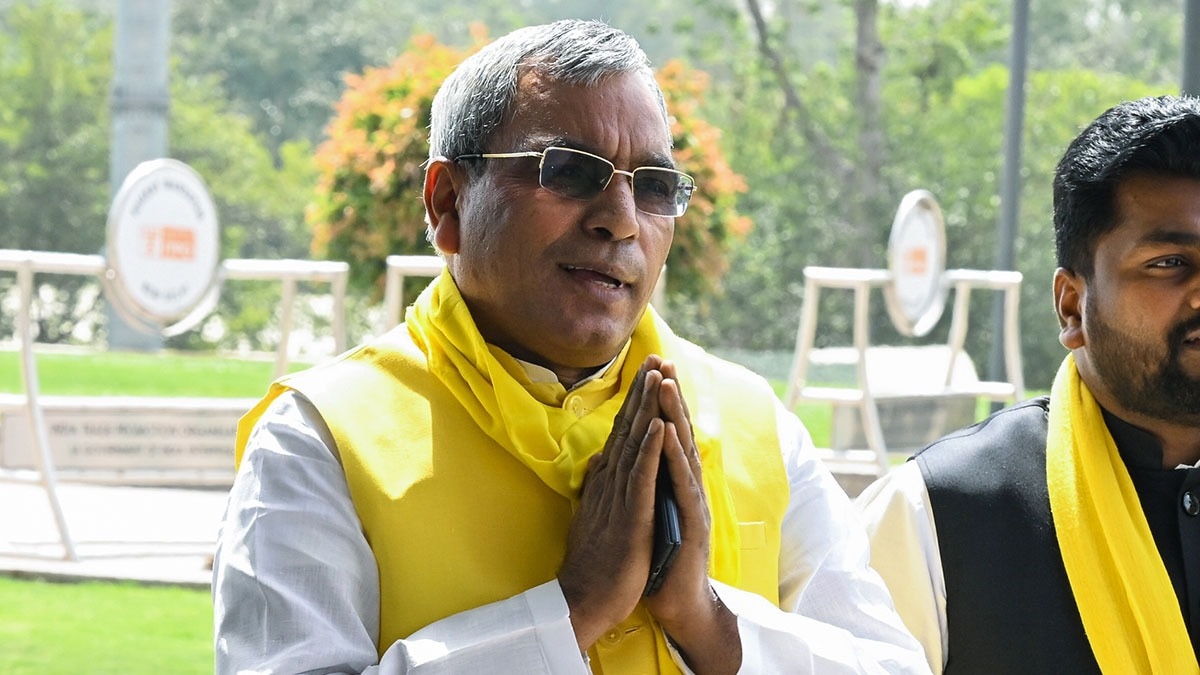
The issue resurfaced after Om Prakash Rajbhar, chief of the ruling BJP’s ally Suheldev Bharatiya Samaj Party (SBSP), claimed that Prime Minister Narendra Modi had assured him that UP could be divided into four parts after the caste census.
Rajbhar, whose party has six MLAs in the 403-member UP legislative assembly, is a state minister. He remarked that should Purvanchal become a separate state, a leader from the Rajbhar community should become chief minister.
While the Union government has not confirmed any such plan, Rajbhar’s demand rests on two arguments. The administrative argument is that UP is geographically large, densely populated and marked by sharp disparities in development, social composition and regional needs.
The political argument is that creating smaller states could change the balance of power among caste groups, parties and regional leaders. Rajbhar’s statement comes at a time when parties in UP are seeking to consolidate non-Yadav OBC communities and strengthen their claims over regional representation.The idea of dividing UP, though, is not new. In November 2011, the Mayawati government had passed a resolution proposing four states. These were to be Purvanchal in the east, Bundelkhand (south), Awadh Pradesh (central region) and Paschim Pradesh (west) or Harit Pradesh. The argument offered was that smaller administrative units could improve governance and address regional imbalances.
The resolution was sent to the Centre but not taken forward after the Samajwadi Party (SP) assumed power in UP in 2012. Mayawati’s proposal may have also had an electoral dimension. The division of UP could have allowed her Bahujan Samaj Party (BSP) to build influence across four states while changing the geographical concentration of the SP’s Yadav base. The plan never moved beyond the proposal stage.
Among the proposed regions, western UP (Paschim/Harit Pradesh) spans 136 assembly seats across 26 districts, from Ghaziabad to Bareilly. It has significant Muslim population (over 25 per cent in several districts) alongside sizeable numbers of Jats, Gurjars and Dalits. Politics here has long been a contest between Jat-Muslim coalitions (built by the Rashtriya Lok Dal and SP) and the BJP, whose dominance has slipped since peaking in 2017.
Bundelkhand, the smallest bloc with just 19 assembly seats across seven districts, is also UP's poorest region. Dalits form its largest social group, and this has historically been a BSP bastion. The party won its first-ever assembly seat here in 1989. The BJP has swept nearly the entire region since the 2017 polls.
Awadh includes Ayodhya and has been shaped heavily by Hindutva politics and the Ram temple movement. Its 118 seats have swung between the BJP and SP, with Pasis among Dalits and Kurmis among OBCs acting as key, non-fixed voting blocs.
Purvanchal, the largest region with 130 seats, is arguably the most significant politically. It includes both chief minister Yogi Adityanath's home turf of Gorakhpur (he is also the MLA from Gorakhpur Urban) and Prime Minister Narendra Modi's Varanasi Lok Sabha seat. Non-Yadav OBCs and smaller communities, such as Nishads, Rajbhars and Mauryas, hold real sway here. While the BJP remains dominant, the SP has been steadily gaining ground since 2017.
The demand to split up UP has various implications for the major political parties. For the BJP, UP’s sheer size is a major source of national influence. The state sends 80 MPs to the Lok Sabha and is central to the party’s electoral and political calculations. A division could create new administrative opportunities, but it could also reduce the political weight that comes from ruling one large state. The BJP’s position would also vary across the proposed regions because the caste and communal equations are not uniform.
The SP has traditionally opposed the division of UP. A split could alter the influence of its Yadav support while also creating new possibilities for regional parties and caste-based leaders.
Rajbhar’s reference to a Rajbhar chief minister for Purvanchal connects the statehood demand to the growing competition among OBC communities for political power. It also allows him to present himself as a leader seeking a larger role in eastern UP for his community, which makes up around 2.5 per cent of the state’s population.
UP has been divided once to create another state—Uttarakhand (initially Uttaranchal) in 2000. The new state was carved out with the northern hill districts of then UP after about six years of mass agitation based on the hill region’s purported geographical and economic neglect and the local Pahadi population’s distinct identity.