Why do Indians develop diabetes at a lower BMI
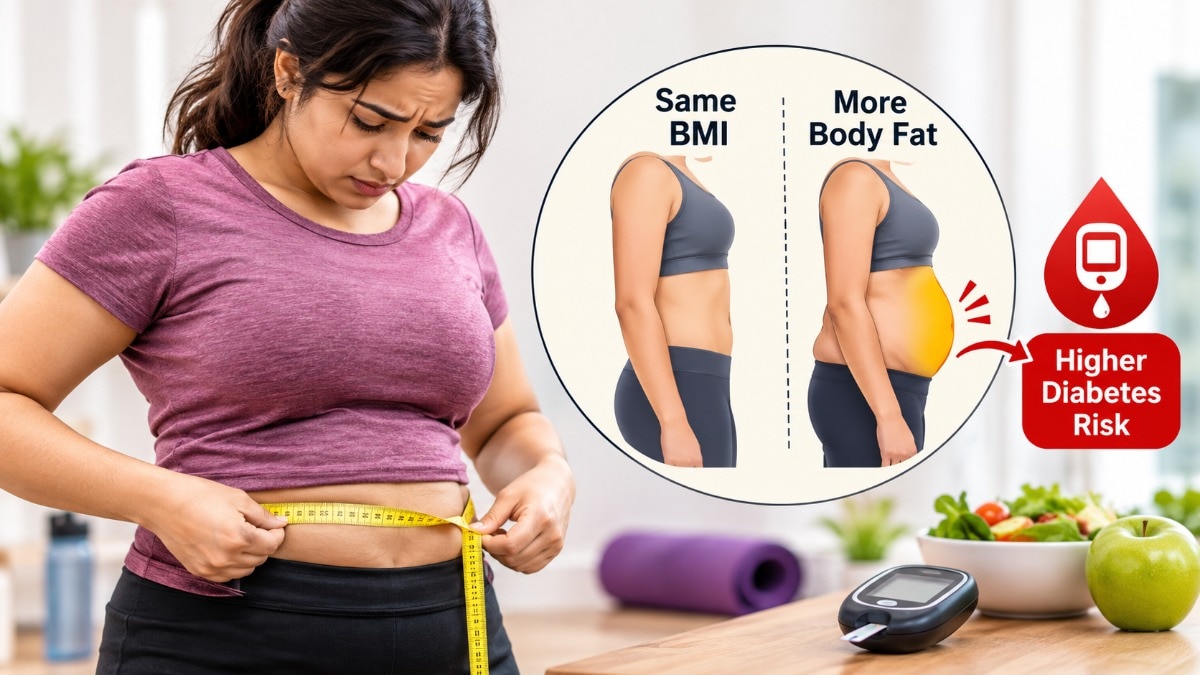
But why are Indians more vulnerable to diabetes even when they do not appear overweight? According to leading endocrinologists, the answer may lie in the difference between body weight and body composition.INDIANS HAVE MORE BODY FAT AT THE SAME BMI
Explaining why South Asians are at a higher risk of diabetes, Dr Nikhil Tandan, an endocrinologist and diabetes specialist, says that Indians tend to have a higher diabetes risk at BMI levels that may not be associated with similar risks in other populations.
One important reason is body composition.
BMI measures weight in relation to height, but it does not tell us how much of that weight comes from muscle, bone or fat.
According to Dr Tandan, at similar BMI levels, South Asians tend to have a considerably higher proportion of body fat than Caucasian populations.
This means two people with the same BMI may have very different body compositions. An Indian individual may carry more body fat and have less muscle and skeletal mass, even if their weight appears normal.BELLY FAT COULD BE INCREASING DIABETES RISK
Another important factor is the distribution of body fat.
Dr Tandan points out that South Asians tend to accumulate more fat around the abdomen. This is particularly concerning because abdominal fat, especially visceral fat stored around internal organs, is associated with metabolic problems and insulin resistance.
Insulin is the hormone that helps regulate blood glucose levels. When the body becomes resistant to insulin, the pancreas has to work harder to produce enough insulin to maintain normal blood sugar levels.
Over time, the body's ability to compensate may become inadequate, increasing the risk of type 2 diabetes.
This is why a person can appear relatively slim but still have an increased risk of metabolic complications.WHY ARE SOUTH ASIANS MORE PRONE TO THIS BODY COMPOSITION?
While the higher proportion of body fat and differences in fat distribution among South Asians are reasonably well established, the exact reasons behind these differences are not fully understood.
Dr Tandan says several theories exist, but there is currently insufficient evidence to establish one definitive explanation.
The underlying causes are likely to involve multiple factors, and more research is needed to understand why South Asians tend to develop diabetes at lower BMI levels.
Another important point highlighted by Dr Tandan is that diabetes risk does not suddenly increase only when someone becomes overweight or obese.
The relationship between BMI and diabetes risk is continuous. Even an increase in BMI within the so-called normal range can increase the risk of developing diabetes.
However, the positive message is that weight reduction can also be beneficial even when the loss is modest.
People do not necessarily have to lose 15 or 20 kilograms to improve their metabolic health. Even losing five kilograms can be helpful, depending on their starting weight and overall health.
The emphasis should therefore be on sustainable weight management rather than waiting until someone becomes overweight or obese before taking action.WHAT CAN INDIANS DO TO REDUCE THEIR DIABETES RISK?
According to Dr Tandan, diabetes prevention should not be limited to focusing on one disease or one dietary restriction. Instead, people should follow the broader principles of good health.
Regular physical activity, adequate sleep, a healthy diet and moderation in food intake are important.
Building and maintaining muscle mass, managing excess body fat and avoiding prolonged sedentary behaviour can also support better metabolic health.
Importantly, people should not assume that having a normal BMI means they are automatically protected from diabetes.
The higher risk of diabetes among Indians is not simply about body weight. It is also about body composition, the proportion of body fat and where that fat is stored.
As Dr Tandan explains, South Asians can have a higher diabetes risk even at BMI levels that may appear normal.
For Indians, the focus should shift from simply watching the weighing scale to paying attention to body fat, abdominal fat and overall metabolic health.- Ends
I’m a gym freak and fitness lover with a serious love for food and travel. I'm an extrovert at heart, responsible, caring, and sensitive. Whether lifting weights or lifting moods, I bring energy, empathy, and enthusiasm wherever I go.
Anchoring and journalism are my true callings -- I love being in front of the camera and behind the pen. Writing about skincare and makeup hacks is my happy place, where I blend creativity with expertise to share tips that truly work and keep beauty fun and relatable.