Why drought-hit Karnataka has called for a special legislature discussion
A bleak southwest monsoon season has so far resulted in Karnataka declaring 101 of its 239 taluks as drought-hit. A further 25 taluks are expected to be notified in the second phase of an ongoing assessment.
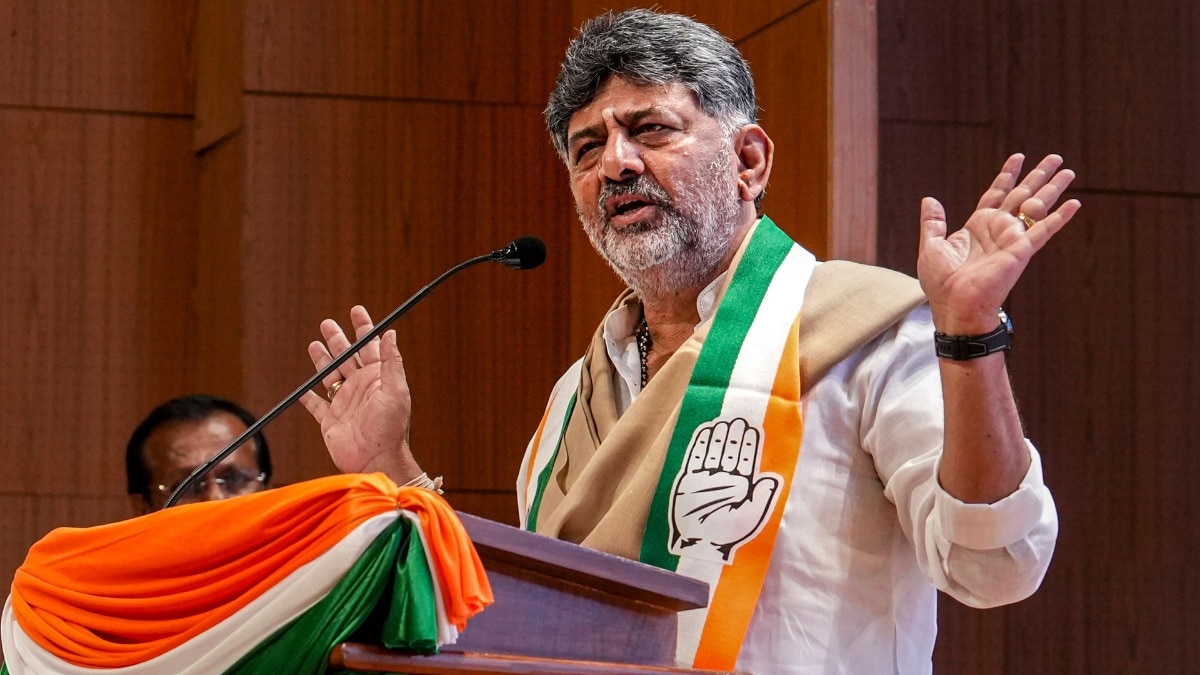
But with arid conditions prevailing across most parts of the state, the eventual number of drought-hit taluks is likely to cross 200, said chief minister D.K. Shivakumar on September 14. “There has been crop damage and the water table has dipped. Besides, sowing was not possible in many places,” Shivakumar said, adding that drinking water and electricity generation were core concerns.
Given that night-time consumption of electricity is increasing, he noted that the state’s peak power demand rose to 19,000 MW in early September, necessitating immediate measures to tide over.
Karnataka has the second-largest area of dry land in the country, after Rajasthan. The state last faced a severe drought in 2023 when it declared 223 taluks as drought-hit and sought an allocation of Rs 18,171 crore from the Centre to provide relief to farmers.
This year, the southwest monsoon season, beginning in June, has seen a deficit of 34 per cent up to September 11, with the state recording rainfall of 487 mm as against the normal of 742 mm. Out of the state’s 31 districts, only Belagavi—which recorded a minus 15 per cent deviation from norm—was classified as normal.While June saw a 42 per cent deficit overall, it narrowed to 29 per cent in July and 23 per cent in August. The first 11 days of September, however, have recorded an 81 per cent deficit.
As a result, inflow into the four reservoirs in the Cauvery basin in southern Karnataka has slowed down. Inflow into the Krishnaraja Sagar was 4,834 cusecs on September 15 as against 7,868 cusecs the same day a year ago, while that of Harangi was 507 cusecs (against 1,585 cusecs in 2025). Hemavathi was at 1,404 cusecs (against 4,275 cusecs in 2025) and Kabini at 1,091 cusecs (against 3,929 cusecs in 2025).
But the reservoirs of the Krishna basin in the northern part of the state appear to be comparatively better off. The Almatti dam, Karnataka’s largest reservoir by storage capacity, has filled up owing to copious rains in the Maharashtra section of the western ghats. As of September 15, the live storage at Almatti was 105 TMC, about the same as a year ago, although inflow was at 522 cusecs compared to 17,942 cusecs on the same day in 2025.
According to the Kharif area coverage figures put out by the Union ministry of agriculture & farmers welfare on September 4, Karnataka’s area under rice cultivation has decreased by 4.28 lakh hectares, that of pulses by 2.07 lakh hectares and millets and coarse grains by 5.64 lakh hectares.
The farm sector distress will be discussed at a special three-day legislature session starting September 21, according to Shivakumar. While the first two days have been earmarked for a discussion on farmers’ problems, the final day has been set aside for a discussion on the separate issue of the Centre's draft notification proposing an eco-sensitive area in the Western Ghats, which lawmakers in Karnataka are protesting against.