
Why hilsa-exporter Bangladesh is importing the fish from Gujarat
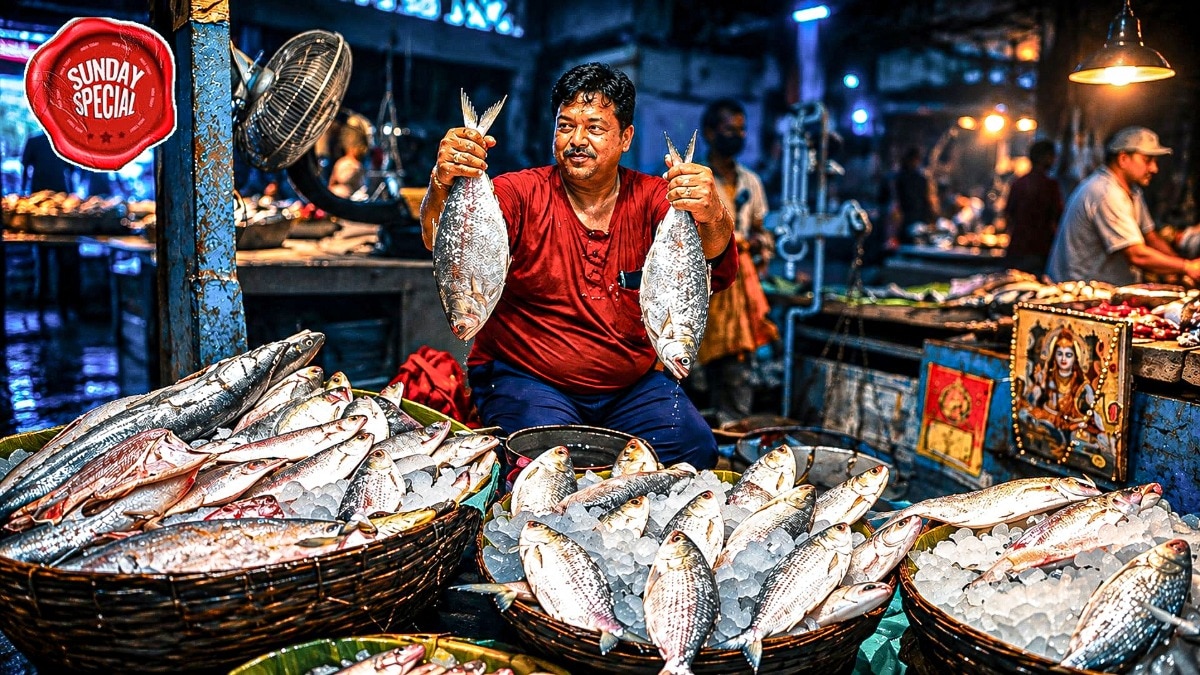
"Padmar Ilish (hilsa fish from the Padma) from Bangladesh is the queen of all hilsa. But it is almost impossible to get your hands on one. Whenever they reach the markets in Kolkata, it is an event by itself," says Pallav Kumar Karrar, a resident of Howrah in West Bengal.
Karrar, a 63-year-old businessman, describes the respect that fishmongers accord to the hilsa from Bangladesh. "They carefully wrap them in a green plastic bag and keep them separated from all the other fish. They go for as much as Rs 3,000 a kilo."
Tenualosa ilisha, better known as hilsa or ilish, is a fixture of pride at Bengali dinner tables and an important part of religious ceremonies and cultural traditions. The Bengali's fondness for hilsa and its cultural significance have given the fish an almost mythical status. It is a fish that inhabits the salty sea but swims up to the mouths of fresh water to spawn. Like crops that carry the essence of the soil they grew in, the hilsa has a distinct taste depending on the water from where it was harvested. The flesh is delicate and the aroma sticks to the fingers.
The Padma River is a distributary of the Ganga and merges with the Meghna in Bangladesh to flow into the Bay of Bengal.
Though hilsa is found across the country, from West Bengal to Odisha to Andhra Pradesh to Gujarat, millions in India, especially the Bengalis, pine for the catch from Padma. Historically, Bangladesh, the largest producer of the hilsa, had been exporting to India.
However, a curious exchange is in motion. While Bangladesh is exporting a limited quantity of hilsa to India, especially around Durga Puja time, it is also importing hundreds of tonnes of hilsa from India, especially from Gujarat. While the catches from Padma and Meghna are being bought at high prices in India, hilsa from Gujarat, particularly Bharuch, are ending up on the plates in Dhaka, Sylhet and Chittagong.
Bangladesh has imported around 500 tonnes of hilsa from India over the past two months, and is in the process of getting 150 to 200 tonnes more in the next couple of weeks.
So, what explains this dichotomy? Why are Indians willing to pay an arm and a leg for Bangladeshi hilsa, while Bangladeshis are importing the same fish from the other side of the Indian subcontinent?
"Bangladesh imports hilsa from Gujarat not as a dining substitute for its prized Padma and Meghna varieties, but to bridge local supply shortages and supply industrial processing," Dhaka-based activist academic Rezaur Rahman Lenin told India Today Digital.
That is just one part of the answer. The bigger story is a combination of regional preferences, differences in hilsa tastes, and shifting production figures.
Then there is another question: can connoisseurs tell the difference between the hilsa variants while buying the costly fish? Fishermen from Bangladesh preparing freshly caught hilsa for auction. (Image: Getty Images) THE HILSA HIERARCHY OF WEST BENGAL
The hilsa is deeply woven into the social and culinary fabric of eastern India and Bangladesh. It is the national fish of Bangladesh, is offered in pairs as a tribute to Gods and Goddesses, and is even the unofficial mascot of one of India's most storied football clubs, which is the East Bengal FC.
Whether steamed in a mustard sauce, grilled in a banana leaf or cooked in a light tomato and onion curry, the hilsa is one of the most coveted fish for Bengalis.
In West Bengal, the fish appears in markets under a bewildering array of labels – Chandana, Gurta, Khoka, Ganga, Diamond Harbour, Padma, Meghna, Gujarat, Bombay, Myanmar and more. At the risk of offending the purists and the connoisseurs, we shall simplify this bewildering taxonomy into three broad categories, those being Padma from Bangladesh, Ganga and Gujarat from India.
For the average Bengali or Bihari or Assamese or Odia or anyone who swears by the fish, these are very important distinctions. Even if all hilsa are created equal, some are more equal than others. As with most things in life, even this humble fish has its own hierarchy.
At the top of the hierarchy sits Padmar Ilish from Bangladesh. Its loyalists swear by it for being fattier and more fragrant, with an oil that carries a distinctive sweetness. But getting fresh Padmar Ilish into India has, over the years, become an odyssey in itself.
Historically, Bangladesh has been the largest producer of the hilsa. In 2024, Bangladeshi fisherfolk caught more than half a million tonnes of hilsa, reported the Dhaka-based news outlet Prothom Alo.
Hilsa exports from Bangladesh were banned by then PM Sheikh Hasina's administration in 2012 and Dhaka has, since then, allowed only limited shipments for short periods, usually ahead of Durga Puja.
In 2025, for instance, the Muhammad Yunus-led interim administration permitted 1,200 tonnes of hilsa to be sent to India, down from 2,400 tonnes in 2024. And of the 1,200 tonnes authorised, Prothom Alo reported, only 150 tonnes actually reached markets in India. No such shipment has been authorised in 2026, even though multiple Indian and Bangladeshi traders have reportedly been lobbying Dhaka for the same.
As a result, Padma hilsa, when available, can retail for anywhere between Rs 2,000 to Rs 3,000 a kilo, and sometimes even more. Moreover, much of the fish reaching Kolkata is frozen rather than fresh, which can diminish the distinctive flavour that makes Padma hilsa so prized.
"The best hilsa is one that has been caught no more than a day or two earlier, and not kept over ice. Too much time in cold storage makes the fish oil lose its characteristic sweet flavour," Kolkata resident and retired shipping manager Partha Chatterjee told India Today Digital.
Although its loyalists would rate it the best, the Ganga hilsa comes next in the hierarchy. In terms of flavour, it is in many ways comparable to its Bangladeshi cousins, although its taste is not as pronounced.
That said, Ganga hilsa is considerably more affordable. Prices depend on the size of the fish and the season and whether it is freshly caught or taken out of cold storage. An adult Ganga hilsa typically sells for around Rs 1,500 to Rs 1,800 a kilo, while the smaller catch can fetch Rs 800 to Rs 1,200 a kilo. Hilsa arranged for sale at a fish market in Kolkata. (Image: Getty Images)
There is, however, one problem. The production of hilsa in Bengal has dwindled from around 80,000 tonnes in 2001 to close to 15,000 tonnes in 2013 to around 10,000 tonnes in 2020, largely because of excess fishing in the Bay of Bengal.
It is this shortfall, that is, reportedly being met by hilsa from one of the most unlikely sources, the state of Gujarat. According to the Indian Council of Agricultural Research, the state produced around 14,588 tonnes in 2025–26. While it is sold across India, shipments of Gujarat hilsa have also reportedly made their way to Kolkata, where they sell for around Rs 800 to Rs 1,200 a kilo.
That said, many in West Bengal are not particularly fond of Gujarat hilsa. Its higher roe (fish eggs) content gives the fish a more bitter flavour than its Gangetic or Bangladeshi cousins. In fact, several Kolkata and Howrah residents told India Today Digital that they would rather save up and splurge on a Ganga or Padma hilsa rather than buy the more affordable Gujarat variant.
Chatterjee, the retired shipping manager, said: "Fish eggs are a delicacy on their own, yes. But if I want fish eggs, I will buy them separately. I will not buy hilsa with fish eggs in it because the fish then doesn't have the taste I expect from it any more."ARE BUYERS ABLE TO DIFFERENTIATE AMONG THE HILSA VARIANTS?
So how do people differentiate between Padma, Ganga and Gujarat hilsa?
According to Howrah resident Karar, the easiest way is to look at its colour. "Padma hilsa has this distinctive reddish tinge, and is almost always kept wrapped in green plastic packets. This ensures that its skin and scales are not damaged when kept on ice, and its taste is somewhat preserved".
Ganga hilsa, on the other hand, says Karar, is "usually shiny, almost like silver".
Gujarat hilsa, however, is far more difficult to differentiate from the Ganga variant. One fishmonger in New Delhi's Govindpuri says "it is usually not possible for buyers to tell one from the other."
People in the markets of Delhi's Govindpuri and CR Park generally try to ensure that they are either buying hilsa from Padma or Ganga.
"Buyers wouldn't know if hilsa from Gujarat was surreptitiously sold as Ganga hilsa," says the Govindpuri fishseller, adding, "Gujrat hilsa is not sold in Delhi, only hilsa from Kolkata are sold".
Seventy-year-old Kolkata resident Gautam Sanyal backs this assertion. "To be frank, I cannot distinguish between hilsa from Bharuch or Diamond Harbour. When I go to the market, I put my faith in the fish seller's honesty and hope for the best". One of the more popular hilsa recipes in West Bengal is shorshe ilish (hilsa in mustard). (Image: Getty Images) BUT WHY IS BANGLADESH IMPORTING HILSA FROM INDIA?
As in India, hilsa from the Padma and the Meghna rivers are the most prized variants in Bangladesh. So why is hilsa from Gujarat, travelling the more than 2,300 km to Bangladesh?
A report in the Dhaka-based news outlet Prothom Alo noted, in the first nine and a half months of 2026, 427,000 kg of hilsa arrived from India, much of it caught along the Narmada river in Gujarat's Bharuch. The report further noted that Bangladeshi traders were able to acquire shipments for as low as Tk 57 a kilo.
So why is so much Gujarat hilsa making its way to Bangladesh, despite ostensibly being inferior in taste and aroma? It's a combination of economics and the unique niche occupied by the catch from Gujarat.
Although Bangladeshi fisherfolk catch the most hilsa in the world, production has been declining for the last four years.
Prothom Alo reported that the annual production numbers had decreased from 571,324 tonnes in 2022, to 500,000 tonnes in 2025. As a result, hilsa prices in Bangladesh have soared from Tk 705 a kilo in 2018, to as high as Tk 2,600 a kilo on August 25.
This is where hilsa from Bharuch comes in. Dhaka-based activist academic Rezaur Rahman Lenin says the Indian variety helps bridge local and industrial supply shortages.
"Authentic 1 kg Padma and Meghna hilsa command premium rates between Tk 2,200 and Tk 2,800 per kg, whereas marine varieties sell slightly lower at around Tk 2,000 to Tk 2,200 per kg," Lenin tells India Today Digital.
Compare this with the imported Gujarat hilsa, which, according to Lenin, "arrives at land ports at wholesale landing costs of just Tk 500 to Tk 700 per kg and retails at Tk 1,500 to Tk 1,800 per kg, roughly Tk 1,000 cheaper than the river catches".
Most of these shipments from the Narmada basin enter Bangladesh via West Bengal's Petrapole land border, which, according to Lenin, acts as a cold storage and transit hub.
"While the mature, roe-laden Gujarati hilsa is less popular in West Bengal because of its leaner meat, it holds high commercial value in Bangladesh, where fish eggs are extracted for popular domestic dishes in Sylhet and Chattogram, as well as for re-export abroad," says Lenin.
"The lower price point and leaner texture of Gujarati hilsa make it a cost-effective raw material for coastal processors producing salted and sun-dried hilsa, for which using premium river catches would be financially impractical," he says. Salted hilsa being processed at Chattogram, Bangladesh. (Image: Getty Images)
The hilsa trade is a curious case because Bangladesh, the biggest producer and exporter, is importing hundreds of tonnes from India. It is a story of two very different markets responding to their own shortages, preferences and prices.
For Bengalis in West Bengal, the Padma and Ganga hilsa remain the gold standard, with freshness and flavour carrying a premium. In Bangladesh, meanwhile, Gujarat hilsa has found a rather different niche, helping plug a supply gap, keeping prices in check and providing raw material for processed fish and roe.
In the end, the hilsa may be the same species, but what people want from it can vary dramatically depending on which side of the border they are. And so, it is a rather delicious irony. The fish that travels one way and fawns nostalgia and culinary prestige, is seeing a very different kind of travel to satisfy economics.- EndsPublished By: Shounak SanyalPublished On: Sep 20, 2026 07:00 IST
