Why India raised a storm over ship collision by Pakistan in Arabian Sea
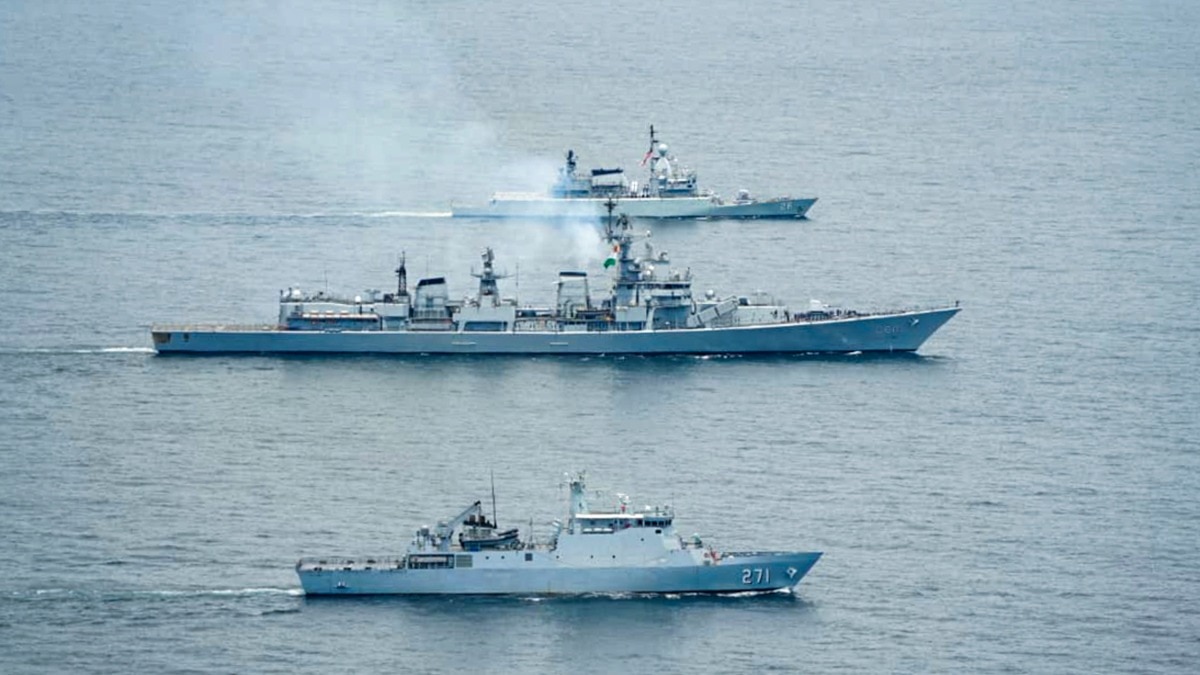
A Pakistan Navy warship collided with an Indian Navy frontline vessel in the northern Arabian Sea on the evening of September 15 after closing in at high speed. The mishap occurred while the Indian ship was carrying out routine surveillance in international waters, around 220 km east of Oman.
According to Indian government sources, the Pakistani vessel made an unsafe and unprofessional manoeuvre that brought the two ships into contact. Neither vessel reportedly suffered damage.
The Pakistani warship involved is PNS Hunain, an offshore patrol vessel of the Yarmook class of the country’s navy. It was built by Damen Shipyards in Galai, Romania.
According to Indian authorities, even under extreme provocation from the Pakistani side, the Indian Navy captain exercised extreme restraint and took timely action that prevented a severe accident, which could have resulted in serious loss of lives and significant damage.
The incident quickly moved to the diplomatic arena. On September 16, India summoned Pakistan’s Charge d’Affaires in New Delhi and lodged a strong protest over what the ministry of external affairs termed as “unacceptable and unprofessional conduct”. New Delhi said the Pakistani vessel’s actions had violated Article 10 of the 1991 India-Pakistan Agreement on Advance Notice on Military Exercises, Manoeuvres and Troop Movements.That provision requires naval ships and submarines of the two countries to maintain a minimum separation of three nautical miles while operating in international waters. India also instructed its Charge d’Affaires in Islamabad to lodge a similar protest with Pakistan’s ministry of foreign affairs.
The incident has its precedent. In June 2011, Pakistan Navy frigate PNS Babur had approached Indian Navy frigate INS Godavari at high speed from behind in the Gulf of Aden. The Pakistani ship then carried out a manoeuvre that resulted in the two vessels brushing against each other. The contact damaged the helicopter safety net on INS Godavari. Both ships were operating in the Gulf of Aden as part of anti-piracy operations following the release of the merchant vessel MV Suez, which had Indian crew members aboard.
India had lodged a formal protest, accusing the Pakistani vessel of violating international navigational safety rules as well as the same 1991 bilateral agreement. Video footage subsequently emerged, showing PNS Babur approaching INS Godavari from behind, with Pakistani sailors heard shouting slogans. Pakistan denied responsibility. The episode nevertheless developed into a diplomatic dispute.
Close encounters between Indian and Pakistani military assets are not uncommon. Naval vessels and military aircraft have periodically operated in close proximity, particularly in the Arabian Sea. But actual physical contact between warships outside wartime has been uncommon.
The distinction is important. During the 1971 war, Indian and Pakistani naval forces engaged in direct combat, including India’s Operation Trident strikes on Karachi. Those were deliberate military operations conducted during an open conflict. What makes the latest collision particularly sensitive is that it occurred in peacetime and in international waters. There’s also the backdrop of strained India-Pakistan relations and previous military confrontations.
At the centre of India’s protest is a provision negotiated more than three decades ago. The India-Pakistan Agreement on Advance Notice on Military Exercises, Manoeuvres and Troop Movements was signed in New Delhi on April 6, 1991 by Indian foreign secretary Muchkund Dubey and his Pakistani counterpart Shahryar M. Khan.
The agreement was intended to serve as a confidence-building measure: reduce the chances of military activity being misunderstood, provide advance warning of significant movements and prevent routine exercises or deployments from being mistaken for preparations for an attack. Its provisions cover all three services—army, navy and air force—and establish notification requirements, geographical restrictions and rules governing the conduct of major military exercises.
The notification periods vary according to the scale of an operation. Certain air exercises require 15 days’ notice; divisional-level land exercises and major naval exercises involving six or more destroyer- or frigate-sized ships can require 30 days’ notice. Larger corps-level movements can require 60 or 90 days’ advance notification. The agreement also places restrictions on the positioning and orientation of major forces when exercises take place near the other country.
For the latest naval incident, Article 10 is the key provision. It states that naval ships and submarines of the two countries should not come within three nautical miles of each other in international waters. That translates to roughly 5.5 km. The logic: to leave enough sea room to prevent an accident from becoming a military crisis. The agreement contains a similar safeguard for military aviation, generally keeping combat aircraft at least 10 km from the other country’s airspace, subject to specified exceptions.
The 1991 agreement was negotiated at a time of considerable tensions between India and Pakistan and formed part of a broader effort to build mechanisms for managing military risk. India has previously invoked Article 10 following incidents involving Pakistani naval vessels, most notably after the 2011 encounter between PNS Babur and INS Godavari. New Delhi has again pointed to the provision following the September 15 collision.
For India, the issue is that a bilateral rule specifically designed to prevent dangerous encounters at sea was breached. With both navies operating regularly across the Arabian Sea and bilateral tensions high, the incident highlights how quickly a close encounter between warships can move beyond navigation and into diplomacy and military risk.