Why is King Shaka Day being erased from our national narrative? - IOL
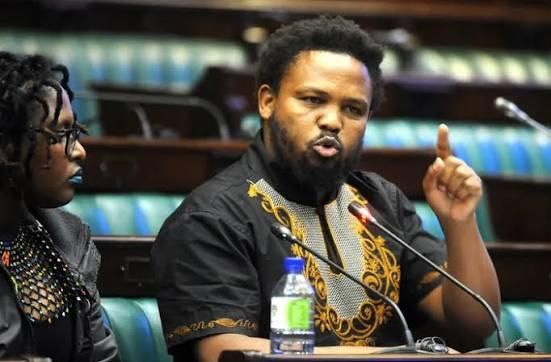
Andile Mngxitama argues that ANC's erasure of King Shaka Day from the national consciousness is seen as a betrayal of South Africa's rich black heritage and hear calls for its restoration.
It is a betrayal of struggle sacrifices that the ANC seems committed to the erasure of black heroic history. This is manifested in the inexplicable erasure of King Shaka Day into the amorphous "Heritage Day," which is further defiled by the racist moniker of "braai day," used mostly by the white section of the population and white business. This seems like a deliberate minimisation of King Shaka's stature.
White racism is offended by black pride and achievement. The modernisation project of King Shaka exposed the colonial lie of the immutability of African social and cultural systems. King Shaka demonstrates the dynamism of African leadership and its adaptability to contemporary challenges. African cosmology is neither dogmatic nor static, but evolves to answer contemporary challenges.
One of the understated achievements of King Shaka is how he reshaped Zulu masculinity. The notion of manhood was calibrated by the practical expression of bravery on the battlefield, and not merely symbolically based on aesthetics. To be a real man, one ought to be a good soldier. This has significant lessons for South Africa today, with men lost in insecure masculinity, at devastating social cost for men, women and children.
Instead of making Shaka Day a national day of remembrance and reflection beyond KwaZulu-Natal's celebrations, the ANC chose to erase this colossal historic figure in the name of reconciliation, proving the claim that South Africa's reconciliation project is a con. Blacks are called upon to sacrifice the sacred — history and land — for a one-way reconciliation project. Little wonder that, after more than 30 years, blacks remain excluded from land and the economy.
The erasure of King Shaka from our national consciousness is consistent with the erasure motif of ANC rule, which seems calculated to assuage white anxieties about defiant black anti-colonial history. There is a long list of these erasures, spanning from turning Sharpeville Day into Human Rights Day, to turning June 16 — which is correctly Black Power Day — into the banal "Youth Day."
King Shaka holds a special place in the history of black South Africans. Just like Otto von Bismarck, the creator of the modern German nation, King Shaka used the spear to create a modern nation. King Shaka was a military genius who was not afraid to introduce new methods of warfare, and who even reconfigured notions of musicality. Culture had to serve the nation, or cease to exist. King Shaka must be celebrated for inculcating the spirit of war in maintaining national sovereignty among the Zulu-speaking people of South Africa.
It is not a big surprise that it was only the Zulu-speaking people who negotiated for land during the negotiations toward the end of formal apartheid. The Ingonyama Trust land was secured for the Zulu people thanks to their commitment to defend the land — credit to the spirit of King Shaka for influencing the decision to ensure land for the isiZulu speakers of KwaZulu-Natal.
It is encouraging to see the new king continuing in the defence of the sovereignty of the Zulu people by calling for the removal of "Natal" from the province's name. This is a decolonial turn which must be celebrated. From there, the King must ensure that all Zulu-speaking people's land currently occupied by white settler colonialists is returned.
King Shaka, the colossal figure of our history, should be a subject of learning in our schools and universities. His leadership style and philosophy of modernisation can do our postmodern world a great deal of good. Like the Chinese modernisation programme, we can, through appropriate application of King Shaka's methods, realise the notion of culture as a weapon of development and enlightenment.
The very limitations of King Shaka are material for learning, too. We can learn a lot from his military system, based on the shape of the bull's horn. King Shaka is also a genius of nation-building. Coming out of the systematic divisions of apartheid, we can learn a thing or two about how different communities can be melded into a single social organism. Failure to elevate King Shaka to his rightful place robs the nation of his genius to build the now.
The ANC must do serious introspection on how it has assisted in the erasure of black history, even as it elevates its white cadres like Joe Slovo. It may be a little too late now, since our people are abandoning the ANC for parties more loyal to our collective history, and more so to the neglected black history. King Shaka deserves his day back. The 24th of September must be reverted back to King Shaka Day.
* Andile Mngxitama is a member of Parliament, writing in his personal capacity.