
Why Is the Red and White Flag Flown at Half-Mast? The Rules and Its Meaning Explained
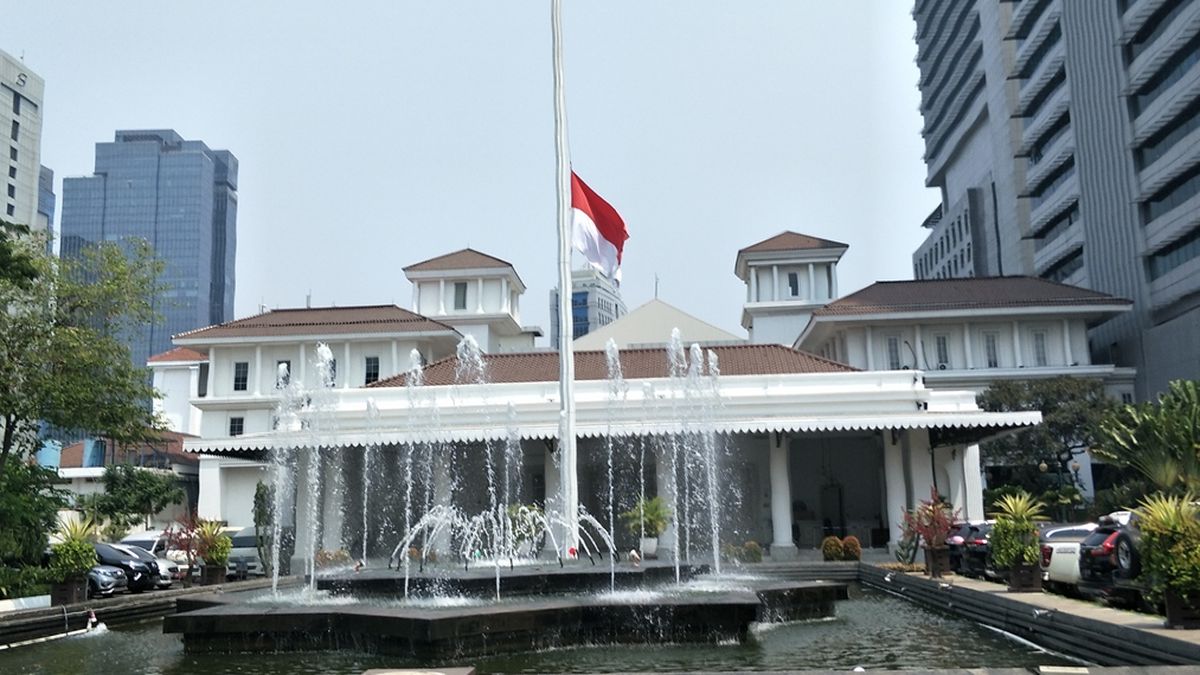
Why Is the Red and White Flag Flown at Half-Mast? The Rules and Its Meaning Explained
KOMPAS.com - The Red and White Flag is more than just a symbol of Indonesia’s independence. At certain moments, flying it at half-mast conveys a different message: mourning and respect for national figures.
This meaning is not only derived from tradition but is also formally regulated by Law Number 24 of 2009 concerning the Flag, Language, and National Emblem, as well as the National Anthem.
Raising the Red and White Flag at half-mast is not merely a ceremonial tradition but has a legal basis within Law Number 24 of 2009 regarding the Flag, Language, and National Emblem, as well as the National Anthem.
Article 12 paragraph (1) of the law states that the national flag can be used as a sign of peace, mourning, and as a cover for coffins or funeral palanquins.
Furthermore, Article 12 paragraphs (4) and (5) specify that the flag is flown at half-mast as a sign of mourning if the President or Vice President, former President or former Vice President, leaders or members of state institutions, ministers or officials with ministerial rank, regional heads, or regional council leaders pass away.
The primary meaning behind flying the flag at half-mast is an official expression of national mourning and a tribute to the services of state officials.
In addition to its meaning, the procedures for flying the flag at half-mast are also regulated in Law Number 24 of 2009.
The flag is not directly placed at half-mast. When raised, the flag must first be hoisted to the top of the pole, paused briefly, then lowered to the half-mast position.
Conversely, when lowering the flag, it must first be raised back to the top of the pole before being fully lowered.
During both raising and lowering, all present are required to stand at attention facing the flag until the ceremony concludes. The ceremony may also be accompanied by the national anthem, Indonesia Raya.
According to Article 12 paragraph (11), if the flag is flown at half-mast as a sign of mourning on the same day as a national holiday, two Red and White Flags are flown side by side.
The flag on the left is flown at half-mast to signify mourning, while the flag on the right is flown at full height to honor the national holiday.
For example, if a national mourning period coincides with the Independence Day of the Republic of Indonesia or another national holiday requiring the flag to be flown at full mast, the procedure follows this rule so that both mourning and patriotic respect are properly conveyed.
The Red and White Flag is regarded not only as a national identity but also as a symbol of sovereignty, unity, and the nation’s struggle.
Respecting the flag, including following proper protocols when raising it, forms part of the national defense attitude and an appreciation of Indonesia’s historical struggles.
Acts that demean the dignity of the national flag can erode feelings of unity and national pride.
Therefore, honoring the Red and White Flag is not only a legal obligation but also a way to respect the nation’s identity.
